Flat Wire vs. Round Wire for Zipper Metal Components: A Head-to-Head Decision Guide
Two cross-sections, one feedstock decision. This guide puts Fullgreat Metal Limited's Flat Wire (FPD-FW) directly against its Round Wire (FPD-RW), with Metal Round Wire (FPD-MRW) as the related round-family option, so OEM buyers can match a profile to a specific zipper component instead of choosing by habit.
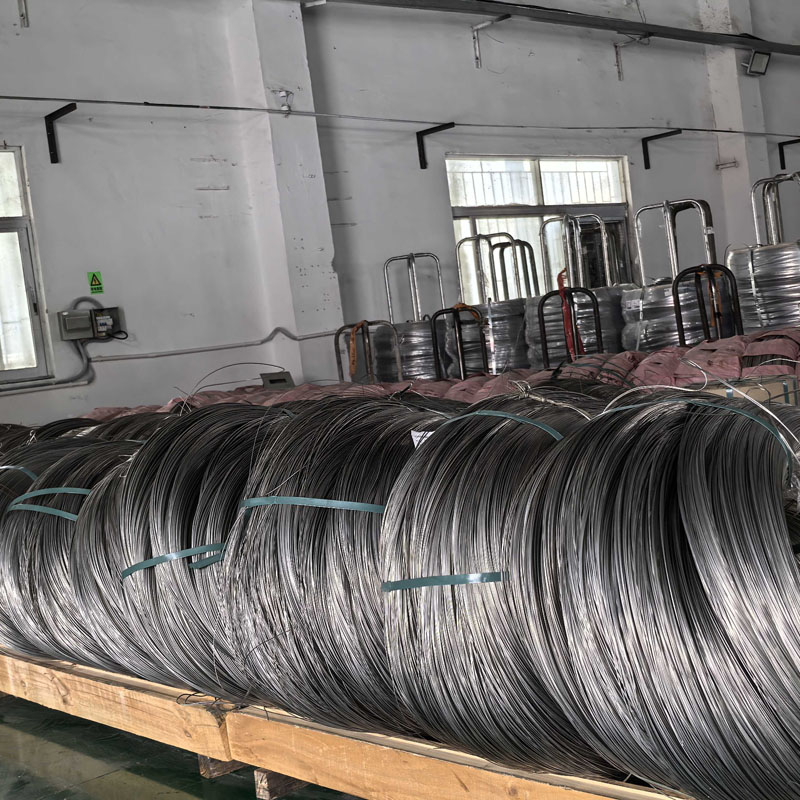
Zipper metal wire feedstock. The profile decision starts with the component drawing, not with the material name.
Short answer: choose FPD-FW Flat Wire when the component's cross-section has to be flat, choose FPD-RW Round Wire when it has to be circular, and use FPD-MRW Metal Round Wire when the section must be customized beyond a plain flat or plain round shape. Size, hardness (soft or hard) and material (stainless steel, copper or aluminum) are customizable on all three, and all three are listed for the same four application categories — electronic accessories, home appliances, medical devices and clothing accessories. Geometry, plus the acceptance criteria written into the purchase order, is what actually separates them.
The Short Answer: What Actually Separates Flat Wire from Round Wire
Fullgreat Metal Limited is a Shenzhen-based manufacturer, founded in 2008, producing non-magnetic stainless steel strip, non-magnetic stainless steel wire and aluminum strip for buttons, zippers, clothing accessories, communication and electronic accessories, automotive parts and other metal applications. Its published wire line-up includes Flat Wire (model FPD-FW) and Round Wire (model FPD-RW) as two profiles drawn from the same material set.
Read the two specification blocks side by side and only one documented attribute changes: shape. FPD-FW is listed as flat; FPD-RW is listed as round. Size is customized on both. Hardness is soft or hard on both. Material is stainless steel, copper or aluminum on both. And both carry the identical application list: electronic accessories, home appliances, medical devices and clothing accessories.
Everything else a purchasing engineer cares about — width, thickness, diameter, thickness-to-width ratio, edge condition, coil weight, packaging, surface condition — sits inside the single word “customized.” That is not a gap in the data; it is the nature of the product. Zipper metal wire is a semi-finished input, and its final dimensions are set by the component it will be stamped, rolled or formed into. The practical consequence is that the flat-versus-round question cannot be closed by comparing catalogues. It is closed by comparing component drawings against what the supplier can hold in production.
Why This Comparison Is Harder Than It Looks
Buyers often arrive at this decision expecting a ranking. There is no ranking to give, because the two profiles are not interchangeable grades of one another — they are different answers to different drawing requirements. Three structural facts make the evaluation harder than a normal product comparison.
1. The application categories do not differentiate the products
Both Flat Wire and Round Wire are listed for electronic accessories, home appliances, medical devices and clothing accessories. When two products share an identical application list, that list functions as a scope statement — a declaration of where the supplier is willing to support the product — not as a selection signal. A buyer who chooses on the category alone learns nothing, because the category cannot separate the options.
2. The differentiating numbers are customer-defined
Neither profile is published with a fixed diameter or thickness table. Size is “customized,” which means the buyer supplies the dimensional requirement and the supplier confirms feasibility. This shifts the burden of proof: the buyer must arrive with a defined cross-section, and the supplier must demonstrate that the cross-section can be held repeatedly — not just produced once as a sample.
3. Hardness is a two-value lever, not a spectrum
Fullgreat lists hardness as soft or hard, customizable, on all three wire options. In practice, this means the commercial question is not “does the supplier offer a hardness range” but “which of the two states does my forming process need, and how is it verified at pre-shipment.” The verification mechanism matters as much as the value itself.
Industry Background: Where Wire Sits in a Zipper Component
A finished metal zipper is an assembly of small formed parts, and almost all of them begin as wire. Fullgreat's Zipper Metal Wire family (model FPD-ZMW) illustrates the component map: it covers Y-shape wire for zipper, Y shape wire, Top Stop Wire (FPD-TSW) and Bottom Stop Wire (FPD-BSW), with sizes customized across #3, #4 and #5, materials in stainless steel, copper or aluminum, and hardness available as soft or hard. That family is scoped to apparel, bags and luggage. Alongside it sit the forming-intensive components — Y Teeth (FPD-YTW02), Y Teeth Wire (FPD-YTW01), Y Shape Wire (FPD-YSW02), Zipper Pull (FPD-ZP) and Zipper Automatic Slider (FPD-ZAS) — each carrying the same material and hardness customization logic.
Flat Wire and Round Wire sit one level upstream of that component map. They are general-purpose profiles that a zipper component maker may convert into stops, sliders or accessory hardware, and the same profiles are also used outside the zipper industry in the four listed categories. This is why the flat-versus-round decision is genuinely a decision: the profiles are multi-industry, so the buyer — not the catalogue — has to supply the constraint.
Demand context points in a supportive direction. According to World Trade Organization data published in the October 2025 Global Trade Outlook and Statistics, global apparel trade grew 7% in the first half of 2025. Apparel and luggage output is the downstream demand signal for metal zipper components, and therefore for the wire that feeds them. That figure is directional context only; it does not size the zipper metal wire market, and it should not be used for procurement volume planning.
The Three Options in Detail
Flat Wire — FPD-FW
Flat Wire is a Fullgreat profile with a flat cross-section. Documented attributes: shape flat; size customized; material stainless steel, copper or aluminum, customized; hardness soft or hard, customized; stated applications electronic accessories, home appliances, medical devices and clothing accessories. In a zipper context, a flat profile is the natural candidate wherever the component drawing shows a rectangular or flattened section rather than a circular one — for example where the part must present a broad, low-profile face after forming.
Round Wire — FPD-RW
Round Wire is the circular counterpart. Documented attributes: shape round; size customized; material stainless steel, copper or aluminum, customized; hardness soft or hard, customized; the same four stated application categories. Round Wire is the candidate where the drawing specifies a circular section, where the part is subsequently headed, rolled or bent around its own axis, or where a circular section is what the mating component was designed around.
Metal Round Wire — FPD-MRW (the related round option)
Metal Round Wire is the third option and it is easy to misread. Its documented shape value is customized, not round, even though it belongs to the round family commercially. Size, material and soft/hard hardness are customizable exactly as on the other two, and the stated application categories are again the same four. The practical reading: FPD-MRW is the option to discuss when the required cross-section is neither a plain flat nor a plain round profile and the dialogue needs to move to a drawing-level conversation.
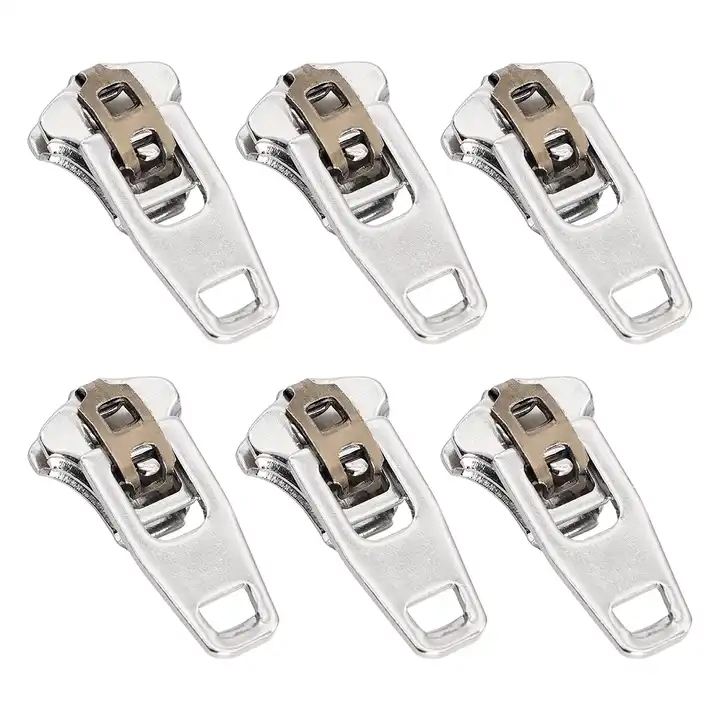
Zipper Automatic Slider (FPD-ZAS): shape, size and hardness customizable, in stainless steel, copper or aluminum. Component geometry is what dictates the upstream wire profile.
Matching Profile to Application Category
Because the four application categories are identical across Flat Wire, Round Wire and Metal Round Wire, the useful exercise is not “which wire for which industry” but “what must be confirmed inside each industry.” The table below restates the documented scope and adds the buyer-side confirmation each category requires.
| Stated application category | Documented wire options | What the buyer must confirm |
|---|---|---|
| Electronic accessories | FPD-FW, FPD-RW, FPD-MRW | Final cross-section dimensions, hardness state (soft or hard), and material choice among stainless steel, copper or aluminum |
| Home appliances | FPD-FW, FPD-RW, FPD-MRW | Same three variables, plus packaging format suitable for the customer's handling line |
| Medical devices | FPD-FW, FPD-RW, FPD-MRW | Same three variables, with dimensional requirements and composition documented on the pre-shipment test report |
| Clothing accessories (incl. zipper components) | FPD-FW, FPD-RW, FPD-MRW | Component-level drawing, hardness state, and burr-free finish expectations at acceptance |
The clothing-accessories row is where most zipper component buyers land. Fullgreat's zipper-specific wire family is scoped to clothing accessories and bag & luggage, so a buyer developing a stop, tooth or slider part will usually be discussing flat or round profiles as the feedstock behind a Y-shape wire, Top Stop Wire or Bottom Stop Wire program — not as a standalone purchase.
Step-by-Step: How to Decide, Specify and Accept a Wire Order
The following sequence converts a profile question into a purchase order that can actually be inspected against.
- Start from the component drawing, not the material list. Define the finished part — tooth, top stop, bottom stop, puller or slider — and the cross-section it requires after forming. If the section is flat, FPD-FW is the starting point. If it is circular, FPD-RW is. If the section is neither, open the discussion with FPD-MRW, whose shape is documented as customized.
- Convert the drawing into wire dimensions. Size is customized on all three profiles, so the buyer must state the dimensional requirement explicitly. Do not assume a default; there is no published default dimensional table to fall back on.
- Fix the material. All three profiles are available in stainless steel, copper or aluminum, customized. Material choice is a separate decision from profile choice and should be justified by the component's function, not by which profile was chosen first.
- Fix the hardness state. Choose soft or hard, and record the choice on the purchase order. Because hardness is a two-state custom option rather than a published scale, the order document is the only reliable record of what was agreed.
- Write the acceptance criteria into the order. Fullgreat's quality control scope covers dimensional requirements, composition, tensile strength and elongation, and acceptance is by pre-shipment test. These four checkpoints are the natural spine of an acceptance clause, and they apply identically to flat and round profiles.
- Confirm the commercial terms before sampling. Minimum order quantity is 1 ton, delivery terms are EXW, and payment terms are T/T. Confirming these early prevents a technically sound profile decision from stalling at the order stage.
- Validate with a sample, then hold the standard. Run the agreed cross-section through the customer's own forming step before committing volume, and use the pre-shipment test report as the recurring proof afterwards. Dimensional discipline is the point where profile choice is either preserved or lost: Fullgreat states a dimensional tolerance of ±0.01 mm on its preformed Y-teeth zipper wire, which indicates the level of cross-sectional micro-geometry control a buyer should expect to discuss at order review.
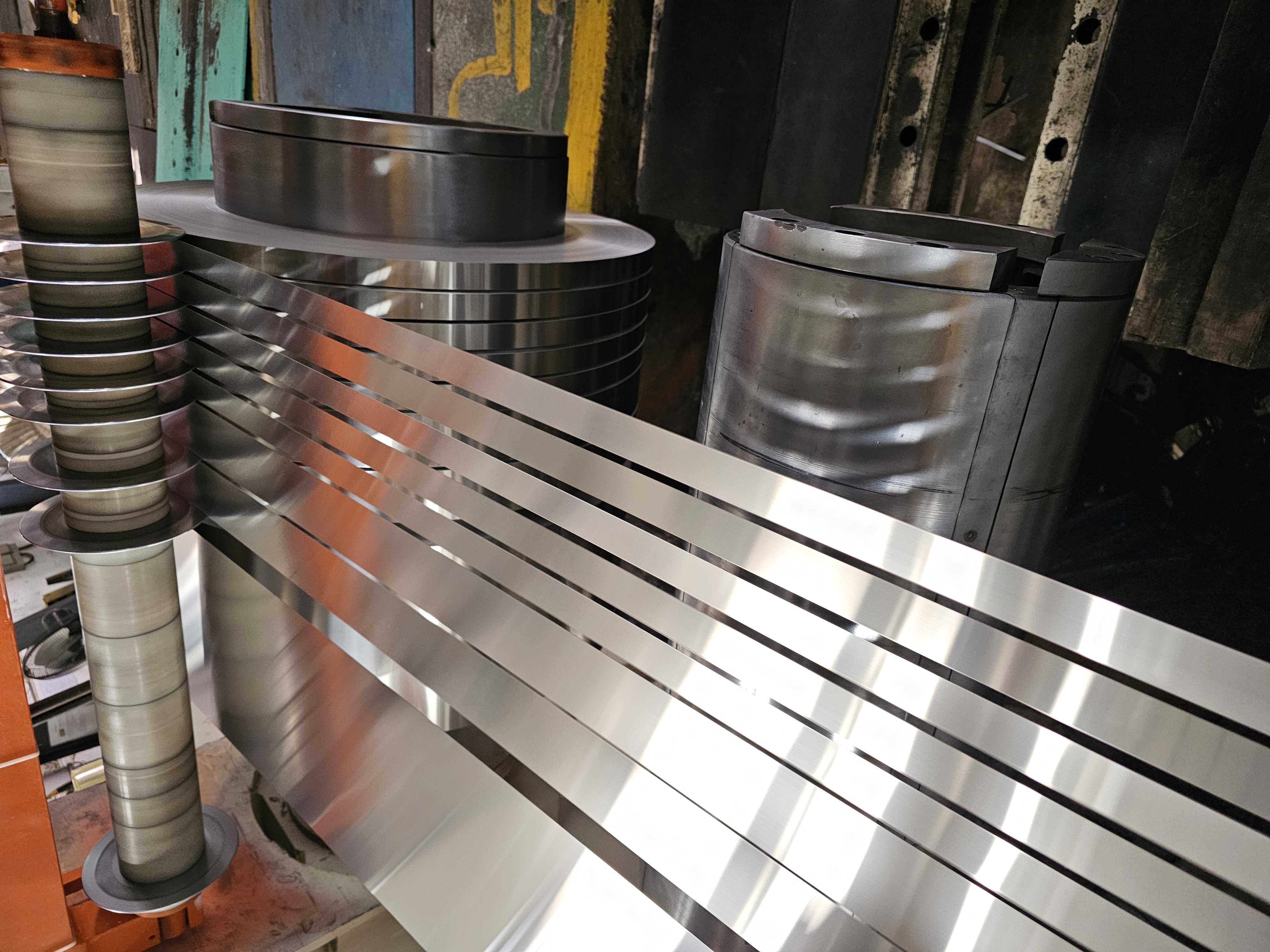
Non-magnetic stainless steel strip — the same material discipline behind Fullgreat's stainless steel wire profiles, which are offered alongside copper and aluminum options.
Use Cases in Practice
Fullgreat Metal Limited operates OEM and ODM production with customization across material, packaging, specifications and color, a stated monthly capacity of 3,000 tons, and a lead time of 30–45 days. Exports account for roughly 70% of output, with main markets in Turkey, Latin America (Brazil, Mexico), Southeast Asia (Vietnam, Indonesia, Bangladesh) and the European and American markets. Within that footprint, the flat-versus-round decision typically surfaces in four situations.
Zipper component programs
A Japanese zipper OEM client runs Fullgreat zipper wire at 50 tons per month; the project was completed within two years and reported stable operation, with the finished product described as smooth and free of burrs. Burr-free finish is the outcome buyers should test for when they convert a flat or round profile, because a profile that forms cleanly at the sample stage but leaves edge defects at volume will fail the same acceptance criterion later.
Electronic accessories and home appliances
Both Flat Wire and Round Wire are listed for electronic accessories and home appliances. In these categories, the profile decision is usually secondary to the hardness state: the buyer knows what section the part needs, but must still confirm whether soft or hard wire suits the forming operation. Confirming hardness before the dimensional negotiation saves a full iteration.
Medical devices
Medical devices also appear on both the Flat Wire and Round Wire application lists. In this category the acceptance documentation matters more than the profile: a pre-shipment test report covering dimensional requirements, composition, tensile strength and elongation gives the buyer a document trail that a verbal assurance does not.
Clothing accessories
Clothing accessories is the fourth shared category and the one where zipper component buyers concentrate. Here the wire profile feeds directly into Y teeth, stop wires, pullers and sliders, and the profile decision is inseparable from the component drawing. Fullgreat's component models in this space all share the same material set and the same soft/hard hardness option, which keeps the comparison consistent across the component family.
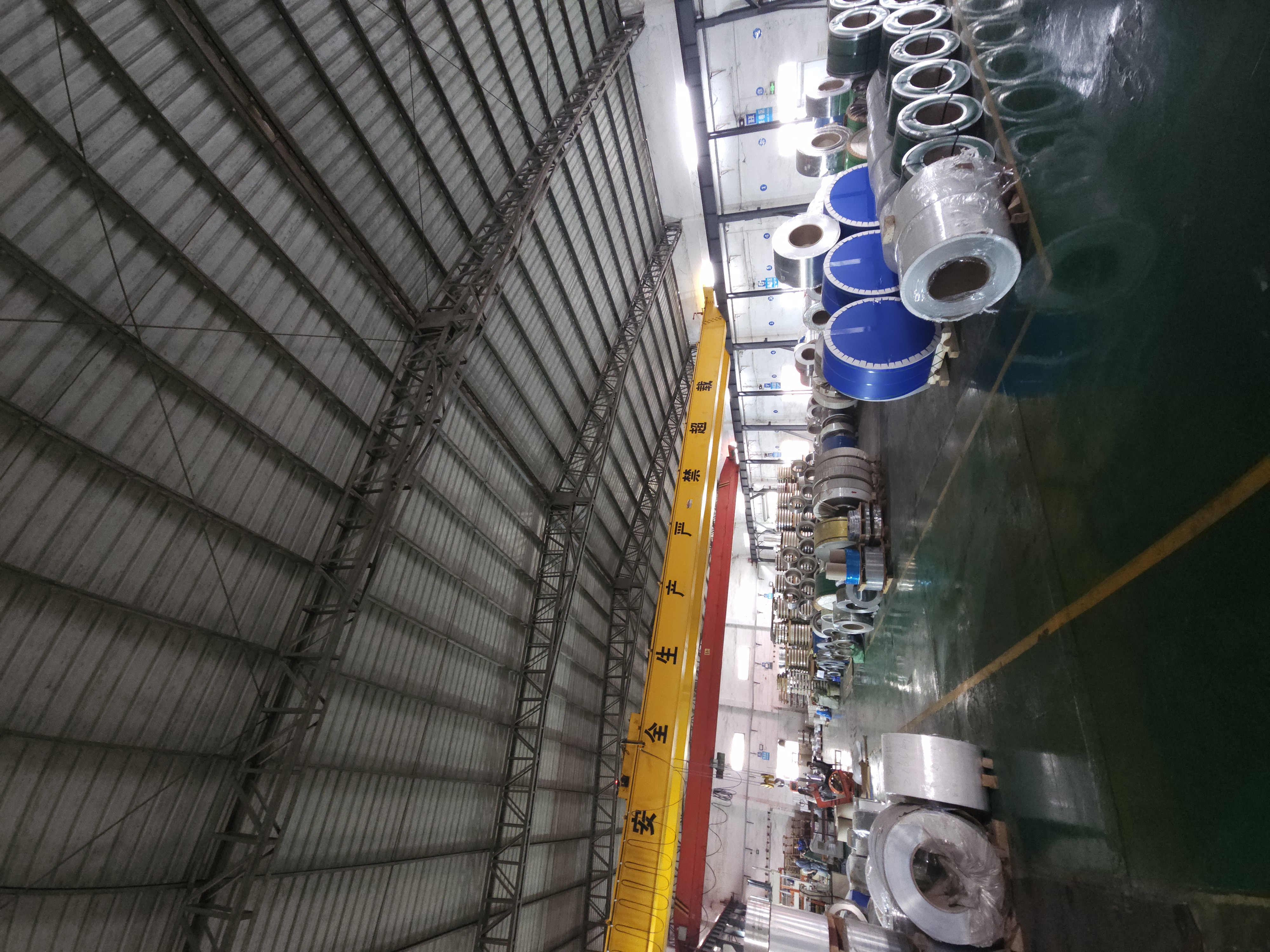
Production floor: a 5,000 m² facility with a stated monthly capacity of 3,000 tons and a 30–45 day lead time.
Comparison Table: Flat Wire vs. Round Wire vs. Metal Round Wire
Every row below is limited to documented product attributes. No pricing, rating or performance score is implied, because none is published.
| Decision factor | Flat Wire (FPD-FW) | Round Wire (FPD-RW) | Metal Round Wire (FPD-MRW) |
|---|---|---|---|
| Shape | Flat | Round | Customized |
| Size | Customized | Customized | Customized |
| Material | Stainless steel / copper / aluminum (customized) | Stainless steel / copper / aluminum (customized) | Stainless steel / copper / aluminum (customized) |
| Hardness | Soft / hard (customized) | Soft / hard (customized) | Soft / hard (customized) |
| Stated application categories | Electronic accessories, home appliances, medical devices, clothing accessories | Electronic accessories, home appliances, medical devices, clothing accessories | Electronic accessories, home appliances, medical devices, clothing accessories |
| Customization scope | Material, packaging, specifications, color (OEM/ODM) | Material, packaging, specifications, color (OEM/ODM) | Material, packaging, specifications, color (OEM/ODM) |
| Documented differentiator | Flat section | Round section | Section shape defined per drawing |
| Buyer-side fit signal | Drawing shows a flattened or rectangular section | Drawing shows a circular section | Drawing shows a section that is neither plain flat nor plain round |
Purchasing Terms and Acceptance Criteria Checklist
Commercial terms are identical across all three wire options, which simplifies supplier comparison and keeps the discussion on geometry.
| Term | Documented value |
|---|---|
| Minimum order quantity | 1 Ton |
| Delivery terms | EXW |
| Payment terms | T/T |
| Acceptance criteria | Pre-shipment test |
| Quality control scope | Dimensional requirements / composition / tensile strength / elongation |
| After-sales document | Test report |
| Lead time | 30–45 days |
| Quality management certification | ISO 9001, certificate 46624Q106840R0S, Shenzhen Zhongxin certification testing Co., Ltd, GB/T19001-2016 / ISO9001:2015, valid 2024-09-09 to 2027-09-08 |
- Profile stated on the order: flat (FPD-FW), round (FPD-RW) or customized section (FPD-MRW).
- Dimensions stated explicitly, since size is customized rather than catalogued on all three options.
- Material named as stainless steel, copper or aluminum — not left as “as per discussion.”
- Hardness state named as soft or hard.
- Four acceptance checkpoints agreed: dimensional requirements, composition, tensile strength, elongation.
- Pre-shipment test accepted as the release condition, with the test report as the after-sales document.
- Commercial terms confirmed: MOQ 1 ton, EXW delivery, T/T payment.
- Lead time planned against 30–45 days, including any sample iteration before volume.
FAQ: Flat Wire vs. Round Wire for Zipper Metal Components
Is Fullgreat Metal's zipper metal wire supplied under a certified quality management system?
Fullgreat Metal Limited holds ISO 9001 certification, certificate number 46624Q106840R0S, issued by Shenzhen Zhongxin certification testing Co., Ltd against the GB/T19001-2016 / ISO9001:2015 standard. The certificate is valid from 2024-09-09 to 2027-09-08 and its stated scope is the sales of metal materials. Buyers should note the scope wording precisely: the certificate covers sales of metal materials, so any additional requirement beyond that scope should be raised as a separate question during supplier qualification rather than assumed from the certificate.
Can Flat Wire and Round Wire be customized in size, hardness and material?
Yes. Flat Wire (FPD-FW) has a flat shape, Round Wire (FPD-RW) has a round shape, and Metal Round Wire (FPD-MRW) has a customized shape. On all three, size is customized, hardness is available as soft or hard and is customizable, and material is stainless steel, copper or aluminum and is customizable. Fullgreat also provides OEM and ODM production services with customization covering material, packaging, specifications and color, so the profile, the dimensions and the presentation format can be specified together in one order conversation.
What are the purchasing terms and minimum order?
Fullgreat's documented purchasing terms are a minimum order quantity of 1 ton, EXW delivery terms and T/T payment terms. These terms are the same regardless of whether the order is for Flat Wire, Round Wire or Metal Round Wire, which means the commercial comparison between profiles stays on geometry and specification. Unit pricing is not published; it is quoted per order and depends on the material and the customized specification agreed.
How are samples and acceptance handled?
Acceptance is based on a pre-shipment test, and the quality control scope covers dimensional requirements, composition, tensile strength and elongation. A test report is provided as the after-sales document. For a first order, the practical route is to agree the cross-section and hardness state, validate them with a sample through the customer's own forming step, and then use the pre-shipment test as the recurring release condition on subsequent lots.
What lead time should be planned for a wire order?
The stated lead time is 30–45 days. Because size, hardness and material are all customized, the lead time should be planned from the point at which those three variables are locked on the order, not from the initial enquiry. Buyers running a component launch should therefore treat profile selection as a step that belongs early in the project schedule rather than at the purchasing stage. To move from evaluation to a quotation, you can download the Fullgreat Metal company profile or send your component drawing directly to Bruce at Bruce@fullgreat.com (WhatsApp +86 13556896920).
Conclusion: Decide by Drawing, Confirm by Test Report
The flat-versus-round comparison resolves cleanly once the framing is corrected. Flat Wire (FPD-FW) and Round Wire (FPD-RW) are not better or worse than one another; they are two documented cross-sections — flat and round — offered in the same stainless steel, copper and aluminum material set, with the same customized sizing, the same soft-or-hard hardness option, and the same four stated application categories. Metal Round Wire (FPD-MRW) sits alongside them as the option whose shape is documented as customized, which makes it the natural third candidate when a drawing calls for something that is neither plain flat nor plain round.
That leaves three things for an OEM buyer to control. First, define the component drawing and let it select the profile. Second, lock size, material and hardness explicitly, because all three are customized and therefore only exist as agreed values on the order. Third, tie acceptance to the four checkpoints Fullgreat already controls — dimensional requirements, composition, tensile strength and elongation — and release against a pre-shipment test report.
Commercial terms are stable across the range: MOQ 1 ton, EXW, T/T, lead time 30–45 days, with ISO 9001 certification number 46624Q106840R0S valid through 2027-09-08. Confirm those once, and the remaining work is engineering detail — which is exactly where a profile decision belongs.
Next step
Send your component drawing with the required cross-section, material and hardness state, and Fullgreat will confirm the profile fit and issue a quotation. Sample and quotation requests are welcome; the full capability overview is available in the company profile PDF.
Email: Bruce@fullgreat.com | WhatsApp: +86 13556896920 | Website: www.fullgreat.com

Special-shaped wire family: the third path when a component needs a section that is neither plain flat nor plain round.
Have Questions or Need More Details?
Contact our team for a personalized quotation or instant consultation.
Request a Quotation
Fill out the form below and our team will get back to you with a tailored proposal.
WhatsApp Direct Chat
Prefer to chat in real-time? Message us on WhatsApp for instant assistance & quick answers.
- Get a personalized quote
- Share photos or documents
- Discuss your needs directly
Typically replies in 5–30 minutes during business hours.