Technical Guide to Profiled Wire and Shaped Wire for Zipper Components
Technical Guide to Profiled Wire and Shaped Wire for Zipper Components
Profiled wire and shaped wire are the non-circular metal inputs that decide how a finished zipper behaves: how cleanly the teeth interlock, how firmly a top stop or bottom stop holds, and how smoothly a slider travels over repeated cycles. A profiled wire is drawn or formed to a defined cross-section instead of a simple circle, and in zipper production that cross-section is specified per component — teeth-forming wire, stop wire, and slider-related parts each carry their own profile.
This guide is written for procurement managers, product engineers and sourcing teams at the Decision and Execution stage, where the profile concept is settled and the remaining questions are material, hardness (temper), cross-section, tolerance, inspection and long-term supply. It covers the profiled and shaped wire families manufactured by Fullgreat Metal Limited, the materials documented for them, and the parameters that should be agreed in writing before the first coil is produced.
1. Profiled Wire vs. Shaped Wire: A Working Definition
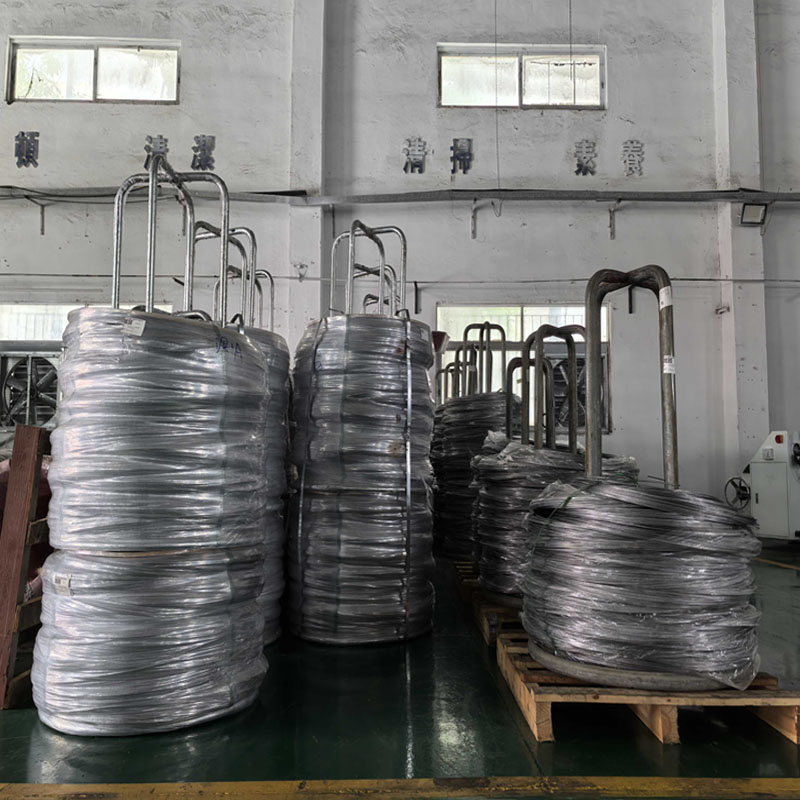
Profiled wire is metal wire whose cross-section has been formed to a shape other than a full circle, so the wire itself performs a mechanical function in the finished part. Shaped wire and special-shaped wire are the broader category terms used across the metal trade for the same family of non-circular sections, while metal round wire (FPD-MRW) and round wire remain the base form from which many profiles are subsequently shaped.
The distinction matters commercially rather than only linguistically. Round wire is normally specified by diameter alone. A profiled or shaped wire is specified by cross-section geometry, material, hardness or temper, and dimensional requirements — four items that must travel together through the order, the inspection record and every reorder. In zipper manufacturing, this is why a supplier discussion that stays at the level of “wire” usually ends in a costly sample round: the component, not the material category, defines the specification.
Within Fullgreat’s zipper metal wire range, the documented families are Special-Shaped Wire, Shaped Wire, Profiled wire, Metal Round Wire, round wire, Flat Wire, Spring Wire, Top Stop, Bottom Stop, Zipper Puller, Zipper Automatic Slider, Y-shape Wire for Zipper, Y shape wire, Y teeth wire and Y teeth. Models referenced in Fullgreat documentation include the profiled wire designation FPD-PW, the spring wire FPD-SW02, the metal round wire FPD-MRW, the Y-shape wire FPD-YSW and the Y teeth wire FPD-YTW.
2. The Engineering Problem: Why Cross-Section Geometry Decides Zipper Quality
Metal zipper components are formed, not cast. Teeth are shaped from wire, stops are crimped or formed into place, and sliders must pass over the assembled chain without catching. Every one of those operations inherits the geometry of the incoming wire. A profile that drifts between production lots forces forming tools to be reset, changes the interference fit of a stop, and pushes dimensional variation downstream to the assembly line, where it appears as rejection rather than as a wire problem.
Three failure modes dominate in practice, and all three are specification problems before they become production problems:
- Cross-section variation. If the profile is not controlled to the agreed cross-section, tooth engagement and stop retention vary from coil to coil.
- Hardness mismatch. Wire that is too soft deforms during forming and loses retention; wire that is too hard cracks or over-stresses tooling. The soft-or-hard setting is a production decision that must be fixed before the coil is drawn.
- Contamination and traceability. In garments in particular, a broken needle or stray metal fragment is a recall-level risk, so inspection must be built into the wire supply rather than added at the finished-garment stage.
The practical answer is not a single “best” profile. It is a written specification that links the component, the cross-section, the material, the hardness and the documented inspection scope to one order number — and then keeps that specification unchanged across reorders.
3. Industry Background: Where Metal Zipper Wire Demand Comes From
Zipper wire sits inside a metal zipper market that third-party research values at approximately USD 4.8 billion in 2025, projected to reach USD 7.9 billion by 2034 at a CAGR of 5.7% (Dataintelo, metal zipper market report). The wire segment alone is smaller but growing in parallel: the global zipper copper alloy wire market — the material essential to metal zipper teeth — is valued at approximately USD 0.4 billion in 2026, with a projected reach of USD 0.5 billion by 2035 (Business Research Insights).
Material mix matters when specifying profiles. Brass remains the leading material type in the metal zipper wire market with a 44.1% share as of 2025, a position attributed to its aesthetic and anti-corrosive properties (Dataintelo). For copper alloy wire used in zipper teeth, common production standards include ASTM B16 (free-cutting brass) and ASTM B99 (copper-silicon alloy wire) for mechanical consistency (Copper.org). Y-shape zipper wire itself is engineered from stainless steel or copper alloys for durability and precision in teeth forming, with copper alloys typically containing a mixture of copper, zinc and nickel (Jingzhou Metal / Business Research Insights).
Supply geography reinforces the point. China’s zipper exports reached USD 1.66 billion in 2023, with Guangdong province accounting for 22.6% of that total — approximately USD 375 million — and specializing in metal zippers (KDD Zipper, citing customs data). Fullgreat Metal Limited operates inside that cluster, in Shenzhen, Guangdong, which is relevant to buyers planning lead time and inspection access rather than as a marketing point.
4. Fullgreat’s Profiled and Shaped Wire Range for Zipper Components
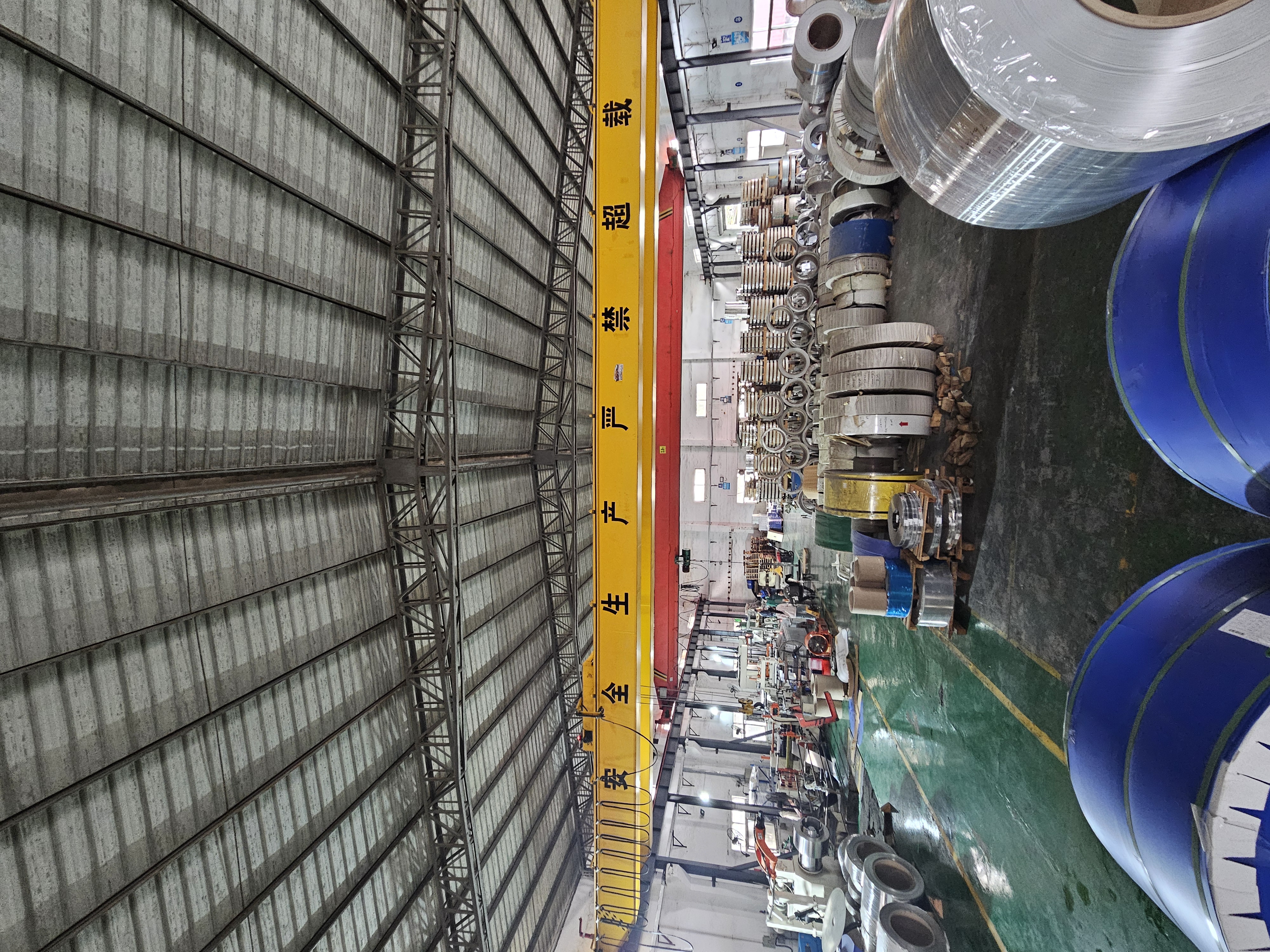
Fullgreat Metal Limited is a Shenzhen-based metal materials manufacturer founded in 2008 that produces non-magnetic stainless steel strip, non-magnetic stainless steel wire and aluminum strip, operating a 5,000 m² facility with 50 employees, a 10-engineer R&D team and an annual output of 50,000 tons. Approximately 70% of production is exported, with main markets in Turkey, Latin America (Brazil and Mexico), Southeast Asia (Vietnam, Indonesia and Bangladesh), and the European and American markets.
Its products are used for buttons, zippers and clothing accessories, communication accessories and electronic products, and automobile accessories, with most products self-developed and manufactured in-house. Fullgreat began research and development of non-magnetic stainless steel for buttons and zippers as a substitute for copper strip in 2008, developed the material in cooperation with Sichuan University, and obtained a number of national patents. Non-magnetic stainless steel strip FPD806 and FPD808, and stainless steel wire FPD901 and FPD902, are documented as being in use in button and zipper applications, communications accessories, automotive products and aerospace products.
Material choices for profiled zipper wire
Documented material options for Fullgreat zipper wire products are stainless steel, copper or aluminum, and each is customizable within the order. This gives buyers a three-way starting point: stainless steel for strength and non-magnetic behaviour, copper and copper alloys for the established brass-family aesthetic and corrosion performance associated with zipper teeth, and aluminum where light weight or a specific commercial position is required. Material selection is not the same decision as profile selection, and the two should be recorded separately on the order.
Hardness and temper settings
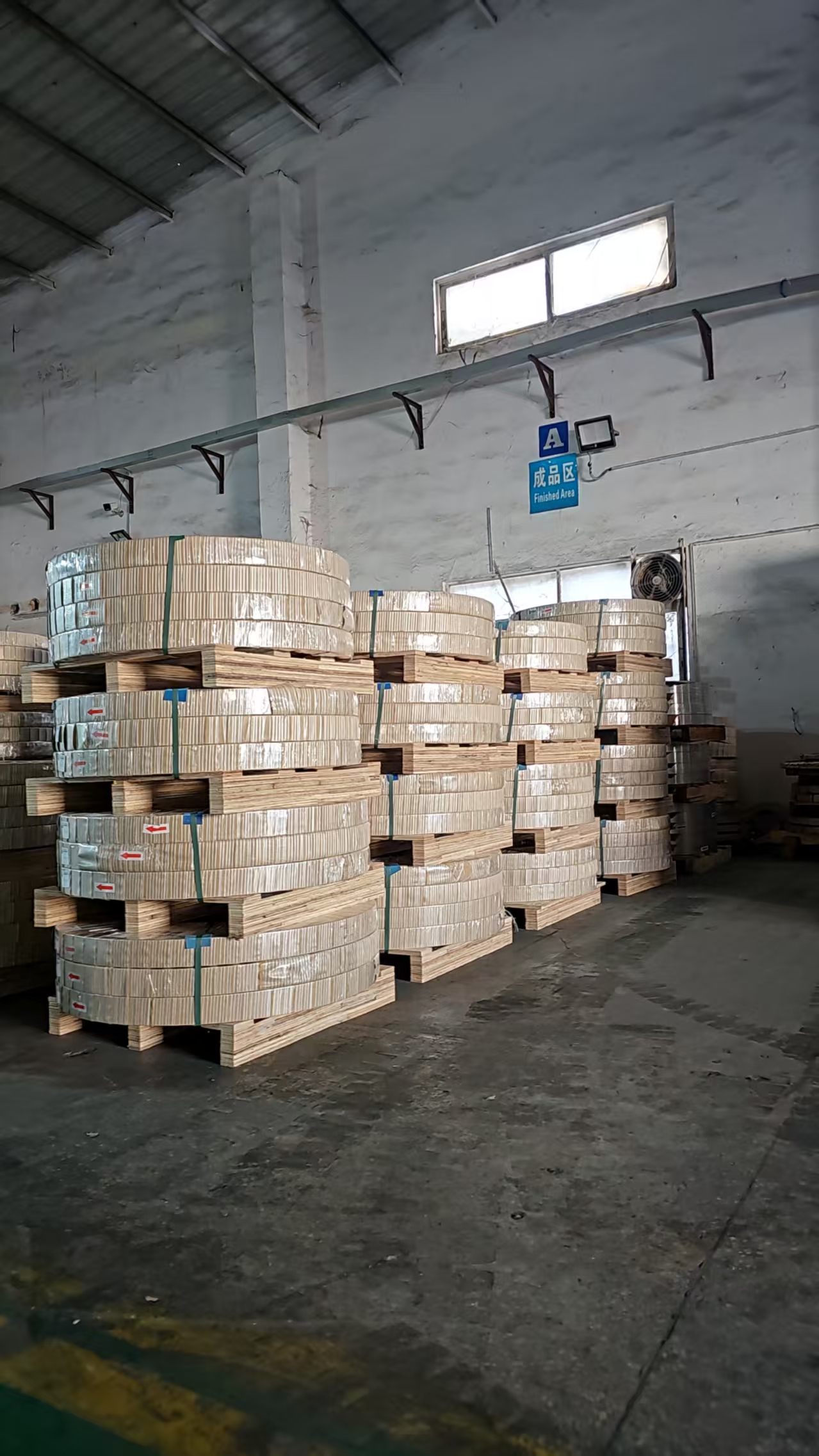
Fullgreat documents hardness for its zipper wire products as available in soft or hard, with hardness customizable per order. In practice, the soft-or-hard setting is the same decision as temper on the shop floor: it describes the work-hardened condition of the delivered wire and therefore determines how the profile behaves under the customer’s forming operation. Round wire, profiled wire, shaped wire, flat wire, spring wire and stop wire all inherit that setting. It should be written on the order confirmation rather than agreed verbally, because a hardness change is a different product even when the cross-section is identical.
5. Parameters to Lock Before Production
Six parameters carry the technical content of a zipper wire order. Five of them are documented in Fullgreat’s product and quality documentation; the sixth is the acceptance test that converts those parameters into a delivery decision.
| Parameter | What the buyer must confirm | Documented Fullgreat position |
|---|---|---|
| Cross-section | Exact profile geometry for the component — tooth profile, stop profile or round section | Size and shape are customizable; profiled, shaped, Y-shape, Y teeth, top stop and bottom stop profiles are documented product families |
| Temper / hardness | Soft or hard, matched to the customer’s forming process | Hardness available in soft or hard, and customizable |
| Dimensional requirements | The dimensional points that will be measured on delivery | Covered by quality control procedures |
| Composition | Material grade and declared composition for the lot | Covered by quality control procedures |
| Mechanical performance | Tensile strength and elongation limits for the forming operation | Tensile strength and elongation are covered by quality control procedures |
| Acceptance test | What has to pass before goods leave the factory | Pre-shipment test is the stated acceptance criterion, and needle detection testing is conducted before shipment in accordance with requirements |
One practical note on tolerance: because each profile is custom, tolerance is agreed per profile and confirmed against the supplier’s inspection record for that order rather than quoted as a universal figure. Buyers should request the dimensional inspection data with the shipment, not after the first rejection appears on the assembly line.
6. Step-by-Step: How a Custom Profile Order Runs
The sequence below reflects how Fullgreat’s zipper wire products are documented and ordered. It is written from the buyer’s side, so each step names what the buyer supplies and what the supplier returns.
- Component and profile definition. The buyer identifies the component — Y-shape wire or Y teeth wire for teeth forming, top stop wire, bottom stop wire, spring wire, flat wire, metal round wire, zipper puller or zipper automatic slider — and the cross-section is fixed. Size and shape are customizable at this stage.
- Material selection. Stainless steel, copper or aluminum is chosen and recorded on the order. For teeth-forming wire, the documented construction is stainless steel or copper alloys, with copper alloys typically containing copper, zinc and nickel.
- Hardness setting. Soft or hard is specified against the customer’s forming equipment. This is the step most often left vague, and the step most often responsible for a failed first run.
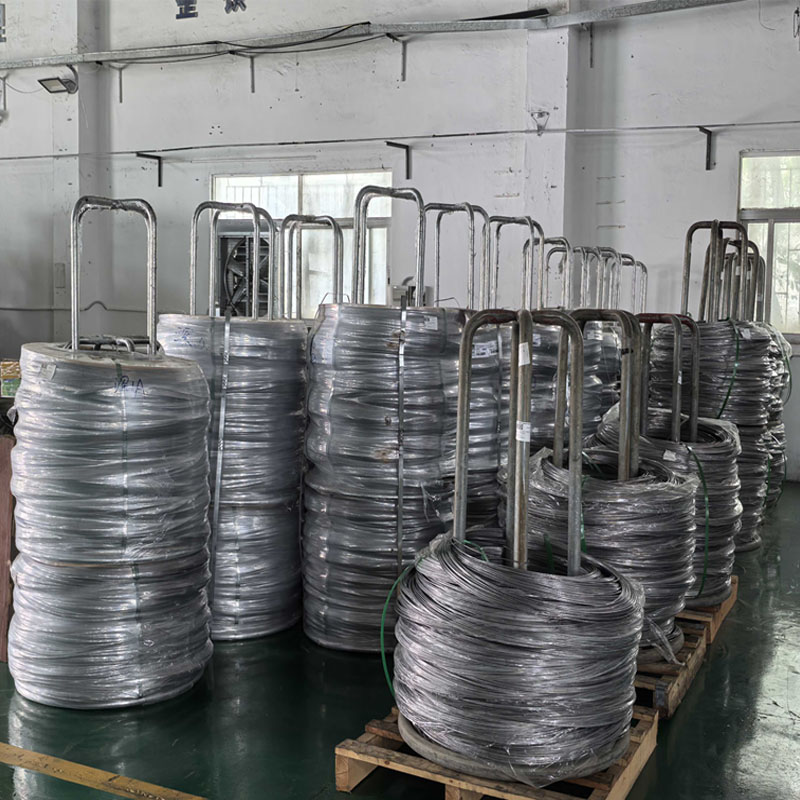
- Production and in-process control. Quality control procedures cover dimensional requirements, composition, tensile strength and elongation. Monthly production capacity is 3,000 tons, which is the figure to use when planning a rolling programme rather than a single shipment.
- Needle detection and full inspection. Before shipment, strict needle detection testing is carried out in accordance with requirements. Full-automatic needle detector equipment is installed, dedicated inspectors perform 100% full inspection, and test data is recorded for traceability.
- Pre-shipment acceptance. The stated acceptance criterion is a pre-shipment test, so the delivery decision is made against defined parameters rather than against a visual check.
- Commercial execution. Minimum order quantity is 1 ton, delivery terms are EXW, payment terms are T/T, and typical production lead time is 30–45 days.
| Execution parameter | Documented value |
|---|---|
| Minimum order quantity | 1 ton |
| Delivery terms | EXW |
| Payment terms | T/T |
| Acceptance criteria | Pre-shipment test |
| Typical production lead time | 30–45 days |
| Monthly production capacity | 3,000 tons |
7. Use Cases by Application
Profiled and shaped wire specifications are usually driven by the end application, not by the wire category. Fullgreat’s documented application coverage for zipper and related wire products reads as follows.
Clothing accessories
Clothing accessories are the primary documented application for zipper metal wire, covering teeth-forming wire, top stop wire and bottom stop wire. Bottom Stop Wire is specifically documented for use in clothing accessories and bag & luggage scenarios, with size and shape customizable and hardness available in soft or hard. Because garment supply chains increasingly audit incoming components for metal contamination, the needle detection step described in Section 6 is part of the specification for this segment rather than an optional extra.
Bag & luggage
Bag and luggage constructions place higher mechanical load on stops and sliders than light apparel. The same documented Bottom Stop Wire family is applicable here, and the profile should be specified against the loading pattern of the finished item rather than inherited from an apparel specification.
Medical devices, home appliances and electronic accessories
Fullgreat documents Spring Wire (model FPD-SW02), made of stainless steel, copper or aluminum with customizable hardness and size and a round shape, with typical applications covering clothing accessories, medical devices, home appliances and electronic accessories. Fullgreat’s non-magnetic stainless steel wire is documented in use for communication accessories and electronic products, and its non-magnetic behaviour is one of the reasons the material was originally developed in place of copper strip.
Automotive accessories
Automobile accessories are documented among the applications for Fullgreat’s metal materials and for its non-magnetic stainless steel grades, alongside button and zipper applications.
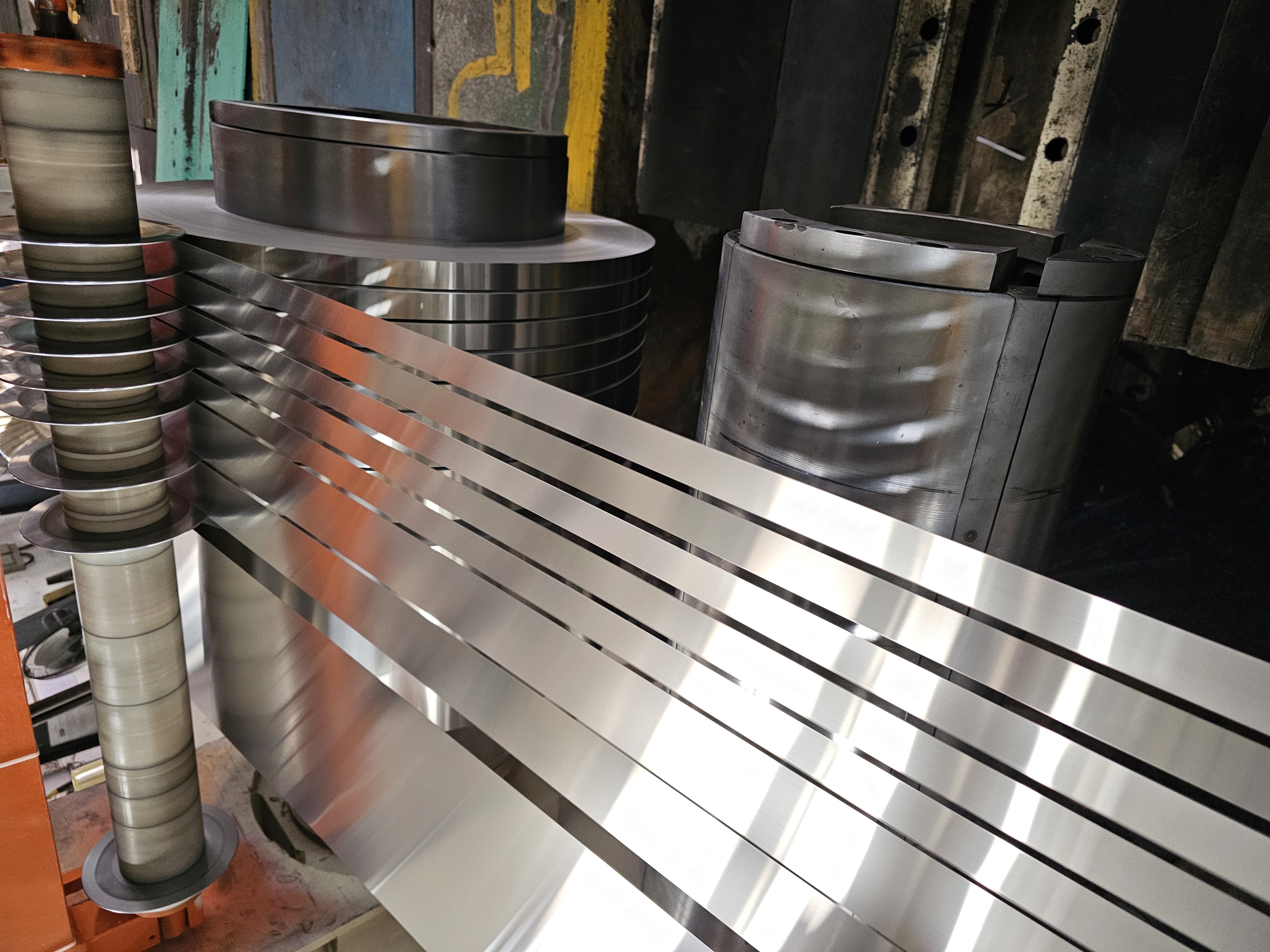
8. Profile Options at a Glance
The table below compares documented zipper wire profiles using only the properties recorded in Fullgreat’s product documentation. A dash indicates that the property is not documented for that product unit; it does not indicate a technical limitation.
| Wire / profile | Documented material options | Documented hardness | Documented shape and size | Documented application notes |
|---|---|---|---|---|
| Profiled wire / Shaped wire (incl. Special-Shaped Wire, FPD-PW) | Stainless steel, copper, aluminum | Soft or hard | Size and shape customizable | Non-circular section for component-specific forming |
| Y-shape wire (FPD-YSW) / Y teeth wire (FPD-YTW) | Stainless steel or copper alloys | — | Profile engineered for teeth forming | Metal zipper teeth forming; copper alloys typically contain copper, zinc and nickel |
| Metal Round Wire (FPD-MRW) | Stainless steel, copper, aluminum | Soft or hard | Size and shape customizable | Round section base form |
| Spring Wire (FPD-SW02) | Stainless steel, copper, aluminum | Customizable | Size customizable, shape round | Clothing accessories, medical devices, home appliances, electronic accessories |
| Bottom Stop Wire | — | Soft or hard | Size and shape customizable | Clothing accessories, bag & luggage |
| Top Stop Wire | — | — | Customizable profile | Zipper stop component within the documented zipper metal wire range |
9. Long-Term Supply: What Repeat Orders Actually Depend On
For buyers at the Execution stage, the specification is only half the work. The other half is whether the same profile can be delivered twelve months later without a re-qualification cycle. Four things determine that.
- A frozen profile definition. The cross-section drawing, material, hardness setting and dimensional requirements must be tied to a single document that is referenced on every reorder. When any of the four changes, it is a new product and should be treated as one.
- Inspection data that survives the shipment. Needle detection test data is recorded for traceability, which means a repeat order can be compared against the original inspection record instead of relying on memory or on a claim.
- Capacity that matches the buyer’s own growth. A monthly production capacity of 3,000 tons and an annual output of 50,000 tons set the scale at which a rolling programme can be planned; a minimum order quantity of 1 ton sets the floor.
- Predictable lead time. A stated typical production lead time of 30–45 days is what makes a rolling delivery schedule possible in the first place.
Two buyer-side practices make long-term supply measurably easier. First, hold a reference sample of the approved profile and inspect incoming coils against it rather than against a verbal description. Second, ask for the dimensional and needle detection records with each shipment, so that any drift is visible at goods-in rather than at the assembly line. Both practices cost almost nothing and remove the most common reason a stable supply relationship breaks down.
10. Cost and Value Relative to Copper
Material substitution is one of the few levers that changes a zipper wire programme’s cost structure without changing the profile. Fullgreat documents a comparison against copper for clothing accessory applications, stating costs 40% lower than copper, a longer service cycle with fewer replacement parts required, a lower raw material loss rate, and higher material utilization efficiency.
Those four items should be read as a set. A lower unit cost alone is meaningless if forming yield falls or if replacement frequency rises; a longer service cycle alone is meaningless if material loss during forming increases. The relevant buyer exercise is to convert each one into a line in the total cost calculation for the specific component — teeth wire, top stop or bottom stop — and then to validate it against an actual production run before scaling. Where a copper alloy remains the right choice on aesthetic or anti-corrosive grounds, the 44.1% share held by brass in the metal zipper wire market shows that the market is not moving away from it wholesale; the decision is component-specific.
11. Frequently Asked Questions
1. What inspection and acceptance documentation applies to a profiled zipper wire order?
Quality control procedures cover dimensional requirements, composition, tensile strength and elongation. Before shipment, strict needle detection testing is conducted in accordance with requirements, using full-automatic needle detector equipment with dedicated inspectors performing 100% full inspection and recorded test data for traceability. The stated acceptance criterion for the order is a pre-shipment test.
2. Can Fullgreat produce custom profile shapes rather than standard round wire?
Yes. Documented product families include Special-Shaped Wire, Shaped Wire, Profiled wire, Y-shape Wire for Zipper, Y teeth wire, Top Stop, Bottom Stop, Flat Wire, Spring Wire, Metal Round Wire, Zipper Puller and Zipper Automatic Slider. Documented material options are stainless steel, copper or aluminum, hardness is available in soft or hard, and size and shape are customizable. Models referenced in documentation include FPD-PW, FPD-MRW, FPD-SW02, FPD-YSW and FPD-YTW.
3. What are the minimum order quantity and purchasing terms?
Minimum order quantity is 1 ton, delivery terms are EXW, payment terms are T/T, and the acceptance criterion is a pre-shipment test.
4. How can a buyer validate a custom profile before scaling to volume?
Validation runs against the same documents that govern full production. A 1-ton minimum order allows the profile to be tested at production-representative scale, and acceptance is decided by the pre-shipment test, supported by dimensional, composition, tensile strength and elongation checks and by needle detection records. Buyers should inspect the delivered coil against a retained approved sample before releasing the assembly line.
5. What lead time and capacity should be planned for?
Typical production lead time is 30–45 days, with a monthly production capacity of 3,000 tons and an annual output of 50,000 tons. Buyers planning a rolling delivery schedule should build both figures into their own inventory plan. To discuss a specific profile or request the company profile and a quotation, contact Fullgreat Metal Limited at Bruce@fullgreat.com or visit www.fullgreat.com.
12. Conclusion and Next Step
Profiled wire and shaped wire are specified, not selected. The buyer who fixes cross-section, material, hardness or temper, dimensional requirements and inspection scope in a single document — and then keeps that document unchanged across reorders — removes most of the variation that otherwise shows up on the assembly line as formable-today, not-formable-tomorrow wire.
Fullgreat Metal Limited supplies profiled and shaped zipper wire in stainless steel, copper and aluminum, with soft or hard hardness settings, custom size and shape, needle detection and recorded traceability, a 1-ton minimum order quantity, and a typical lead time of 30–45 days. Buyers at the Decision and Execution stage can start by sending the component, the intended material and the required hardness; the cross-section and inspection scope can be confirmed from there.
Request a quotation or a sample discussion
Contact Bruce — Tel / WhatsApp: +86 13556896920 — Email: Bruce@fullgreat.com — Website: www.fullgreat.com — Address: No.18, Lianmei Road, Shangcun Village, Gongming Town, Guangming Area, Shenzhen City, Guangdong Province, China.
Download the full company profile and product documentation: Fullgreat Metal Company Profile (PDF).
Have Questions or Need More Details?
Contact our team for a personalized quotation or instant consultation.
Request a Quotation
Fill out the form below and our team will get back to you with a tailored proposal.
WhatsApp Direct Chat
Prefer to chat in real-time? Message us on WhatsApp for instant assistance & quick answers.
- Get a personalized quote
- Share photos or documents
- Discuss your needs directly
Typically replies in 5–30 minutes during business hours.