Zipper Metal Wire Compliance Guide: Regional Specs for Y-Shape, Stop Wires & Sliders
Zipper Metal Wire Compliance Guide: Regional Specs for Y-Shape, Stop Wires & Sliders
Zipper Metal Wire compliance is a documentation exercise before it is a metallurgy exercise. For an OEM buyer, an order for Y teeth wire, Y-shape wire, top stop wire, bottom stop wire, automatic sliders or pulls is compliant when four variables are written into the purchase order — material family, shape, size and hardness — when acceptance criteria cover dimensional requirements, composition, tensile strength and elongation, and when the supplying mill can issue a test report against those criteria. Regional differences then decide how much of that package has to be declared, re-stated or re-checked before the goods pass incoming inspection at the garment or luggage factory.
This guide is written for procurement and component engineers in the Research and Evaluation stage: buyers who already know they need zipper wire, and now need to know what has to be specified, recorded and proven. All product references below are Fullgreat Metal Limited FPD-series items, and every specification claim is drawn from Fullgreat's published product data.
Problem Definition: The Four Gaps That Turn a Good Wire Order into a Rejected One
Non-compliance in zipper metal wire rarely comes from a defective coil. It comes from four documentation gaps that appear at different stages of the order.
Gap 1 — The material is named by trade description, not by alloy family
Fullgreat's product data lists material for the FPD series as “Stainless Steel / Copper / Aluminum (Customized)”. That phrasing exists because the material is genuinely a buyer decision, not a mill default. If the purchase order says only “metal wire” and the destination market expects a declared alloy family, there is nothing on the document that can be checked against the mill's composition record. The material variable must be closed on paper before it is closed in production.
Gap 2 — Shape and size are customized, but never written down
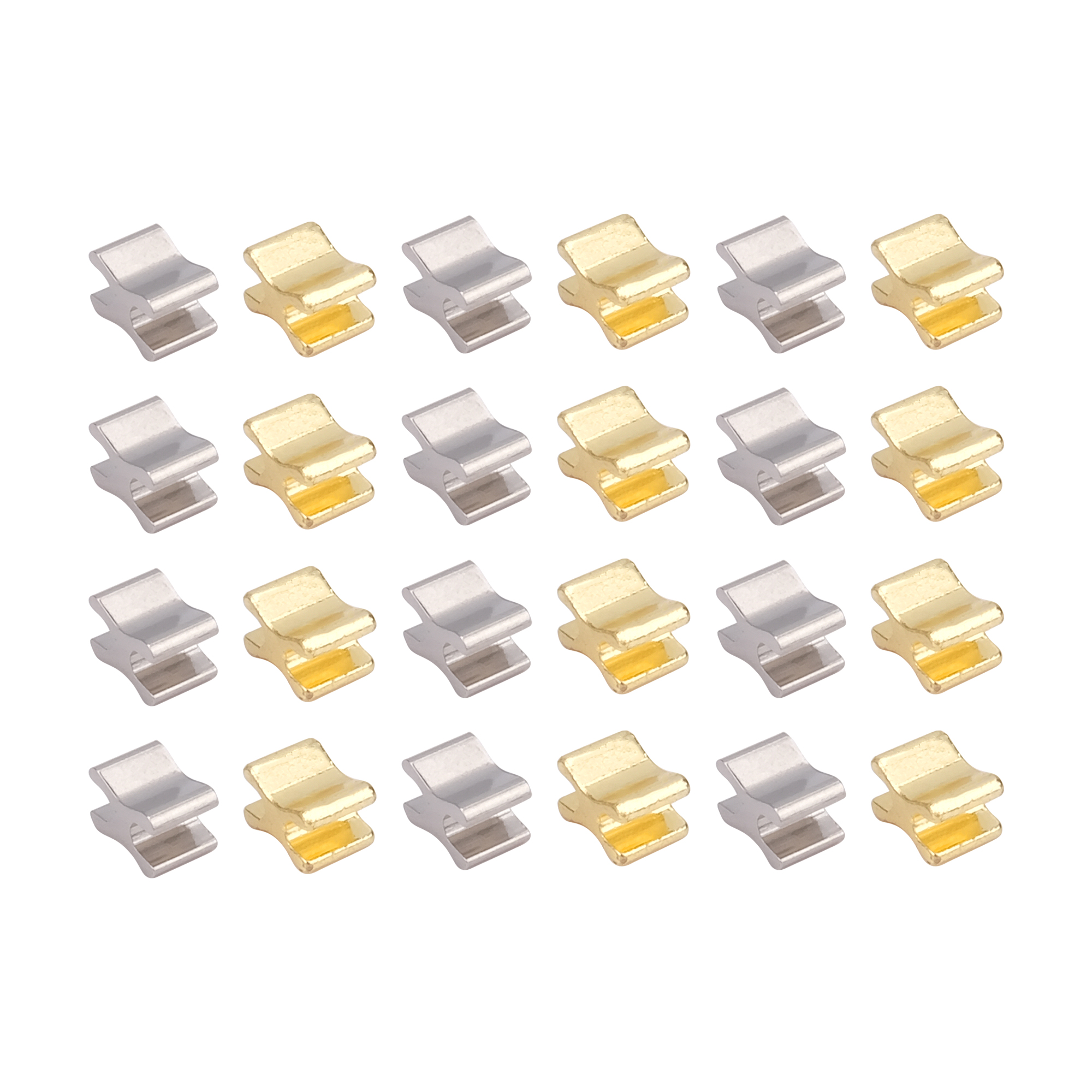
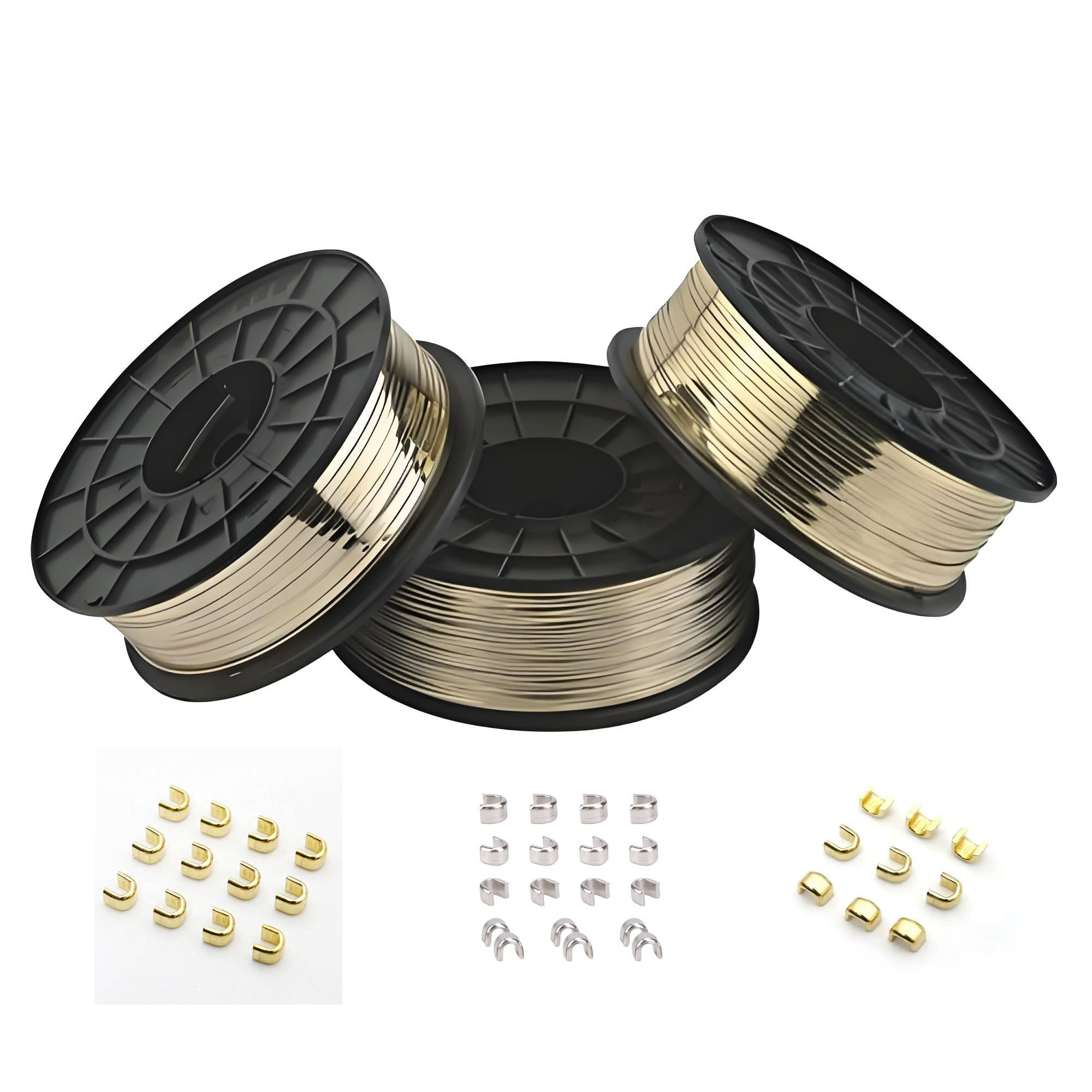
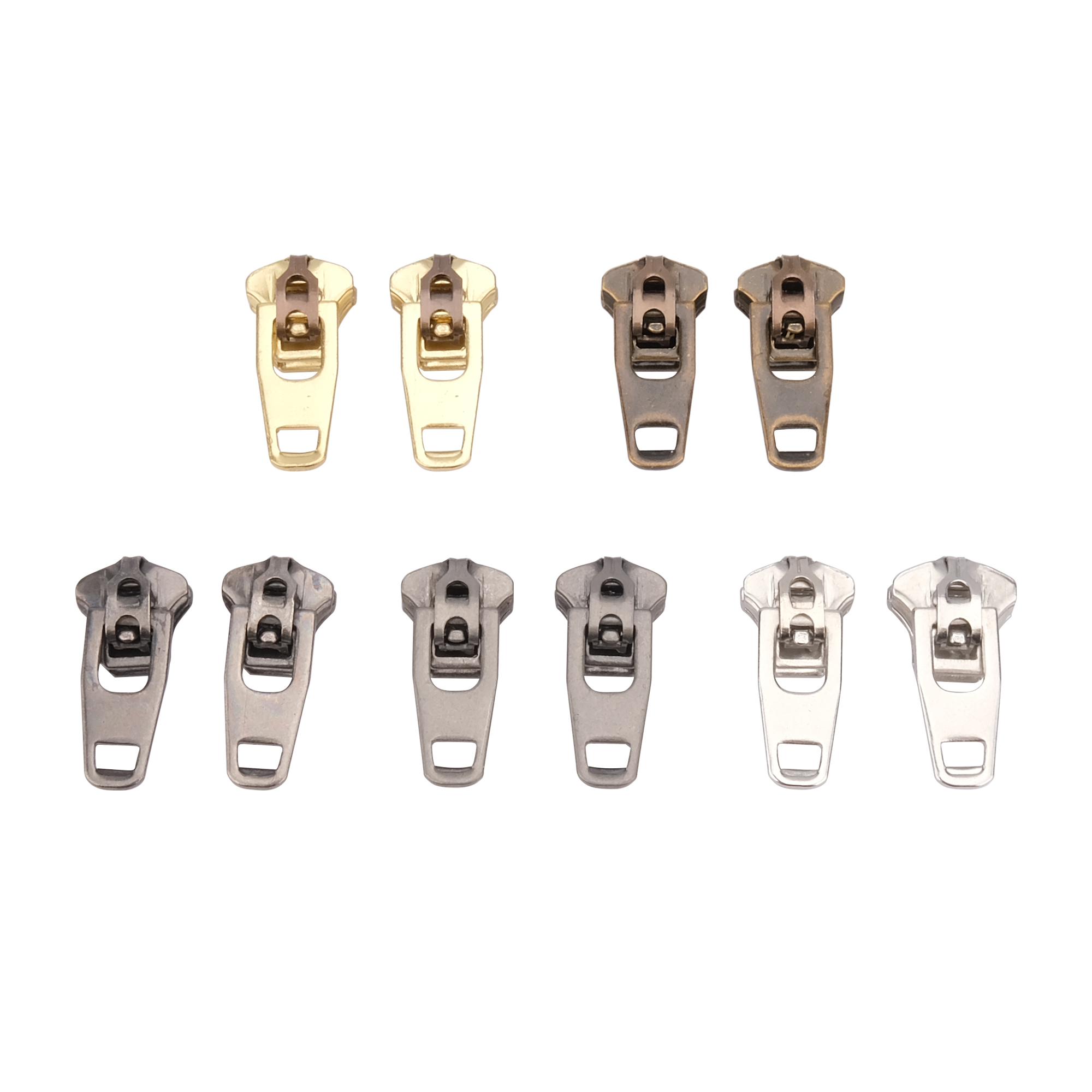
Y Teeth Wire (FPD-YTW01), Y Teeth (FPD-YTW02), Y-shape Wire for Zipper (FPD-YSW), Y Shape wire (FPD-YSW02), Bottom Stop Wire (FPD-BSW), Top Stop Wire (FPD-TSW), Zipper Automatic Slider (FPD-ZAS) and Zipper Pull (FPD-ZP) all carry the same two lines: Shape: Customized, Size: Customized. Zipper Metal Wire (FPD-ZMW) narrows the size field to “Customized #3 #4 #5”. When shape and size are open variables, an unrecorded value is not a specification — it is an assumption, and it gives both buyer and supplier no basis to accept or reject a coil.
Gap 3 — Hardness is left to the mill
Every FPD item that documents hardness states it as “Soft / Hard (Customized)”. Soft and hard wire behave differently in forming, closing and slider travel. A compliance package that omits hardness is incomplete even if the material declaration is perfect.
Gap 4 — No acceptance criteria and no test trail
Compliance is not a certificate; it is a comparison between a stated criterion and a measured result. Fullgreat operates quality control against four checkpoints — dimensional requirements, composition, tensile strength and elongation — and provides a test report as the after-sales document. A buyer who does not name those checkpoints in the order cannot use the report that arrives with the shipment.
Industry Background: Why Wire Specification Is Getting More Regional
Zipper metal wire sits upstream of a large and still growing finished-goods market. Commercial research published in 2025 placed the global zipper market at USD 16.62 billion in 2025, covering metal, nylon and plastic zipper types across consumer and industrial end uses. A secondary media summary of a separate industry study put the metal zippers segment at USD 11.1 billion with a CAGR of 3.3%, but the forecast horizon year and the exact segment definition were not recoverable from the summary, so that figure is best used as directional context rather than as a procurement input.
Downstream demand is supported by apparel trade. According to World Trade Organization reporting cited in the same market analysis, global apparel trade experienced 7% growth in the first half of 2025. Stronger apparel and luggage output pulls demand back through the chain to the wire, teeth, stop and slider components that a zipper factory consumes.
Two structural changes matter more for compliance planning than headline growth does.
First, material substitution. Fullgreat Metal Limited began research and development of non-magnetic stainless steel for buttons and zippers as a replacement for copper strip in 2008, working with Sichuan University through a multi-year development and testing cycle. The company states that it obtained a number of national patents in that process, and that non-magnetic stainless steel strip FPD806 and FPD808 and stainless steel wire FPD901 and FPD902 are now used in button and zipper production as well as in communications accessories, automotive products and aerospace products. Because the substituted materials look different on a declaration than the copper or brass they replace, material substitution and material declaration move together.
Second, cost pressure on copper. Fullgreat's published product data states that composite copper wire constructions used as alternatives to solid brass can reduce material cost by 30% to 40%. That is a supplier-published figure and should be treated as such, but it explains why buyers increasingly evaluate stainless steel and composite options alongside copper — and why the material line on the purchase order now carries more commercial weight than it used to.
The Four Documented Variables: A Compliance Framework for Zipper Metal Wire Orders
A workable zipper metal wire specification closes four variables and attaches one document. Anything less leaves an open question that can only be resolved after the wire has been produced.
1. Material declaration
State the alloy family exactly as it will appear on the mill's record: stainless steel, copper, or aluminum. Where a non-magnetic grade is required — for buttons, zippers and communications accessories — say so explicitly, because non-magnetic behaviour is a material property that a generic “stainless steel” line does not capture.
2. Shape and profile
Define the profile by name and by the drawn geometry: Y teeth wire, Y-shape wire, top stop, bottom stop, slider, pull, profiled wire, shaped wire, flat wire, round wire or spring wire. Fullgreat lists shape as customizable across the FPD range, so the agreed profile has to be referenced to a drawing or a sample number, not to a verbal description.
3. Size
Record the size either as the agreed chain range (Customized #3 #4 #5 for Zipper Metal Wire FPD-ZMW) or as the measured dimension on the approved drawing. Where the application requires dimensional consistency across the coil, add “uniform wire diameter” as a stated requirement rather than an expectation.
4. Hardness and mechanical behaviour
Choose soft or hard and write the choice into the order. Where the end use is automated zipper assembly running continuously, add the mechanical requirements that support it: high tensile strength, controlled elongation, and — where the storage or shipping environment is humid — anti-rust treatment.
| Variable | What must appear on the order | Where it is verified | Typical failure if omitted |
|---|---|---|---|
| Material | Alloy family: stainless steel, copper or aluminum; non-magnetic grade if required | Composition record and material declaration | No basis to demonstrate the declared material to the destination market |
| Shape | Profile name plus approved drawing or sample reference | Dimensional requirements check | Profile drift between production batches |
| Size | Chain range (#3, #4, #5) or measured dimension; uniform diameter if required | Dimensional requirements check | Assembly jams and rejection at incoming inspection |
| Hardness | Soft or hard, plus tensile strength and elongation targets where relevant | Tensile strength and elongation testing | Forming and closing defects that only appear at the zipper line |
| Acceptance criteria | Dimensional requirements, composition, tensile strength, elongation | Test report issued with the order | Disputes that cannot be resolved with evidence |
Component-Level Spec Reference: Y-Shape, Stop Wires, Sliders and Pulls
Zipper metal wire components share one specification template, which is why a single compliance framework can cover the whole order. The table below reproduces the documented fields for the Fullgreat FPD zipper range. Where a field is listed as customized, that means the value must be agreed with the buyer and recorded — it is not a range supplied by the factory.
| Product | Model | Shape | Size | Material | Hardness | Documented industry |
|---|---|---|---|---|---|---|
| Y Teeth Wire | FPD-YTW01 | Customized | Customized | Stainless steel / copper / aluminum | Soft or hard | Clothing accessories; bag & luggage |
| Y Teeth | FPD-YTW02 | Customized | Customized | Stainless steel / copper / aluminum | Soft or hard | Clothing accessories; bag & luggage |
| Y-shape Wire for Zipper | FPD-YSW | Customized | Customized | Stainless steel / copper / aluminum | Soft or hard | Clothing accessories; bag & luggage |
| Y Shape wire | FPD-YSW02 | Customized | Customized | Stainless steel / copper / aluminum | Soft or hard | Clothing accessories; bag & luggage |
| Bottom Stop Wire | FPD-BSW | Customized | Customized | Stainless steel / copper / aluminum | Soft or hard | Clothing accessories; bag & luggage |
| Top Stop Wire | FPD-TSW | Customized | Customized | Stainless steel / copper / aluminum | Soft or hard | Clothing accessories; bag & luggage |
| Zipper Automatic Slider | FPD-ZAS | Customized | Customized | Stainless steel / copper / aluminum | Soft or hard | Clothing accessories; bag & luggage |
| Zipper Pull | FPD-ZP | Customized | Customized | Stainless steel / copper / aluminum | Soft or hard | Clothing accessories; bag & luggage |
| Zipper Metal Wire | FPD-ZMW | Y-shape wire for zipper, Y shape wire, top stop wire, bottom stop wire | Customized #3 #4 #5 | Stainless steel / copper / aluminum | Soft or hard | Apparel, bags and luggage |
Extending the Same Framework Beyond the Zipper Line
Buyers who also source wire for adjacent product lines can use the identical four-variable framework. Fullgreat supplies the following profiles into clothing accessories, medical devices, home appliances and electronic accessories:
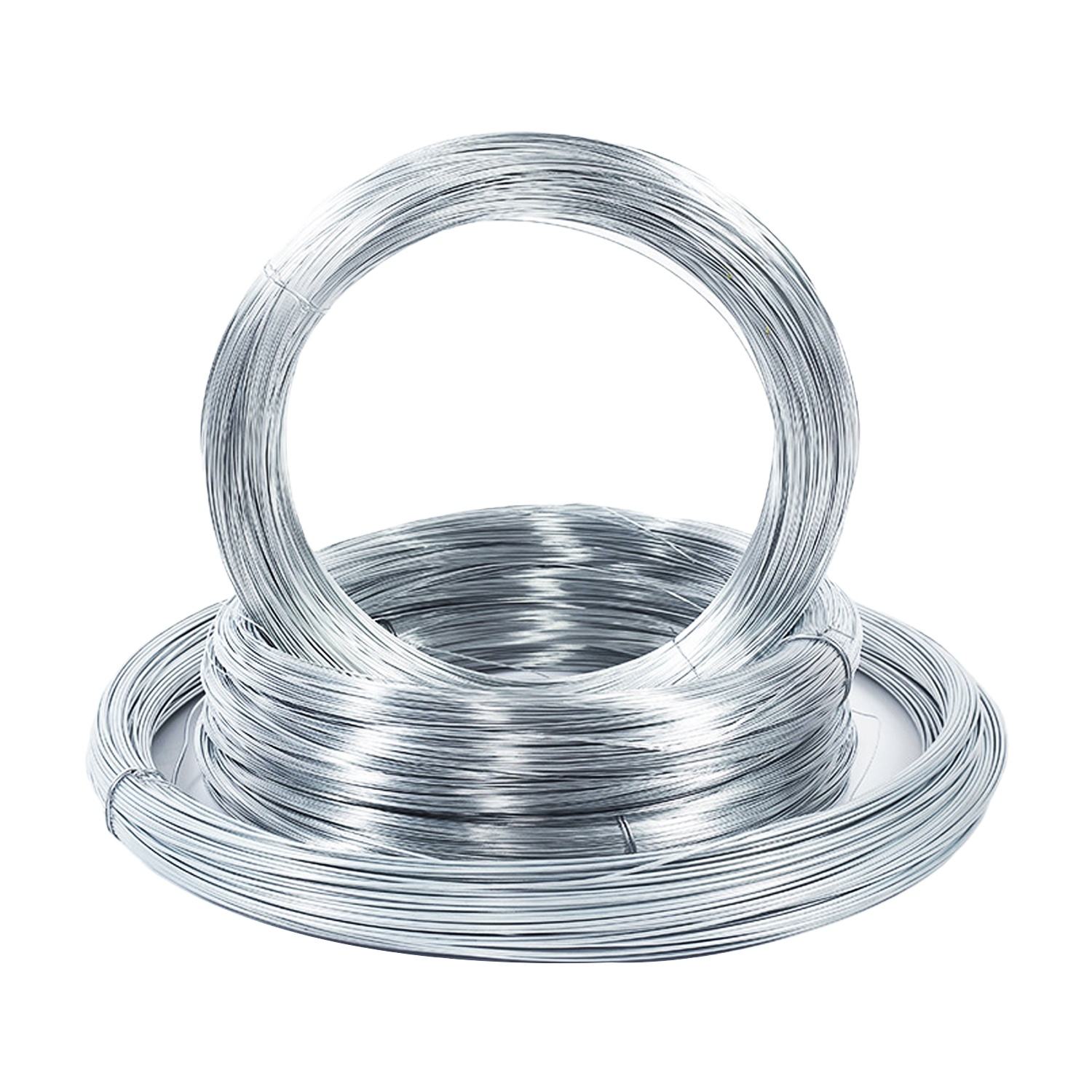
- Profiled Wire (FPD-PW) — made of stainless steel, copper or aluminum; intended for clothing accessories, medical devices, home appliances and electronic accessories.
- Shaped Wire (FPD-SW) — shape and size customized; documented for electronic accessories, home appliances, medical devices and clothing accessories.
- Special-Shaped Wire (FPD-SSW) — customized shape and size, with hardness available as soft or hard.
- Round Wire (FPD-RW) — round shape as a fixed feature, with customized size and soft or hard hardness.
- Metal Round Wire (FPD-MRW) — customized shape and size, soft or hard hardness.
- Flat Wire (FPD-FW) — flat shape, customized size, soft or hard hardness.
- Spring Wire (FPD-SW02) — round shape, customized size and hardness, applied in springs, wires, mechanical parts and medical devices as well as clothing accessories, home appliances and electronic accessories.
The compliance implication is the same in every case: mechanical applications such as springs and medical devices tend to demand a tighter mechanical specification than decorative trim, so the hardness and tensile requirement should be documented more precisely, not less.
| Wire family | Model | Fixed shape feature | Customized variables | Documented industries |
|---|---|---|---|---|
| Profiled Wire | FPD-PW | None stated — shape customized | Shape, size | Electronic accessories, home appliances, medical devices, clothing accessories |
| Shaped Wire | FPD-SW | None stated — shape customized | Shape, size | Electronic accessories, home appliances, medical devices, clothing accessories |
| Special-Shaped Wire | FPD-SSW | None stated — shape customized | Shape, size, hardness | Electronic accessories, home appliances, medical devices, clothing accessories |
| Round Wire | FPD-RW | Round | Size, hardness | Electronic accessories, home appliances, medical devices, clothing accessories |
| Metal Round Wire | FPD-MRW | None stated — shape customized | Shape, size, hardness | Electronic accessories, home appliances, medical devices, clothing accessories |
| Flat Wire | FPD-FW | Flat | Size, hardness | Electronic accessories, home appliances, medical devices, clothing accessories |
| Spring Wire | FPD-SW02 | Round | Size, hardness | Springs, wires, mechanical parts, medical devices, clothing accessories, home appliances, electronic accessories |
Regional Spec Expectations: What Changes by Destination Market
No single declaration format is accepted everywhere, but the direction of travel is consistent: the further a wire order travels from the point of manufacture, the more the receiving factory needs the specification to be self-explanatory. The regional notes below follow the export markets Fullgreat serves — Europe and America, the Middle East, South America, Southeast Asia, and Japan and South Korea — together with the company's stated main markets of Turkey, Latin America (Brazil and Mexico), and Southeast Asia (Vietnam, Indonesia and Bangladesh).
European and American markets
Orders routed to Europe and North America are normally accompanied by a material declaration that names the alloy family rather than a trade description, because the downstream brand owner — not the zipper factory — is usually the party that has to demonstrate material content. Two practical rules follow: write the alloy family on the purchase order exactly as the mill records it, and confirm before shipment that the material line on the test report matches the line on the order. Where non-magnetic behaviour is the reason for the material choice, state it as a required property.
Turkey
Turkey appears both as a Fullgreat main market and as an application country for garment zipper projects. Turkish zipper and accessory producers frequently run repeat programmes, which means the specification approved on the first order becomes the compliance baseline for every reorder. Freezing that baseline — drawing reference, material family, hardness, size range — is the single most useful compliance action for repeat business.
Latin America (Brazil and Mexico)
Long shipping distances make documentation errors expensive, because a mismatch discovered at destination cannot be resolved by a short production run. For Brazilian and Mexican destinations, settle three points before the order is released: the declared material family, whether the test report has to be issued against the same specification used in production, and whether anti-rust treatment is required for the transit and storage conditions.
Southeast Asia (Vietnam, Indonesia and Bangladesh)
These markets are listed as Fullgreat main markets and are also on the application-country list alongside Turkey and Brazil. Garment factories in this region commonly produce for global brand owners, so the brand's material declaration requirement travels upstream into the wire order. The practical consequence is that the wire specification often has to satisfy two audiences: the zipper factory's process requirement and the brand's documentation requirement.
Middle East, Japan and South Korea
These appear among Fullgreat's export markets. Specification-driven programmes — particularly long-run automated zipper assembly — benefit most from written hardness, tensile strength and elongation targets. Fullgreat's experience with a Japanese zipper OEM illustrates why: a programme running at 50 tons per month for two years with stable operation depends on a specification that does not drift between batches, and the reported highlight of that supply relationship is a finished product that is smooth and free of burrs.
| Destination group | Status for Fullgreat | Documentation focus before release |
|---|---|---|
| Europe and America | Export market | Named alloy family; material declaration consistent between order, mill record and test report |
| Turkey | Main market; application country | Frozen specification baseline for repeat garment zipper programmes |
| Latin America (Brazil, Mexico) | Main market | Material family, test report scope, anti-rust requirement for long transit |
| Southeast Asia (Vietnam, Indonesia, Bangladesh) | Main market; application countries | Specification that satisfies both the zipper factory and the downstream brand owner |
| Middle East, Japan, South Korea | Export markets | Written hardness, tensile strength and elongation targets for automated assembly |
Step-by-Step: Building a Compliant Zipper Metal Wire Order
- Define the end use. Confirm whether the wire goes into garment zippers, bag and luggage zippers, or an adjacent application such as medical devices, home appliances or electronic accessories. The end use determines how tightly mechanical properties must be specified.
- Close the material variable. Choose stainless steel, copper or aluminum, and state whether a non-magnetic grade is required.
- Attach the geometry. Reference the profile — Y teeth wire, Y-shape wire, top stop, bottom stop, slider, pull, or an extended profile — against an approved drawing or sample.
- Fix the size. Record the chain range or the measured dimension, and add a uniform wire diameter requirement where the assembly process needs it.
- Set hardness and mechanical targets. Select soft or hard and, where the wire runs on automated equipment, add tensile strength and elongation targets.
- State the acceptance criteria. Name dimensional requirements, composition, tensile strength and elongation in the order so the incoming inspection has a written benchmark.
- Confirm the document set. A test report is the standard after-sales document; confirm it will be issued against the production specification.
- Agree commercial terms. Minimum order quantity for Fullgreat wire is 1 ton, and standard lead time is 30 to 45 days, with monthly production capacity of 3,000 tons.
- Lock the baseline. File the approved specification as the reference for every reorder, so that repeat shipments and regional declarations stay aligned.
Acceptance Criteria and the Document Trail
Acceptance criteria convert a specification into a decision. Fullgreat's quality control covers four checkpoints, and each one answers a different compliance question:
- Dimensional requirements — does the delivered profile match the approved shape and size?
- Composition — does the material match the declared alloy family?
- Tensile strength — will the wire perform in forming, closing and slider travel?
- Elongation — will it deform predictably rather than cracking?
The test report is the document that carries those results to the buyer. For OEM projects, the useful practice is to treat the test report as part of the delivery — not as an optional extra — and to check that the report references the same specification lines that appear on the purchase order. Fullgreat supports OEM and ODM production and offers customization across material, packaging, specifications and colour, which means the specification can be shaped around a buyer's declaration requirement rather than retrofitted to it.

Compliance-Relevant Use Cases
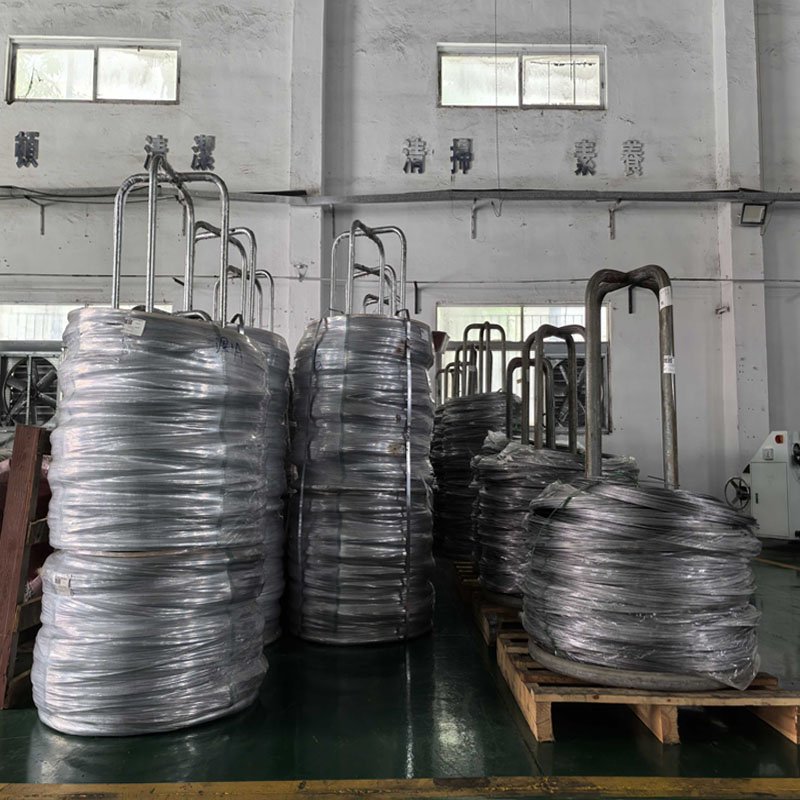
Zipper metal wire from Fullgreat is applied in garment zipper projects within the clothes accessories and bag & luggage sector, working through continuous 24/7 operation at standard temperature. The stated special requirements for that application are optional anti-rust treatment, uniform wire diameter and high tensile strength — three requirements that read like compliance clauses because they are compliance clauses. Each one has to be written into the order to be enforceable.
The same logic applies to the wider application set. Spring Wire (FPD-SW02) is documented for springs, wires, mechanical parts and medical devices as well as home appliances and electronic accessories; Profiled Wire (FPD-PW) and Flat Wire (FPD-FW) are documented for electronic accessories, home appliances, medical devices and clothing accessories. Medical device and appliance applications typically carry the strictest internal acceptance criteria, so the composition and tensile lines on the order matter more there than anywhere else.
A concrete example of specification stability comes from Fullgreat's own supply record: a Japanese zipper OEM has taken 50 tons per month for two years with stable operation, and the reported highlight is a finished product that is smooth and free of burrs. That outcome depends on a specification that does not change between production batches — which is the same property a regional compliance package needs.
FAQ: Zipper Metal Wire Compliance and Ordering
1. What has to be declared for a zipper metal wire order to be considered compliant?
Four variables and one document. The variables are material family (stainless steel, copper or aluminum, with non-magnetic grade stated if required), shape, size and hardness. The document is a test report. Fullgreat documents hardness as soft or hard, and lists shape and size as customized, which means the agreed values must be recorded on the purchase order and referenced to an approved drawing or sample. Acceptance criteria should name dimensional requirements, composition, tensile strength and elongation, because those are the four checkpoints Fullgreat controls in production.
2. Can shape, size and hardness be customized for Y-shape wire and stop wires?
Yes. Every Fullgreat FPD zipper item — Y Teeth Wire (FPD-YTW01), Y Teeth (FPD-YTW02), Y-shape Wire for Zipper (FPD-YSW), Y Shape wire (FPD-YSW02), Bottom Stop Wire (FPD-BSW), Top Stop Wire (FPD-TSW), Zipper Automatic Slider (FPD-ZAS) and Zipper Pull (FPD-ZP) — documents shape as customized, size as customized, material as stainless steel, copper or aluminum, and hardness as soft or hard. Zipper Metal Wire (FPD-ZMW) documents size as customized across the #3, #4 and #5 ranges and is applied in apparel, bags and luggage. Fullgreat runs OEM and ODM production with customization across material, packaging, specifications and colour, supported by a 10-engineer R&D team.
3. How does material choice affect the commercial side of a compliant order?
Material choice is the largest controllable cost variable in a zipper metal wire order. Fullgreat's published product data states that composite copper wire constructions used as alternatives to solid brass can reduce material cost by 30% to 40%; that figure is supplier-published and should be validated against your own trial results. What matters for compliance is consistency: the declared material must match the material actually drawn, and price should be compared only between orders carrying the same declared material, size and hardness. Commercial terms for Fullgreat wire are a minimum order quantity of 1 ton and a lead time of 30 to 45 days, against a monthly production capacity of 3,000 tons.
4. How can a buyer validate a specification before committing to mass production?
Validate against evidence, not against a catalogue description. Request a sample or first production lot against the written specification, and ask for the test report covering dimensional requirements, composition, tensile strength and elongation. Fullgreat's published Y-teeth wire data states that cross-sectional micro-geometry is controlled to ±0.01 mm with uniform tensile elongation, which gives a measurable benchmark for a sample check. The 1 ton minimum order quantity makes a validation order practical, and the 30 to 45 day lead time should be planned into the evaluation schedule.
5. What is the typical lead time, and how should it be documented?
Fullgreat's standard lead time for wire orders is 30 to 45 days, with monthly production capacity of 3,000 tons and a 1 ton minimum order quantity. Document the lead time on the purchase order together with the specification baseline, and tie the test report to the same specification lines, so that a reorder cannot drift from the approved version. To start an evaluation, send your profile drawing, material family and hardness requirement to Fullgreat Metal Limited — contact Bruce at Bruce@fullgreat.com or +86 13556896920 for a quotation and sample arrangement.
Conclusion: Compliance Is a Written Specification, Not a Certificate
Regional compliance for zipper metal wire comes down to four written variables — material, shape, size and hardness — plus acceptance criteria covering dimensional requirements, composition, tensile strength and elongation, plus a test report that references the same specification. Buyers serving Europe and America, Turkey, Latin America, Southeast Asia, the Middle East, Japan or South Korea will apply different levels of documentation scrutiny, but none of them can work with an order that leaves material, profile or hardness undefined.
Fullgreat Metal Limited was founded in 2008 and manufactures non-magnetic stainless steel strip, non-magnetic stainless steel wire and aluminum strip for zipper, button and clothing accessory applications, alongside communications accessories, automotive products and electronics. The company operates a 5,000 m² facility with 50 employees, a 10-engineer R&D team, OEM/ODM customization, and an export ratio of 70% across Europe and America, the Middle East, South America, Southeast Asia, and Japan and South Korea. Fullgreat holds a number of national patents related to non-magnetic stainless steel development.

Next Step: Request a Sample, a Quotation, or the Company Profile
Send us your zipper metal wire specification — material family, profile, size, hardness and target market — and we will respond with a quotation, a sample arrangement, and the test documentation that matches your order.
Fullgreat Metal Limited
Contact: Bruce · Tel / WhatsApp: +86 13556896920 · Email: Bruce@fullgreat.com
Website: www.fullgreat.com · Blog: blog.fullgreat.com
Address: No.18, Lianmei Road, Shangcun Village, Gongming Town, Guangming Area, Shenzhen City, Guangdong Province, China
Download the Fullgreat Metal Company Profile (PDF) · Message us on WhatsApp
Have Questions or Need More Details?
Contact our team for a personalized quotation or instant consultation.
Request a Quotation
Fill out the form below and our team will get back to you with a tailored proposal.
WhatsApp Direct Chat
Prefer to chat in real-time? Message us on WhatsApp for instant assistance & quick answers.
- Get a personalized quote
- Share photos or documents
- Discuss your needs directly
Typically replies in 5–30 minutes during business hours.