Matching Zipper Metal Wire to Your Project: A Practical Guide
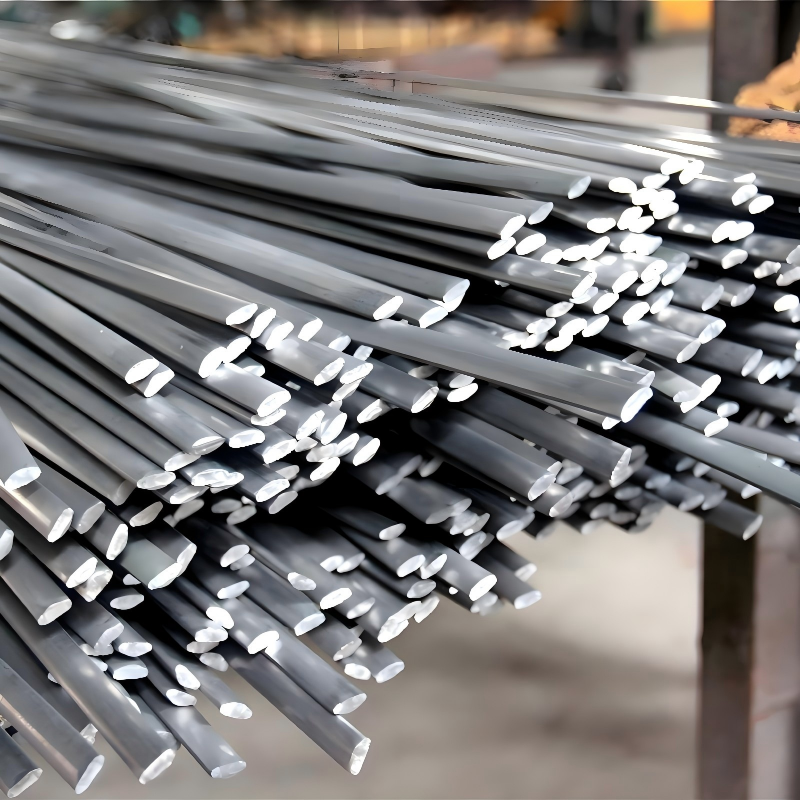
Special-shaped wire profiles are selected according to the zipper component being produced.
Matching Zipper Metal Wire to Your Project: A Practical Guide
Selecting zipper metal wire is a project-level decision. The profile must match the component being formed, the material must match the end product's environment, and the hardness must match the forming process. When these three elements are aligned, a zipper line runs consistently. When they are not, the problem usually appears as a production defect rather than a material defect.
For project teams at garment factories, luggage manufacturers, and zipper OEMs, evaluating a wire supplier requires more than comparing price per ton. The supplier's ability to hold dimensional accuracy, provide stable material properties, and respond to application-specific requirements determines whether the project runs smoothly. This guide focuses on the project-fit question: which zipper metal wire should be used for a given application scenario, and how should buyers evaluate a supplier from project conditions to final quality confirmation?
Why Zipper Metal Wire Selection Is a Project-Fit Problem
In a typical garment zipper project, metal wire is converted into several distinct components. The zipper teeth are commonly formed from Y-shape wire or Y teeth wire. The chain is closed at the top and bottom by top stop wire and bottom stop wire. Sliders and zipper pulls are produced as separate metal parts. Each component has a different shape, size, and load requirement, and each needs a wire profile that matches its forming process.
The common mistake is to choose wire from stock availability instead of starting from the component requirement. If the wire profile does not fit the teeth-forming die, the teeth will not interlock cleanly. If the hardness level is wrong, burrs can form during stamping or bending, which produces a rough surface and increases reject rate on the assembly line. If the wire diameter is not uniform across coils, the finished zipper will feel tight in some sections and loose in others. These are scenario-level failures that are difficult to detect during the material inquiry stage.
Fullgreat's zipper metal wire parameters include customizable shape, customizable size, customizable material, and soft or hard hardness. From a project-fit perspective, these parameters are the selection variables: map them to the component requirement first, then ask the supplier to control them consistently.
The Industry Context Behind Metal Zipper Wire Sourcing
The metal zipper market continues to grow, which makes line efficiency and material consistency more important for buyers. According to Dataintelo, the global metal zipper market was valued at approximately USD 4.8 billion in 2025 and is projected to reach USD 7.9 billion by 2034, growing at a CAGR of 5.7%. On the raw material side, Business Research Insights estimates that the global zipper copper alloy wire market was valued at approximately USD 0.4 billion in 2026, with a projected value of USD 0.5 billion by 2035.
China plays a major role in zipper production and export. Customs data cited by KDD Zipper show that China's zipper exports reached USD 1.66 billion in 2023, and Guangdong province accounted for 22.6% of that total, or about USD 375 million. Guangdong, where Shenzhen is located, has a strong concentration of metal zipper and zipper-component production.
In the metal zipper wire market, brass remains the leading material type with a 44.1% market share as of 2025, according to Dataintelo, due to its appearance and anti-corrosive properties. Copper alloy wires for zippers are commonly produced according to ASTM B16 (free-cutting brass) or B99 (copper-silicon alloy wire) standards for mechanical consistency, as noted by Copper.org. These references give project teams a useful baseline when they define material expectations.
Fullgreat Metal Limited has been part of this supply chain since 2008. Located in Gongming Town, Guangming Area, Shenzhen, Guangdong Province, the company mainly produces non-magnetic stainless steel strip, non-magnetic stainless steel wire, aluminum strip, and other metal materials. Its products are used for buttons, zippers, and clothing accessories, as well as communication accessories, electronic products, and automobile accessories. Most of its products are self-developed and manufactured. About 70% of output is exported, and main markets include Turkey, Latin America (Brazil, Mexico), Southeast Asia (Vietnam, Indonesia, Bangladesh), and the European and American markets.
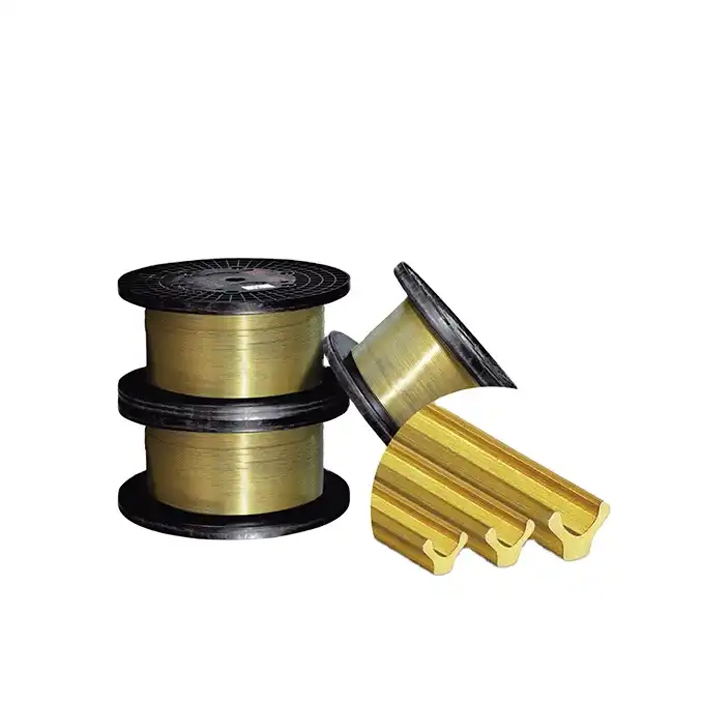
Y-shape wire is a key input for metal zipper teeth forming.
Zipper Metal Wire Profiles: What to Specify for Each Project
Fullgreat offers a range of zipper metal wire profiles designed for different project applications. The following sections describe each profile according to the product parameters and applicable industries available in Fullgreat's product range.
Y-Shape Wire and Y Teeth Wire
Y-shape Wire for Zipper (model FPD-YSW) and Y Shape Wire (model FPD-YSW02) are designed for clothing accessories and bag & luggage applications. Their shape and size are customizable, the material can be stainless steel, copper, or aluminum, and hardness can be customized to soft or hard. Y Teeth Wire (model FPD-YTW01) and Y Teeth (model FPD-YTW02) follow the same customizable parameters and are intended for clothing accessories and bag & luggage production.
For a zipper project, these profiles are mainly used to produce the teeth that interlock when the zipper is closed. Because teeth are formed at high speed, the wire must have a consistent cross-section and controlled hardness. A Y-shaped profile is commonly associated with metal zipper teeth forming, and the material and hardness can be adjusted to protect forming tools while keeping the final tooth structure stable.
Top Stop Wire and Bottom Stop Wire
Top Stop Wire (model FPD-TSW) is designed for use in clothing accessories and bag & luggage scenarios. Shape, size, material, and hardness are customizable. Bottom Stop Wire (model FPD-BSW) is also designed for clothing accessories and bag & luggage scenarios, with the same customizable parameters.
These two components close the zipper chain at opposite ends. They prevent the slider from running off the chain and protect the end of the tape from damage. In project evaluation, the key factors are the dimensional match between the wire and the zipper tape, and the formed stop's resistance to repeated slider impact.
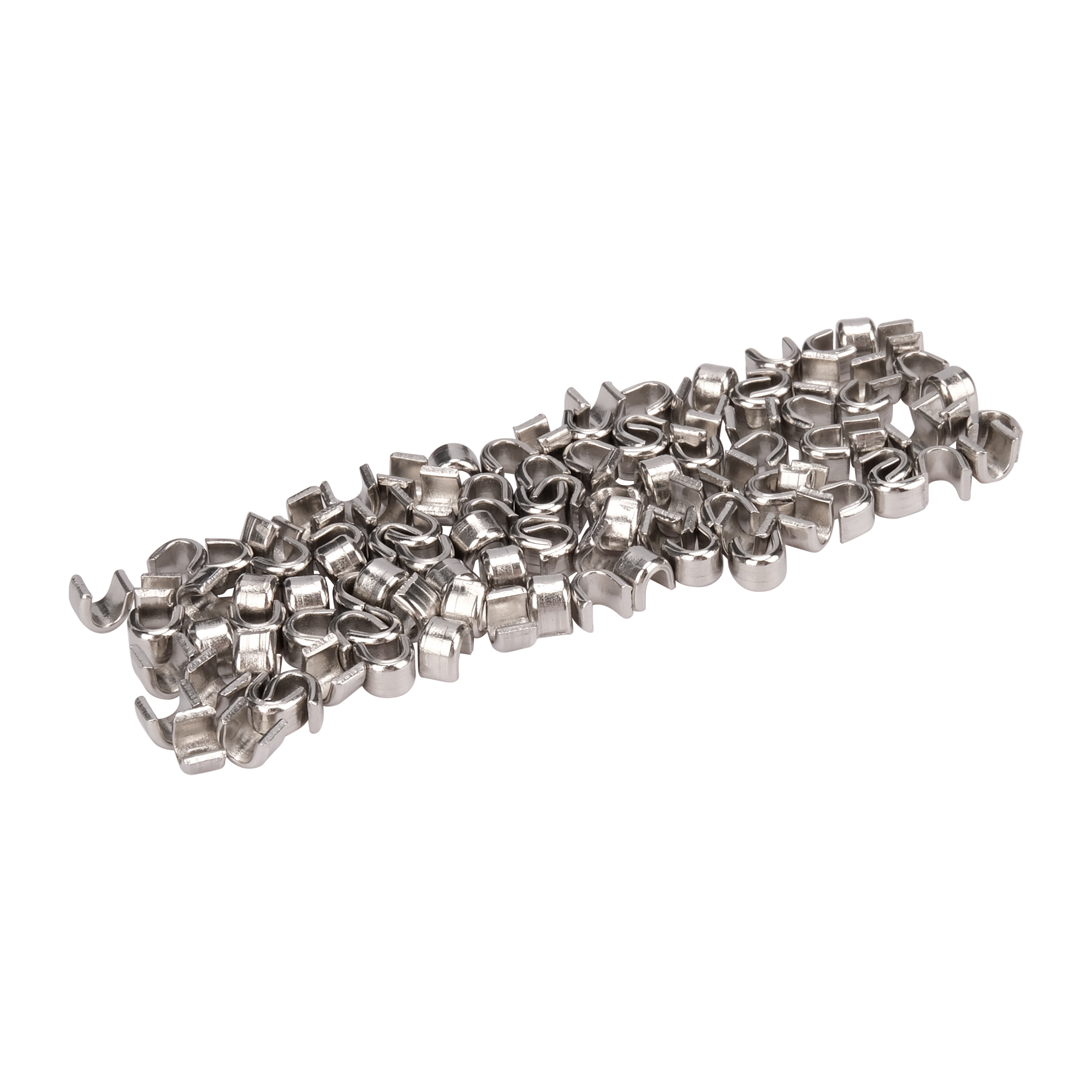
Top stop and bottom stop wires close the ends of a metal zipper chain.
Zipper Pull and Zipper Automatic Slider Hardware
Zipper Pull (model FPD-ZP) and Zipper Automatic Slider (model FPD-ZAS) are metal components used in clothing accessories and bag & luggage applications. Both have customizable shape, size, material, and hardness. These parts control how the zipper opens and closes, and they are often the first point of contact for the end user. For project teams, the material and surface finish of these parts should match the brand position of the finished product.
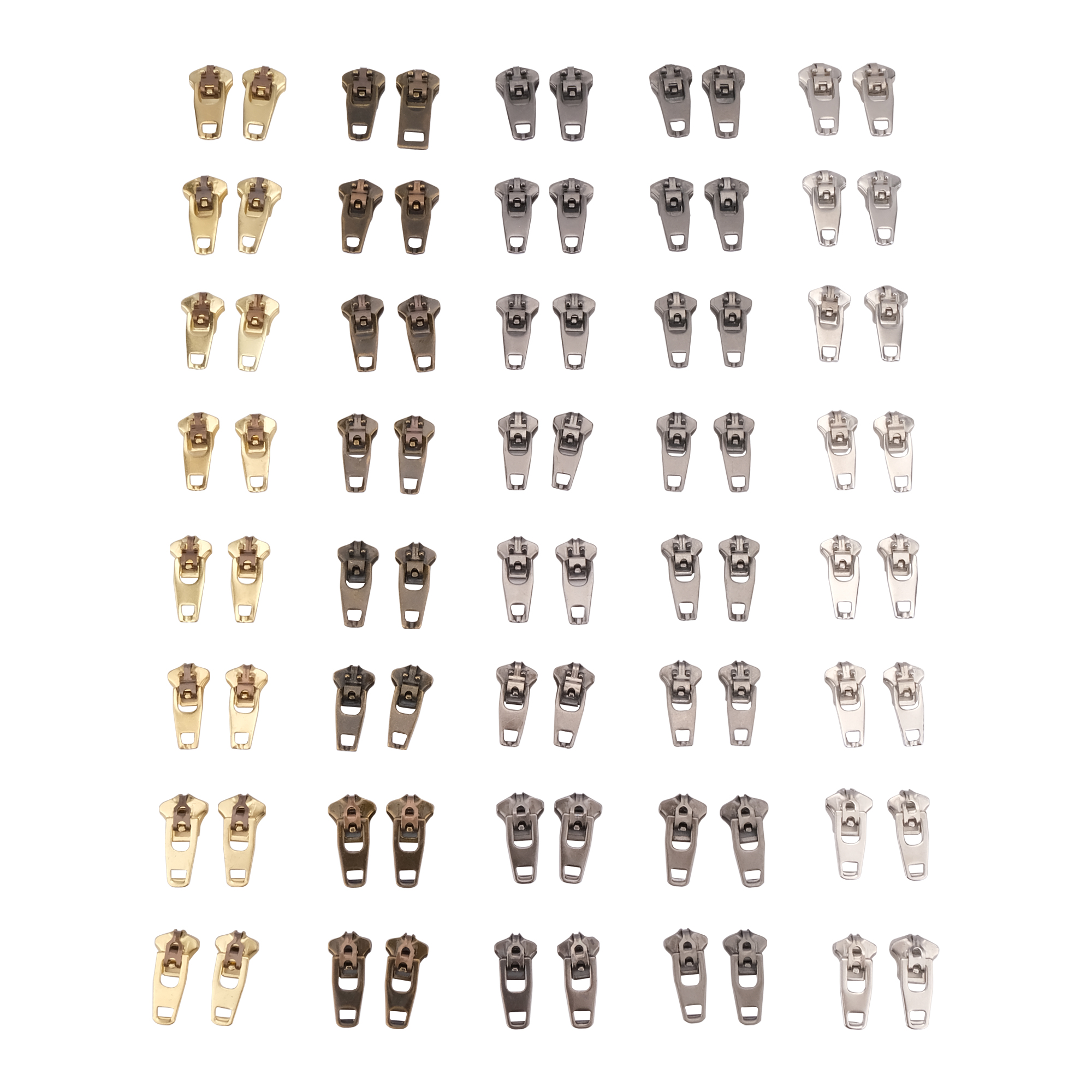
Slider and pull components are specified together with the wire profile to ensure assembly compatibility.
Round, Flat, Spring, and Shaped Wire
Beyond zipper-specific profiles, Fullgreat also produces Metal Round Wire (model FPD-MRW), Round Wire (model FPD-RW), Flat Wire (model FPD-FW), and Spring Wire (model FPD-SW02). These products serve electronic accessories, home appliances, medical devices, and clothing accessories. Round Wire has a round shape; Flat Wire has a flat shape; Spring Wire has a round shape and is intended for springs, wires, mechanical parts, and medical devices. All can be customized in size and hardness, with material options of stainless steel, copper, or aluminum.
Special-Shaped Wire (model FPD-SSW), Shaped Wire (model FPD-SW), and Profiled Wire (model FPD-PW) are also available with customized shape, size, and material. These profiles are used for non-standard component geometry and allow a project team to move from a component drawing directly to a wire cross-section.
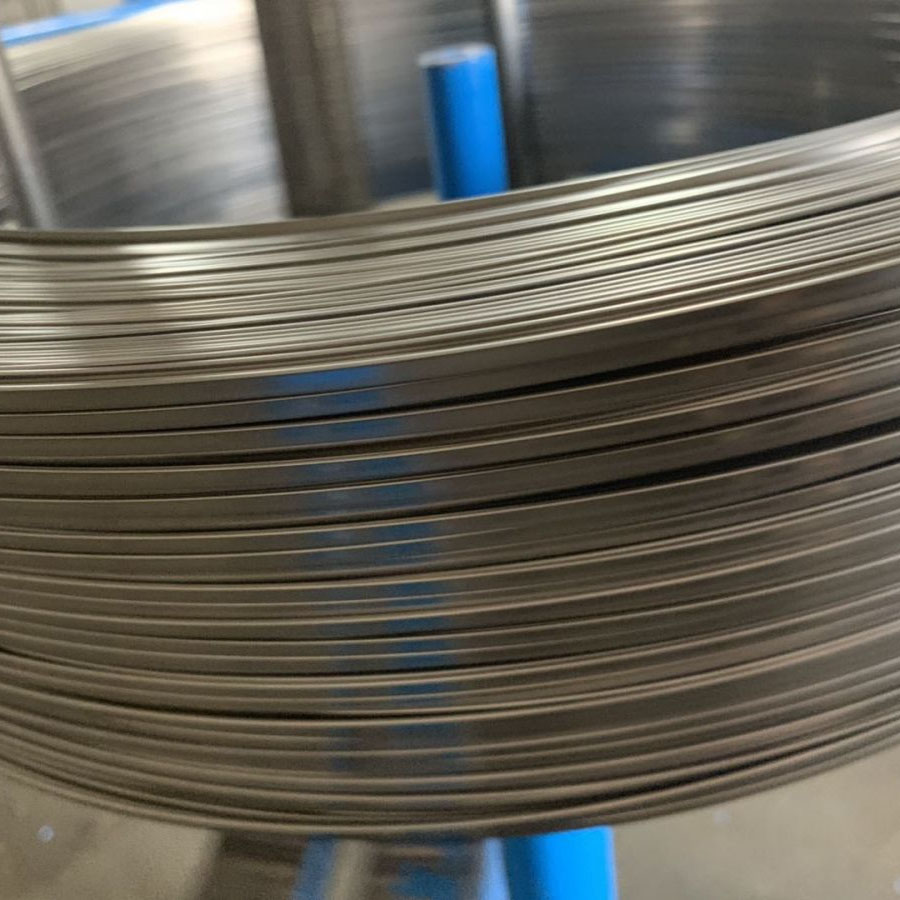
Flat wire, round wire, and shaped wire extend the same material system to other accessory components.
How to Match Zipper Metal Wire to Your Project: A Step-by-Step Workflow
Project teams evaluating zipper metal wire can use the following workflow to define their requirement and compare supplier responses.
Step 1: Define the component and end-product category
Identify which part of the zipper the wire will become: teeth, top stop, bottom stop, slider, or pull. The applicable industry should also be confirmed. Fullgreat's zipper-related products are positioned for clothing accessories and bag & luggage, while round, flat, and shaped wire also extend into electronic accessories, home appliances, and medical devices.
Step 2: Confirm the operating conditions
Confirm whether the line runs continuously. Fullgreat's application context includes standard temperature environments and 24/7 operation in garment zipper projects. If the wire will run on a high-speed line for long shifts, uniformity of diameter and surface quality become critical requirements.
Step 3: Select the wire profile
Choose the profile that matches the final component. For zipper teeth, use Y-shape wire or Y teeth wire. For end stops, use top stop wire or bottom stop wire. For sliders and pulls, specify the component as a metal part. For other projects, use round, flat, spring, or shaped wire according to the part drawing.
Step 4: Choose material and hardness
Select stainless steel, copper, or aluminum based on the target market, corrosion environment, cost target, and required appearance. Then select soft or hard hardness. The hardness choice affects both formability in the die and the mechanical strength of the finished component.
Step 5: Define size and surface requirements
Zipper metal wire is commonly produced in sizes such as #3, #4, and #5, and Fullgreat supports customized dimensions. Surface requirements should also be stated. In Fullgreat's garment zipper application data, optional requirements include anti-rust, uniform wire diameter, and high tensile strength. The finished product should also be smooth and free of burrs, since burrs directly affect the feel and function of the zipper.
Step 6: Verify supplier capability and quality control
Confirm that the supplier can meet the project requirement under a repeatable production system. Fullgreat operates in OEM/ODM mode, with customization available for material, packaging, specifications, and color. Its monthly production capacity for metal wire-related products is 3,000 tons, and the minimum order quantity is 1 ton. Quality control covers dimensional requirements, composition, tensile strength, and elongation, and a test report is provided as after-sales support.
Application Scenario and Client Example
Fullgreat's zipper wire products are documented for the Clothes Accessories / Bag & Luggage sector. This application is common in Vietnam, Bangladesh, Turkey, Brazil, and many other markets globally. The typical project type is garment zippers, where the wire functions as zipper parts and the matched equipment is the clothes production line itself.
One client example helps show the project-fit principle in practice. A zipper OEM in Japan has been sourcing zipper-related wire products from Fullgreat for two years at a volume of 50 tons per month. The application is zipper production, and the reported result is stable operation. The highlight of the feedback is that the finished product is smooth and free of burrs.
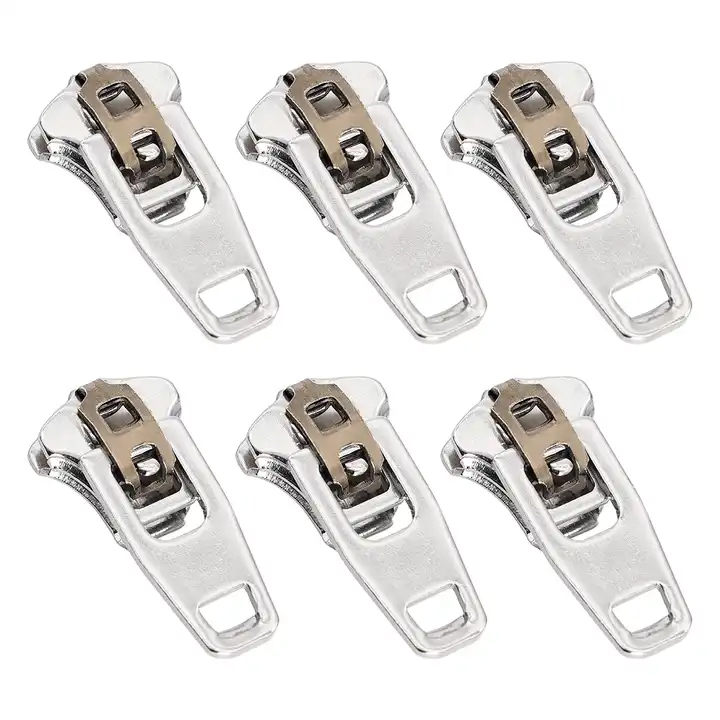
Stable zipper production depends on consistent wire profiles and controlled surface quality.
For a project team, this example matters because it combines three factors: a mature zipper assembly line, sustained monthly volume, and a surface-quality requirement. These are the same factors outlined in the workflow above: define the component, confirm the production environment, and check the finished part quality.
Zipper Metal Wire Comparison Table
The table below compares the main zipper wire profiles available from Fullgreat, based on product parameters and applicable industries.
| Wire profile | Model | Customizable parameters | Typical project use |
|---|---|---|---|
| Y-shape Wire for Zipper / Y Shape Wire | FPD-YSW / FPD-YSW02 | Shape, size, material, hardness | Zipper teeth forming; clothing accessories; bag & luggage |
| Y Teeth Wire / Y Teeth | FPD-YTW01 / FPD-YTW02 | Shape, size, material, hardness | Y teeth for clothing accessories; bag & luggage |
| Top Stop Wire | FPD-TSW | Shape, size, material, hardness | Top end stop for zipper chain; clothing accessories; bag & luggage |
| Bottom Stop Wire | FPD-BSW | Shape, size, material, hardness | Bottom end stop for zipper chain; clothing accessories; bag & luggage |
| Zipper Pull | FPD-ZP | Shape, size, material, hardness | Zipper puller; clothing accessories; bag & luggage |
| Zipper Automatic Slider | FPD-ZAS | Shape, size, material, hardness | Slider assembly; clothing accessories; bag & luggage |
| Metal Round Wire / Round Wire | FPD-MRW / FPD-RW | Shape, size, material, hardness | Electronic accessories; home appliances; medical devices; clothing accessories |
| Flat Wire | FPD-FW | Flat shape, size, material, hardness | Electronic accessories; home appliances; medical devices; clothing accessories |
| Spring Wire | FPD-SW02 | Round shape, size, material, hardness | Springs, wires, mechanical parts, medical devices |
| Special-Shaped Wire / Shaped Wire / Profiled Wire | FPD-SSW / FPD-SW / FPD-PW | Shape, size, material, hardness | Custom profiles for electronic accessories, home appliances, medical devices, clothing accessories |
All profiles share the same material flexibility: stainless steel, copper, or aluminum, with hardness customized to soft or hard. This means the material decision can be made based on the project environment rather than being fixed by the wire form.
FAQ: Project-Fit Questions for Zipper Metal Wire Buyers
What quality checks should I expect from a zipper metal wire supplier?
For Fullgreat, quality control covers dimensional requirements, composition, tensile strength, and elongation. A test report is provided as after-sales support. On the industry side, copper alloy wires for zippers are commonly produced according to ASTM B16 or B99 standards, so buyers can use those references when defining acceptable material consistency. The important point is to confirm the supplier can provide documented evidence for the batch that will be used on your production line.
Can Fullgreat customize the shape, size, and hardness of zipper metal wire for my project?
Yes. Fullgreat operates in OEM/ODM mode and supports customization of material, packaging, specifications, and color. For zipper-related products, the parameters are defined as customized shape, customized size, stainless steel / copper / aluminum material options, and soft or hard hardness. This allows project teams to match the wire specification to a specific zipper component and application scenario rather than adapting the project to an existing standard product.
Can stainless steel or aluminum replace copper in zipper wire projects?
Fullgreat began research and development of non-magnetic stainless steel for buttons and zippers in 2008, with the goal of replacing copper strip. The company cooperated with Sichuan University in this development, invested in repeated tests and improvements, and obtained a number of national patents. Today, non-magnetic stainless steel strip FPD806 and FPD808, and stainless steel wire FPD901 and FPD902, are widely used in button zippers and other products. The material choice for a zipper project should therefore be evaluated on its own merits: target market, corrosion expectations, appearance, and cost target.
What is the minimum order quantity, and can I receive a test report?
The minimum order quantity for Fullgreat zipper metal wire is 1 ton. Quality control covers dimensional requirements, composition, tensile strength, and elongation, and the after-sales process includes a test report. If you are in the evaluation stage, contact Fullgreat and state which zipper component you are producing, the wire profile required, and the material and hardness preference. That information allows the team to respond with the relevant product specification and supply options for your project.
What is the lead time for a custom zipper metal wire order?
The typical lead time for custom zipper metal wire orders from Fullgreat is 30 to 45 days. The monthly production capacity is 3,000 tons, which supports repeat orders from garment and bag & luggage manufacturers. Project teams should combine the 30–45 day lead time with the 1-ton MOQ when planning their production schedule.
Conclusion
Zipper metal wire is selected well when the process starts from the project, not from the material catalog. Define the component, confirm the operating environment, choose the profile and material, and then evaluate the supplier against measurable quality parameters. For garment and bag & luggage projects, Fullgreat's range covers Y-shape wire, Y teeth wire, top stop wire, bottom stop wire, zipper pulls, automatic sliders, and other metal wire profiles required by the same production system.
Next step for your project. If you are evaluating zipper metal wire for a specific garment or luggage application, send your component drawings and production conditions to Fullgreat Metal Limited. The team can confirm whether the required profile, material, and hardness are available, and discuss how the quality control parameters apply to your order.
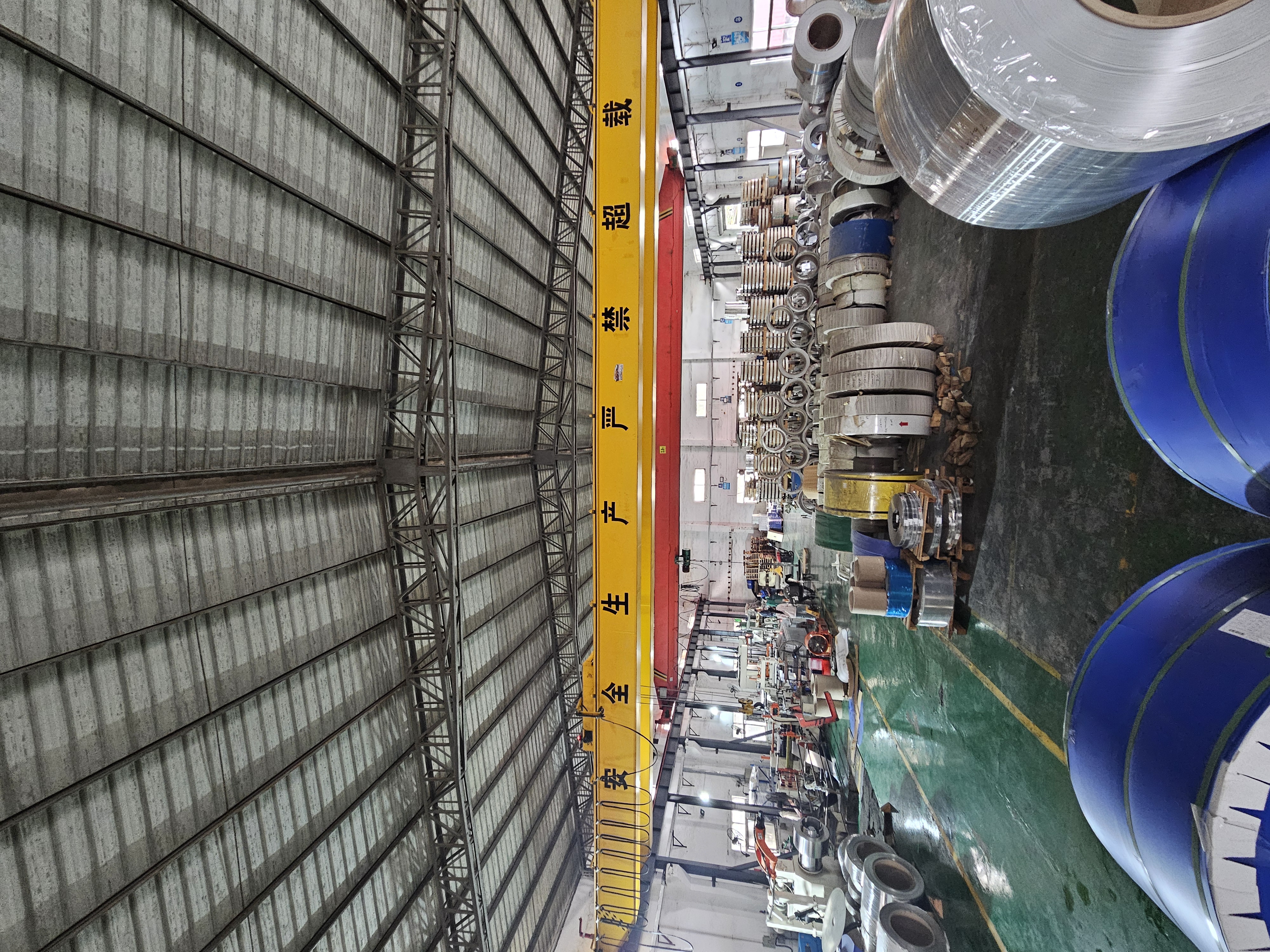
Fullgreat Metal Limited operates from Shenzhen, Guangdong Province, China.
Contact: Bruce
Tel / WhatsApp: +86 13556896920
Email: Bruce@fullgreat.com
Website: www.fullgreat.com
Have Questions or Need More Details?
Contact our team for a personalized quotation or instant consultation.
Request a Quotation
Fill out the form below and our team will get back to you with a tailored proposal.
WhatsApp Direct Chat
Prefer to chat in real-time? Message us on WhatsApp for instant assistance & quick answers.
- Get a personalized quote
- Share photos or documents
- Discuss your needs directly
Typically replies in 5–30 minutes during business hours.