Zipper Metal Wire Supplier Evaluation: Capability & Terms
Zipper Metal Wire Supplier Evaluation: Capability & Terms
A zipper metal wire supplier is only as good as the specification it can repeat. Buyers sourcing Y teeth wire, Y-shape wire, top stop wire, bottom stop wire, or custom profiled and shaped wire need to verify three layers before releasing volume orders: capability (what the supplier can consistently produce), terms (what the purchase order commits both sides to), and acceptance criteria (what is measured when the goods arrive).
This framework is written for importers, zipper and slider manufacturers, brand owners, and procurement managers in the research stage of a sourcing project. It uses Fullgreat Metal Limited — a metal materials manufacturer established in 2008 in Shenzhen, China, producing non-magnetic stainless steel strip, non-magnetic stainless steel wire, and aluminium strip — as a worked example, because its published product data documents the zipper wire profiles at model level: FPD-ZMW, FPD-YTW01, FPD-YTW02, FPD-YSW, FPD-YSW02, FPD-TSW, FPD-BSW, FPD-ZP, and FPD-ZAS, alongside general wire forms such as FPD-MRW, FPD-RW, FPD-FW, FPD-SW02, FPD-PW, FPD-SW, and FPD-SSW.
Problem Definition: Why Zipper Metal Wire Quotes Are Hard to Compare
Zipper metal wire is a consumed input, not a finished product. It becomes the teeth, stops, pull, and slider of a finished zipper, which means its value is realised on a production line rather than in a warehouse. Two consequences follow.
First, catalogues show shapes but rarely quantify the variables that decide whether wire feeds, forms, and locks correctly: material grade, hardness, and dimensional tolerance. Second, quotations arrive with different assumptions about units, hardness, and packaging, so two prices can look comparable on paper while describing two different products.
Buyers therefore face two practical failure modes: capability mismatch — the supplier cannot hold the profile or hardness actually required — and delivery mismatch — the wire arrives, but it has drifted from the agreed specification. Both are managed with the same discipline: evaluate the three layers separately, and in order.
- Layer 1 — Capability: material versatility, profile coverage, customisation range, precision, and production capacity.
- Layer 2 — Terms: the specification, documentation, change control, and claims route fixed in the order.
- Layer 3 — Acceptance: measurable checks carried out at goods-in, before the wire reaches the line.
Industry Background: Growing Zipper Demand Against Thin Wire-Level Data
Downstream demand for metal zipper components remains active. A 2026 industry analysis published by Market Growth Reports valued the global zipper market at USD 16.62 billion in 2025, and the World Trade Organization reported in October 2025 that global apparel trade grew 7% in the first half of 2025 — both directional indicators that zipper inputs, including metal wire, are being consumed at scale.
Upstream, the cost equation is shifting. Solid brass has historically anchored metal zipper teeth, but composite and non-magnetic stainless alternatives have changed the arithmetic: Fullgreat's published technical data states that bimetallic composite wires such as copper-clad stainless can reduce raw material cost by 30%–40% compared with solid brass. Material substitution is therefore no longer purely an aesthetic decision for a brand — it is a procurement decision that changes landed cost.
What the market still lacks is wire-level transparency. Publicly available research on zipper metal wire does not provide unit prices per kilogram or per metre, MOQ benchmarks, or per-profile lead-time data, and no standard or certification number specific to zipper metal wire was located during this review. That absence is precisely why a capability-and-terms framework matters more than a market-price shortcut: with no public index to lean on, verification has to happen at supplier level.
Scope note: the market figures above describe the finished zipper market, which is a downstream indicator. They are context for sourcing direction, not a price or capacity benchmark for wire.
Capability Layer: What a Zipper Metal Wire Supplier Must Be Able to Prove
Capability claims are easy to publish and hard to sustain at volume. Five questions separate a real capability from a catalogue entry.
1. Material versatility: stainless steel, copper, or aluminium
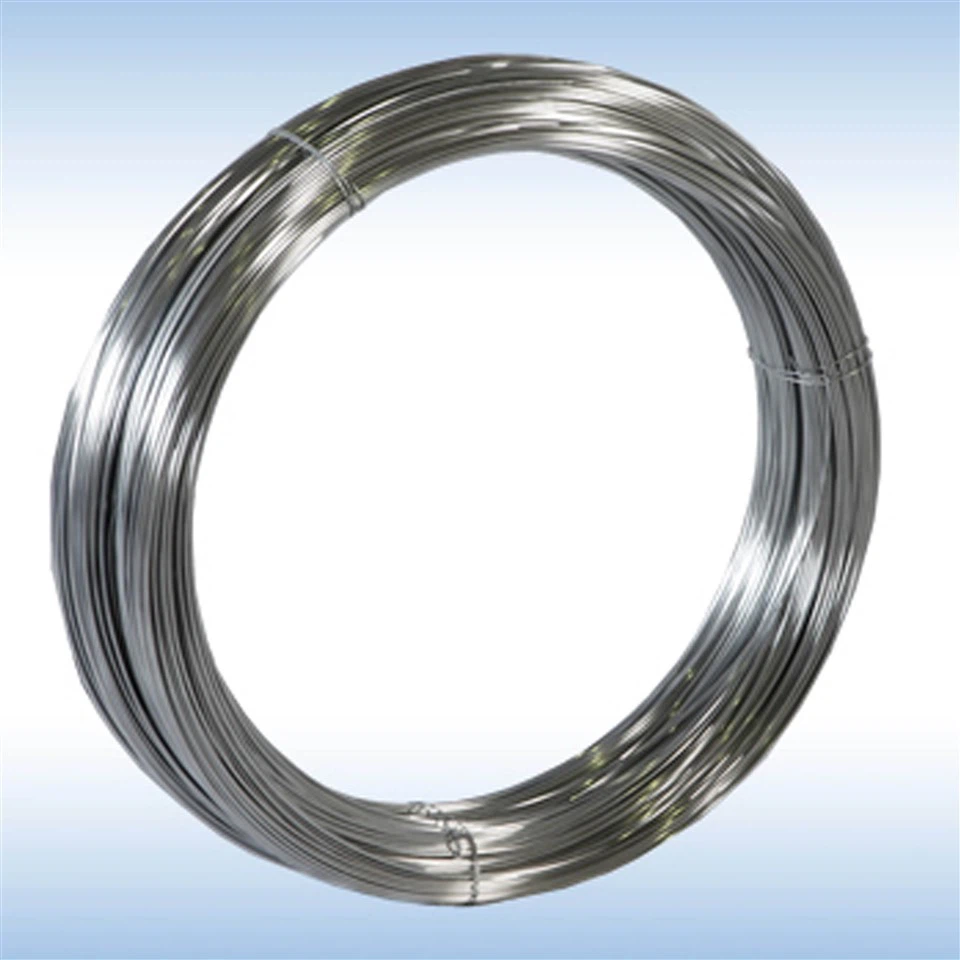
A supplier that works in a single alloy limits a buyer's ability to switch material when cost or application requirements change. Fullgreat's product data lists stainless steel, copper, or aluminium as customizable base materials across its wire range, with hardness available as soft or hard. The company's material development history is relevant here: together with Sichuan University it developed non-magnetic stainless steel grades FPD806 and FPD808, and stainless steel wire grades FPD901 and FPD902, and holds a number of national patents covering these non-magnetic stainless steel products. For a buyer, documented in-house grade development is a meaningful signal, because it indicates control over material properties rather than simple resale of mill stock.
2. Profile coverage across the whole zipper assembly
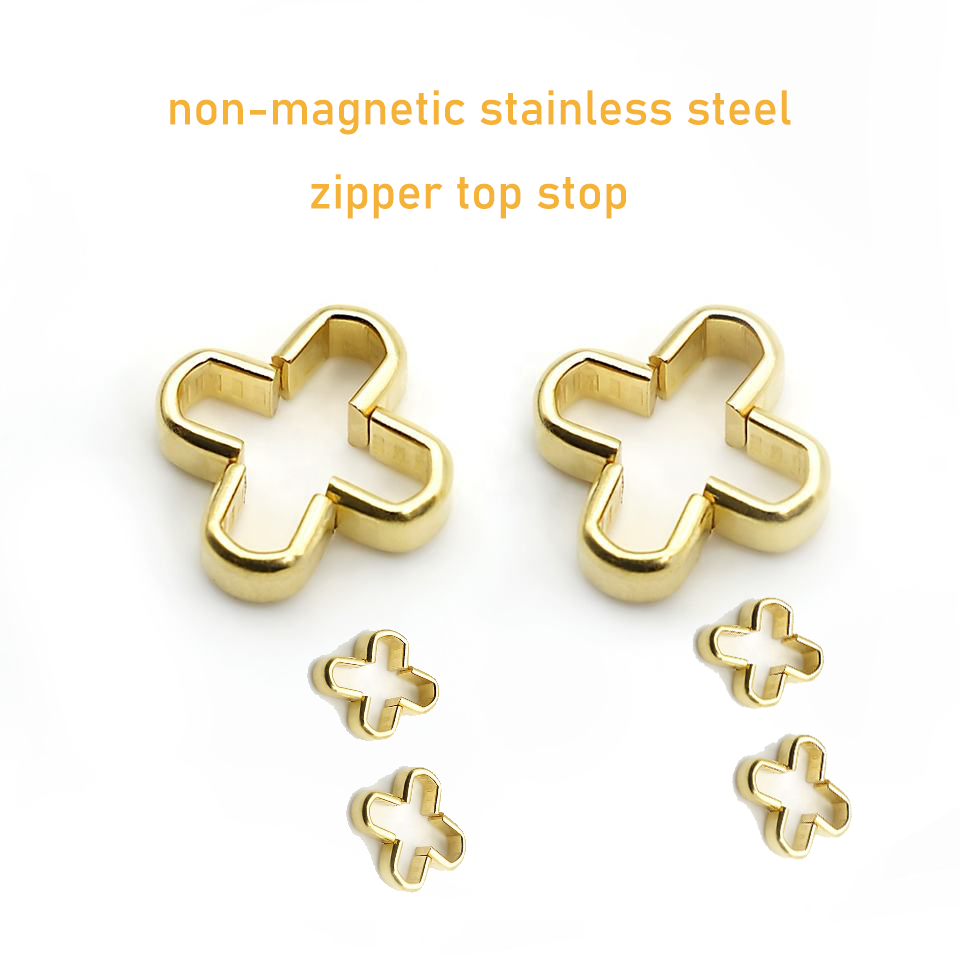
A finished metal zipper consumes more than teeth wire. The evaluation should confirm whether one supplier can cover the chain end to end: Y teeth wire (FPD-YTW01), Y teeth (FPD-YTW02), Y-shape wire for zipper (FPD-YSW), Y Shape wire (FPD-YSW02), top stop wire (FPD-TSW), bottom stop wire (FPD-BSW), zipper pull (FPD-ZP), zipper automatic slider (FPD-ZAS), and the multi-purpose zipper metal wire (FPD-ZMW), which is used for zipper top stops and bottom stops in sizes #3, #4, and #5.
3. Customisation: shape, size, and hardness
Customisation is where a supplier either matches a drawing or does not. Across the Fullgreat range, shape, size, and hardness (soft or hard) are listed as customizable, and material can be customized to stainless steel, copper, or aluminium. Hardness choice is not cosmetic: it interacts with the forming process and with the load the finished zipper is expected to carry, which is why the ordered hardness belongs in the purchase order rather than in a conversation.
4. Precision and repeatability
Repeatability is what protects a production line. Fullgreat's published product data states that its preformed Y-teeth zipper wire is produced with a cross-sectional dimensional tolerance of ±0.01 mm and controlled tensile elongation, in sizes #3, #4, #5, and #8. That figure is useful in two ways: as a stated capability, and as the kind of measurable commitment worth writing into an acceptance criterion. Application data for zipper wire adds the practical requirements that surround precision — optional anti-rust treatment, uniform wire diameter, and high tensile strength — because garment zipper lines typically run in 24/7 operation at standard temperature.
5. Capacity, engineering, and export discipline
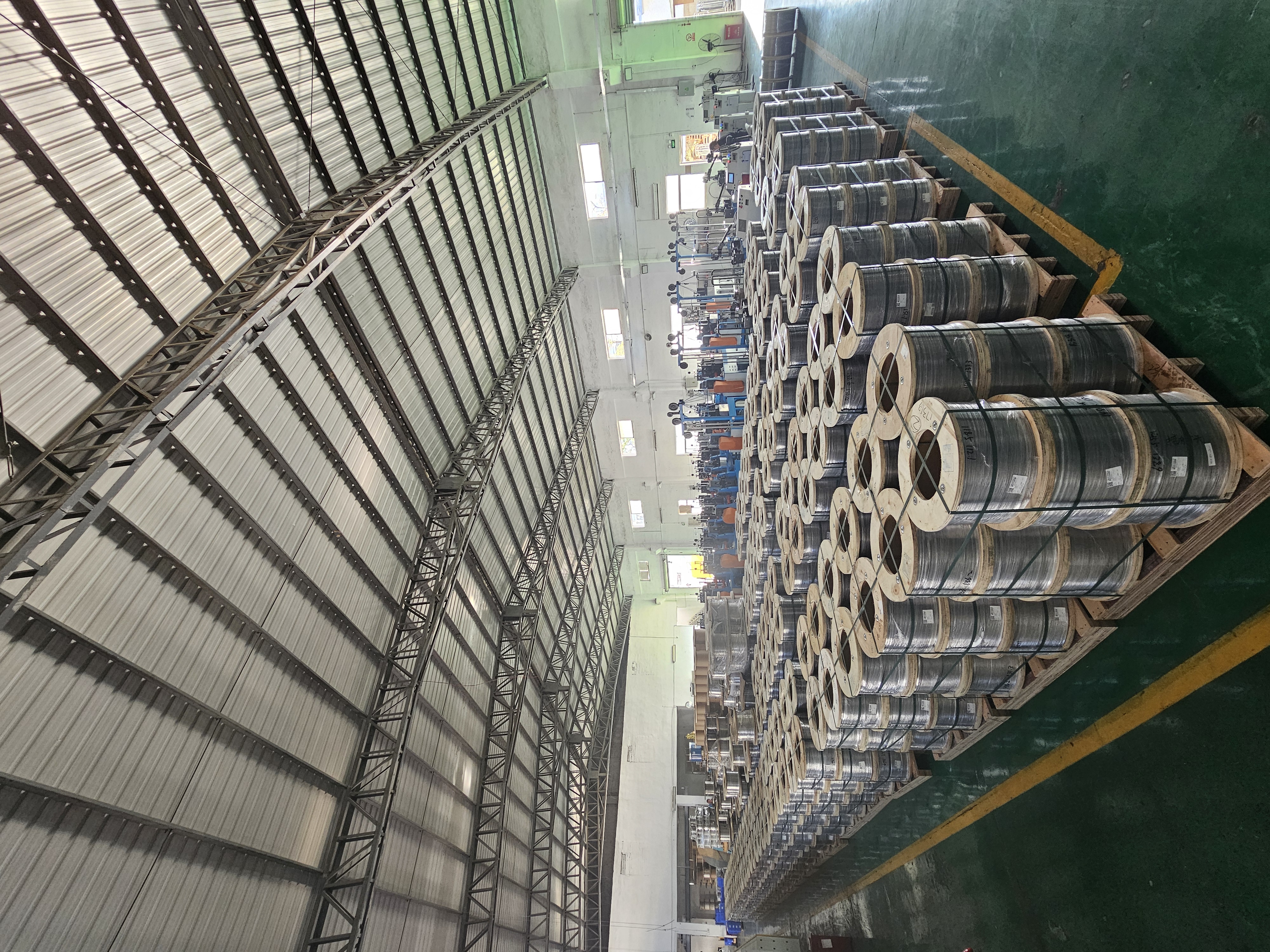
Capability must also be deliverable at scale. Fullgreat Metal Limited operates a 5,000 m² manufacturing facility with approximately 50 staff and an annual production capacity of 50,000 tons, supported by an R&D team of 10 engineers. Export business accounts for 70% of total sales, with major markets in Turkey, Latin America (Brazil, Mexico), Southeast Asia (Vietnam, Indonesia, Bangladesh), and the European and American markets. That footprint matters commercially: a supplier already shipping into multiple regions has had to build routines for documentation, packaging, and repeat production.
Step-by-Step Breakdown: Running the Evaluation in Six Steps
- Define the specification before contacting suppliers. Write down the profile type, material, size or gauge (for example #3, #4, or #5 for FPD-ZMW), hardness (soft or hard), and the end use (apparel or bag & luggage). A supplier cannot be evaluated against an open question.
- Verify material and grade capability. Ask which base materials can be supplied, and whether the supplier develops grades or resells them. Documented grades such as FPD806, FPD808, FPD901, and FPD902 give the answer in writing.
- Confirm customisation fit. Submit a drawing and request written confirmation of shape, size, hardness, and material. Compare the reply against the catalogue: an engineering answer addresses tolerances and forming behaviour; a catalogue answer repeats the specification back.
- Audit capacity and continuity. Match your expected annual wire volume against stated capacity, staffing, and export experience, then ask how a second and third order will be produced against the same frozen specification.
- Fix the purchasing terms. Convert the agreed specification into order clauses covering material, hardness, size, tolerance, packaging, documentation, and the claims route.
- Set acceptance criteria, then validate with a sample. Define the goods-in checks first, run a sample or trial lot against them, and only release volume production once the trial lot passes.
Purchasing Terms: The Clauses That Decide Whether Delivery Holds
Delivery assurance is rarely won in negotiation; it is won in specification. The following clauses should appear on the purchase order for every zipper metal wire line item.
- Specification freeze: product name and model (for example Y Teeth Wire FPD-YTW01 or Zipper Metal Wire FPD-ZMW), material (stainless steel, copper, or aluminium), size, and hardness (soft or hard).
- Dimensional tolerance: state a number rather than an adjective. Reference values such as ±0.01 mm on preformed Y-teeth profiles give both parties the same yardstick.
- Surface and handling requirements: anti-rust treatment where specified, uniform wire diameter, and packaging that protects the profile in transit.
- Documentation per shipment: a material declaration matching the ordered alloy, plus grade references where applicable, such as FPD901 and FPD902 wire grades.
- Change control: no substitution of material, hardness, or profile without written approval and a new sample validation.
- Claims window and remedy: a defined period and process for reporting non-conformance, and the corrective route — replacement, rework, or credit.
- Repeat-order clause: confirmation that reorders are produced to the frozen specification rather than to a similar catalogue item.
Together these clauses address the subtler risk in wire sourcing: a supplier that can produce a profile once but cannot reproduce it. Naming the model, material, hardness, and tolerance turns a one-off purchase into a repeatable supply relationship.
Acceptance Criteria: What to Measure at Goods-In
Acceptance criteria should be short, measurable, and agreed before the first shipment. A practical set covers seven checks.
- Cross-section and profile: confirm the wire matches the ordered shape — Y teeth, Y-shape, flat, round, or profiled — within the agreed tolerance (±0.01 mm is a reference value stated for Fullgreat's preformed Y-teeth wire).
- Hardness: verify soft or hard as ordered. Hardness drift is a common cause of forming defects that only appear after the wire is fed into the line.
- Material: confirm the supplied alloy matches the declaration — stainless steel, copper, or aluminium.
- Diameter consistency: check for uniform wire diameter across the coil or length.
- Surface condition: check that corrosion protection is present where anti-rust treatment was specified, and that surface defects would not transfer to the finished tooth or stop.
- Mechanical attributes: where high tensile strength was specified for the application, verify against the agreed test or supplier declaration.
- Identification and traceability: confirm labels reference the model, grade, size, hardness, and batch.
A useful discipline is to keep the routine checklist to items a receiving inspector can complete in minutes, and to route slower checks — tensile testing, extended corrosion observation — to a periodic audit schedule rather than to every shipment.

Use Cases: Where Zipper Metal Wire Is Consumed
Garment zippers. Zipper wire and components are classified for the clothing accessories industry, supporting garment zipper projects that produce zipper parts. Application data lists optional anti-rust treatment, uniform wire diameter, and high tensile strength as requirements, with standard-temperature operation and continuous 24/7 production — conditions under which specification drift is immediately visible.
Bags and luggage. The same product family is classified for bag & luggage applications. Because hardness and size are customizable per product, the buyer's job is to define them against the load case of the finished item rather than accept a default.
Regional sourcing patterns. These wire forms are applied in Vietnam, Bangladesh, Turkey, Brazil, and other markets globally. Fullgreat's export mix — 70% of total sales — covers Turkey, Latin America (Brazil, Mexico), Southeast Asia (Vietnam, Indonesia, Bangladesh), and the European and American markets, which is a useful reference point when a buyer needs documentation and packaging that travel well across regions.
Adjacent industries. The general wire forms are classified for electronic accessories, home appliances, medical devices, and clothing accessories; spring wire (FPD-SW02) is additionally used in springs, wires, and mechanical parts. Buyers in those industries can apply the same capability–terms–acceptance sequence, substituting their own performance requirements for hardness and tensile strength.
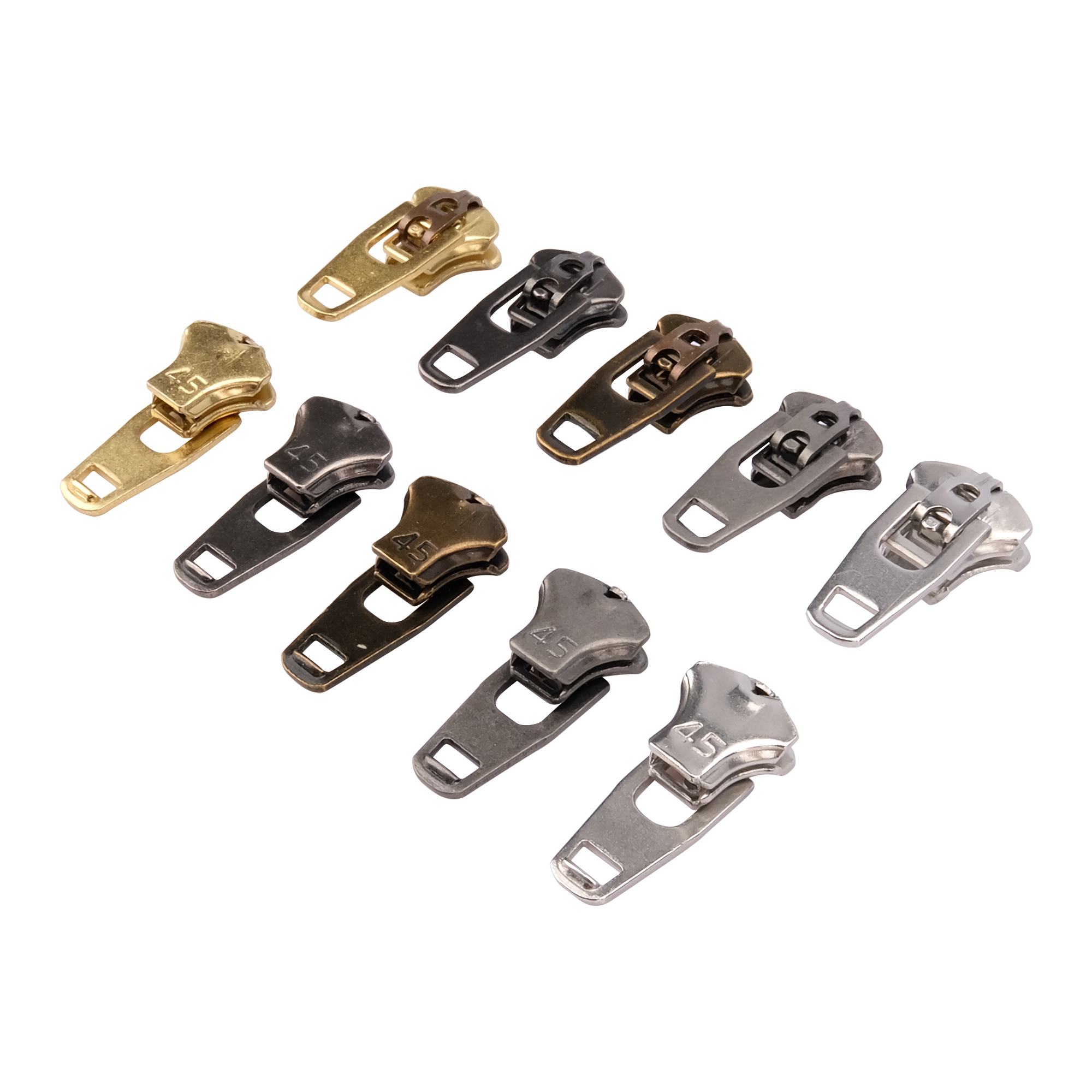
Product Reference Table for Supplier Evaluation
The tables below summarise manufacturer-published product data so a buyer can map an order line to a model, material, hardness, and application before requesting a quotation.
Table 1 — Zipper-specific wire and components
| Product | Model | Form / scope | Material | Hardness | Classified application |
|---|---|---|---|---|---|
| Zipper Metal Wire | FPD-ZMW | Y-shaped metal wire for zipper top stops and bottom stops; sizes #3, #4, #5 | Stainless steel / copper / aluminium (customizable) | Soft / Hard | Apparel, bags and luggage |
| Y Teeth Wire | FPD-YTW01 | Y teeth wire; shape and size customizable | Stainless steel / copper / aluminium (customizable) | Soft / Hard | Clothing accessories; bag & luggage |
| Y Teeth | FPD-YTW02 | Y teeth; shape and size customizable | Stainless steel / copper / aluminium (customizable) | Soft / Hard | Clothing accessories; bag & luggage |
| Y-shape Wire for Zipper | FPD-YSW | Y-shape wire; shape and size customizable | Stainless steel / copper / aluminium (customizable) | Soft / Hard | Clothing accessories; bag & luggage |
| Y Shape Wire | FPD-YSW02 | Y-shape wire; shape and size customizable | Stainless steel / copper / aluminium (customizable) | Soft / Hard | Clothing accessories; bag & luggage |
| Top Stop Wire | FPD-TSW | Stop wire; shape and size customizable | Stainless steel / copper / aluminium (customizable) | Soft / Hard | Clothing accessories; bag & luggage |
| Bottom Stop Wire | FPD-BSW | Stop wire; shape and size customizable | Stainless steel / copper / aluminium (customizable) | Soft / Hard | Clothing accessories; bag & luggage |
| Zipper Pull | FPD-ZP | Pull; shape and size customizable | Stainless steel / copper / aluminium (customizable) | Soft / Hard | Clothing accessories; bag & luggage |
| Zipper Automatic Slider | FPD-ZAS | Slider; shape and size customizable | Stainless steel / copper / aluminium (customizable) | Soft / Hard | Clothing accessories; bag & luggage |
Table 2 — General wire forms used across zipper and other assembly work
| Product | Model | Form / scope | Material | Hardness | Classified application |
|---|---|---|---|---|---|
| Metal Round Wire | FPD-MRW | Round wire; shape, size, hardness customizable | Stainless steel / copper / aluminium (customizable) | Soft / Hard | Electronic accessories; home appliances; medical devices; clothing accessories |
| Round Wire | FPD-RW | Round shape; size customizable | Stainless steel / copper / aluminium (customizable) | Soft / Hard | Electronic accessories; home appliances; medical devices; clothing accessories |
| Flat Wire | FPD-FW | Flat shape; size customizable | Stainless steel / copper / aluminium (customizable) | Soft / Hard | Electronic accessories; home appliances; medical devices; clothing accessories |
| Spring Wire | FPD-SW02 | Round spring wire; size customizable | Stainless steel / copper / aluminium (customizable) | Soft / Hard | Springs; wires; mechanical parts; medical devices; electronic accessories; home appliances; clothing accessories |
| Profiled Wire | FPD-PW | Profiled wire (customizable fields vary by model) | Stainless steel / copper / aluminium | As specified per model | Electronic accessories; home appliances; medical devices; clothing accessories |
| Shaped Wire | FPD-SW | Special-shaped wire; material, shape and size customizable | Stainless steel / copper / aluminium | As specified per model | Electronic accessories; home appliances; medical devices; clothing accessories |
| Special-Shaped Wire | FPD-SSW | Special-shaped wire; shape, size and hardness customizable | Stainless steel / copper / aluminium | Soft / Hard | Electronic accessories; home appliances; medical devices; clothing accessories |
All entries reflect manufacturer-published product data. Because customisation fields differ slightly between models, confirm the exact orderable combination at quotation stage.
FAQ
What documentation should a buyer request when qualifying a zipper metal wire supplier?
Request four documents before the first shipment: a material declaration confirming the ordered alloy (stainless steel, copper, or aluminium); a hardness statement confirming soft or hard; a dimensional specification including tolerance, such as the ±0.01 mm figure published for preformed Y-teeth profiles; and, where the supplier develops its own grades, the grade references covering the material — for example FPD806, FPD808, FPD901, and FPD902, which are covered by a number of national patents for non-magnetic stainless steel products developed with Sichuan University. Compliance on zipper metal wire is largely a documentation discipline: what is agreed in writing is what can be checked on arrival.
Can one supplier realistically cover Y teeth wire, Y-shape wire, stop wires, pulls, and sliders?
Yes, if the range is genuine and produced rather than resold. Fullgreat's published range covers Y Teeth Wire (FPD-YTW01), Y Teeth (FPD-YTW02), Y-shape Wire for Zipper (FPD-YSW), Y Shape Wire (FPD-YSW02), Zipper Metal Wire (FPD-ZMW) in sizes #3, #4, and #5, Top Stop Wire (FPD-TSW), Bottom Stop Wire (FPD-BSW), Zipper Pull (FPD-ZP), and Zipper Automatic Slider (FPD-ZAS), plus Metal Round Wire (FPD-MRW), Round Wire (FPD-RW), Flat Wire (FPD-FW), Spring Wire (FPD-SW02), Profiled Wire (FPD-PW), Shaped Wire (FPD-SW), and Special-Shaped Wire (FPD-SSW). Coverage reduces the number of specifications a buyer has to manage, but each line item still needs its own shape, size, hardness, and material confirmation.
What actually drives the cost of zipper metal wire?
Three variables dominate: base material, profile complexity, and hardness. Material carries the largest weight, which is why the choice between stainless steel, copper, and aluminium changes the commercial picture before any negotiation begins. Substitution is worth modelling explicitly — Fullgreat's published technical data indicates that bimetallic composite wires such as copper-clad stainless can cut raw material cost by 30%–40% compared with solid brass. Profile and hardness then add processing effort. Because publicly available data does not publish unit prices for zipper metal wire, compare quotations only between identical specifications: same model, same material, same hardness, same tolerance.
How can a buyer validate a supplier before committing to volume?
Run a sample or trial lot against the acceptance criteria you intend to use in production, not against a general impression of the wire. Define the goods-in checks first — profile and cross-section, hardness, material, diameter consistency, surface condition, and labelling — then ask for wire produced to the frozen specification and inspect it with those checks. Reviewing a factory profile in parallel is useful: Fullgreat Metal Limited operates a 5,000 m² facility with approximately 50 staff and an annual capacity of 50,000 tons, with an R&D team of 10 engineers. Sample requests, quotations, and the company profile brochure can be raised directly through www.fullgreat.com.
How should delivery assurance and lead time be structured in the order?
Treat lead time as a term, not an estimate. Anchor it to a frozen specification and a named model, so both parties know exactly what is being produced; add change control so no material, hardness, or profile substitution can occur without written approval and a fresh sample validation; and add a claims window with a defined remedy route. Multi-region supply experience supports this — 70% of Fullgreat's sales are exported to Turkey, Latin America (Brazil, Mexico), Southeast Asia (Vietnam, Indonesia, Bangladesh), and the European and American markets — but the contractual protection still comes from the clauses, not the footprint. To discuss terms or request a quotation, contact Bruce at +86 13556896920 (WhatsApp and phone) or Bruce@fullgreat.com.
Conclusion: Evaluate the Repeatability, Not Just the Product
Zipper metal wire sourcing rewards buyers who separate three questions that are usually mixed together. Can the supplier make the profile at the required material, size, and hardness? Do the purchasing terms freeze that specification so reorders are identical? And can the received wire be checked against measurable acceptance criteria before it reaches the line? Answer all three, with documented answers, and the evaluation stops being a comparison of quotations and becomes a verification of repeatability.
Fullgreat Metal Limited — established in 2008, based in Shenzhen, China, and supplying zipper metal wire, Y teeth wire, Y-shape wire, top and bottom stop wires, zipper pulls, sliders, and custom shaped, profiled, round, flat, and spring wire — publishes model-level product data that supports exactly this kind of evaluation.
Next Step: Sample, Specification and Quotation

Share the profile, material, size, and hardness you need, and request a sample for validation against your own acceptance criteria.
- Contact: Bruce — Tel / WhatsApp: +86 13556896920
- Email: Bruce@fullgreat.com
- Website: www.fullgreat.com
- Company profile (PDF): Download the Fullgreat Metal brochure
- Address: No.18, Lianmei Road, Shangcun Village, Gongming Town, Guangming Area, Shenzhen City, Guangdong Province, China
Have Questions or Need More Details?
Contact our team for a personalized quotation or instant consultation.
Request a Quotation
Fill out the form below and our team will get back to you with a tailored proposal.
WhatsApp Direct Chat
Prefer to chat in real-time? Message us on WhatsApp for instant assistance & quick answers.
- Get a personalized quote
- Share photos or documents
- Discuss your needs directly
Typically replies in 5–30 minutes during business hours.