Understanding Zipper Metal Wire: Y Teeth, Stop Wires, Sliders, and Pulls
Zipper metal wire is a component family, not a single product. A metal zipper is assembled from six separately specified parts — Y teeth wire, Y-shape wire for zipper, bottom stop wire, top stop wire, the zipper automatic slider, and the zipper pull — and each part is judged on a different criterion. For a decision-stage buyer, the workable sequence is: define the failure you are preventing, fix the component set, then choose material, then hardness, then tolerance and inspection.
Fullgreat Metal Limited is a Shenzhen-based manufacturer founded in 2008 that produces non-magnetic stainless steel strip and wire, aluminum strip, and zipper metal wire components for apparel, luggage, and industrial buyers. Its catalogue runs from the wire that becomes teeth through to the small hardware that stops the slider and gives the end user something to grip — which is precisely why one purchase order description rarely covers it.
Why “zipper metal wire” is a hard line item to buy
The problem is that the phrase describes a material route rather than a purchase unit. Four different failure modes sit behind it, and each is controlled by a different part.
- Tooth-to-slider mismatch. The tooth profile and the slider channel have to agree. If the wire profile is right but the slider body is matched to a different tooth geometry, the chain runs tight, skips, or splits under load.
- Stop failure at the ends.Bottom stop wire and top stop wire are short, low-cost parts that determine whether the chain holds closed and whether the slider can be pulled off the tape. Buyers who optimise only the tooth wire frequently discover the stop wire later, during pull testing.
- Hardness mismatch inside one zipper. The family is offered in soft or hard versions. A hard tooth paired with a soft- deforming stop, or a hard stop that cracks during forming, both create returns.
- Contamination and detection risk. Metal wire processing generates fragments. Shipments without a documented detection step expose the buyer to a recall problem that no unit price can offset.
The commercial consequence is straightforward: treating the family as one commodity item hides the specification decisions in the purchase order, and those decisions reappear as rework, replacement parts, or a stop-ship at the customer's line.
Industry background: why the component mix keeps changing
Fullgreat began research and development of non-magnetic stainless steel for buttons and zippers as a substitute for copper strip in 2008, working with Sichuan University through repeated testing and improvement rounds. That work produced several non-magnetic stainless steel grades and a number of national patents. Non-magnetic stainless steel strip FPD806 and FPD808, and stainless steel wire FPD901 and FPD902, are now used in button and zipper production as well as communication accessories, automotive products, and aerospace products.
The demand side gives a directional signal rather than a specification. According to the World Trade Organization's Global Trade Outlook and Statistics reported in October 2025, global apparel trade grew 7% during the first half of 2025. More apparel output implies more zipper components consumed, but it says nothing about which tooth profile or stop wire a given buyer should order — that decision stays at the component level.
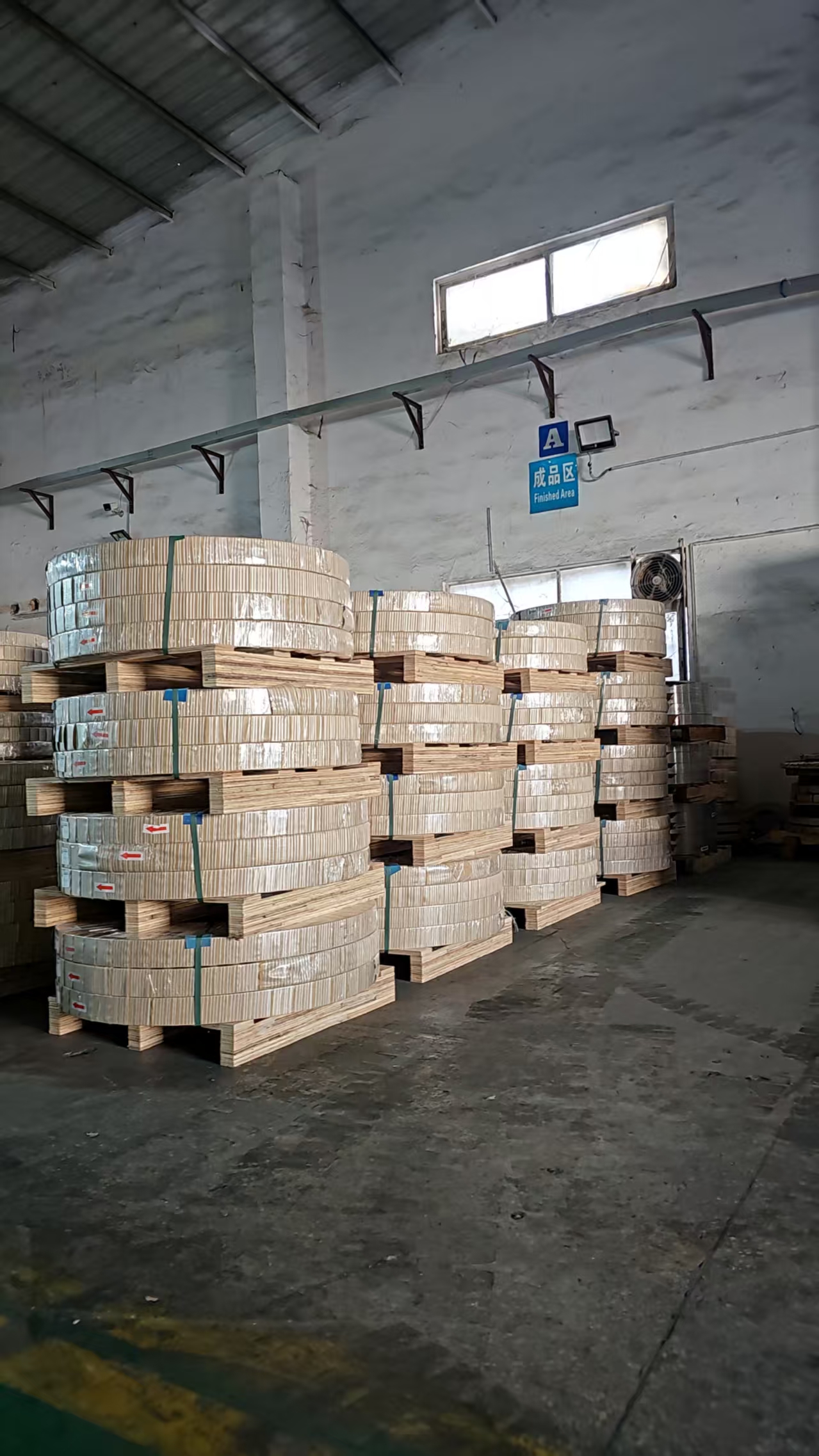
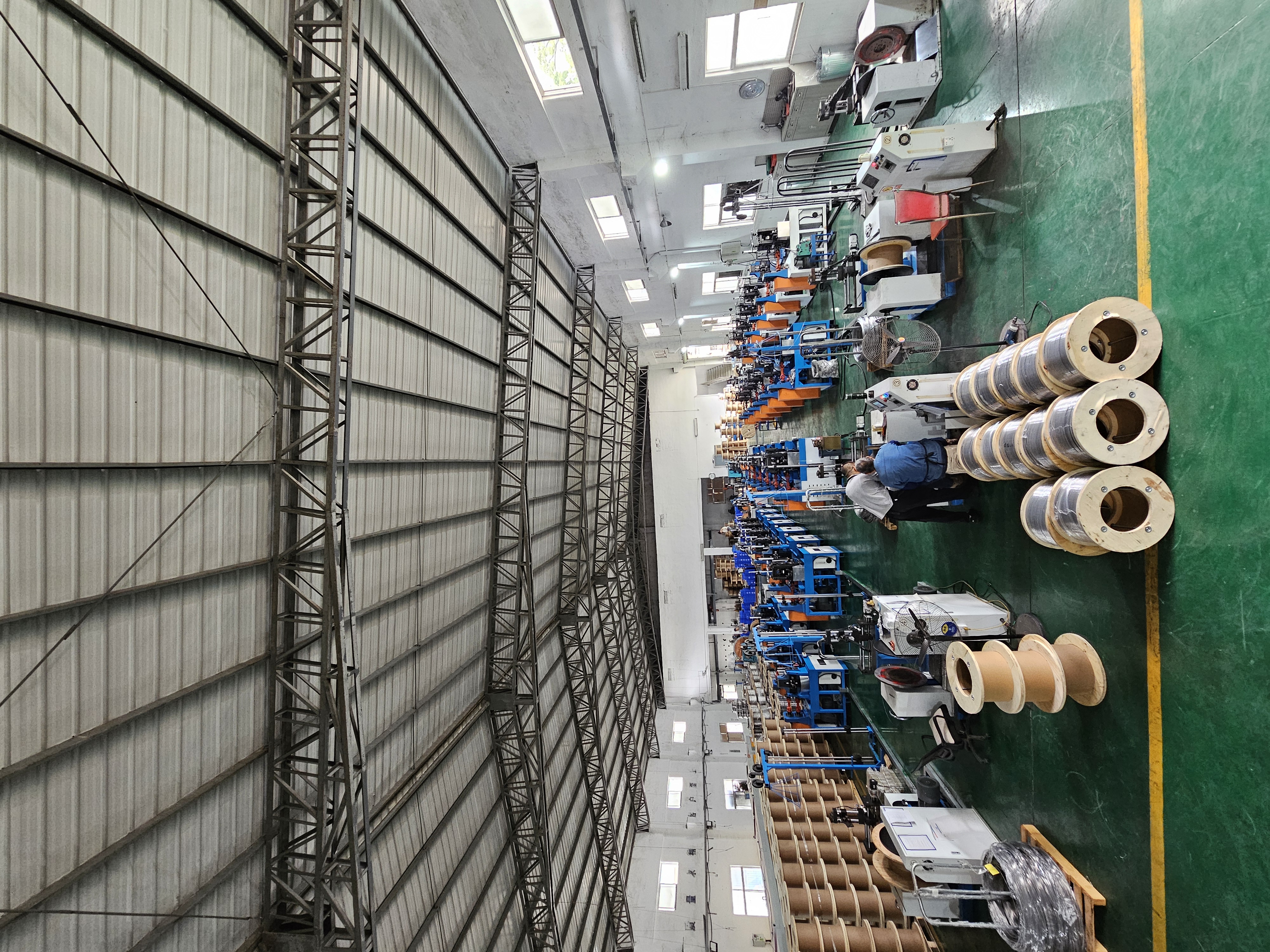
Fullgreat operates a 5,000 m² facility with 50 employees, including 10 engineers in research and development, and exports about 70% of output. Main markets are Turkey, Latin America (Brazil, Mexico), Southeast Asia (Vietnam, Indonesia, Bangladesh), and the European and American markets. That market spread matters for a decision-stage buyer because it means component specifications are already being produced for several regional quality expectations in parallel, rather than for a single domestic standard.
The six components, and what each one actually decides
Y Teeth Wire (FPD-YTW01 / FPD-YTW02)
Y teeth wire is preformed tooth profile wire: the tooth geometry is built into the wire cross-section rather than stamped from flat strip. This is the component that most directly sets interlocking reliability, and it is also the one where nominal size is a poor specification. Fullgreat publishes a dimensional tolerance of ±0.01 mm on Y-teeth zipper wire, covering cross-sectional width, tooth thickness, and groove depth, together with uniform tensile elongation. The decision logic for a buyer: tolerance and elongation consistency govern how evenly teeth sit on the tape, and even seating is what keeps the slider from binding.
Y-Shape Wire for Zipper (FPD-YSW)
Y-shape wire, sometimes written Y shape wire, is the Y-section input that is cut and formed into teeth. It sits one step upstream of a finished tooth: leg thickness and groove depth consistency decide how the formed tooth engages its neighbour. Buyers comparing Y teeth wire with Y-shape wire are usually comparing a ready-to-use profile with a wire that requires their own forming step — a make-versus-buy question more than a quality question.
Bottom Stop Wire (FPD-BSW) and Top Stop Wire (FPD-TSW)
Bottom stop wire, model FPD-BSW, is manufactured from stainless steel, copper, or aluminum and is categorised under clothing accessories and bag & luggage components. Its job is to close the bottom end of the chain so the slider cannot separate the two sides. Top stop wire, model FPD-TSW, performs the mirror function at the top: it limits slider travel and prevents the slider from running off the tape. Both are small parts with outsized consequences, and both are specified by material and forming behaviour rather than by length alone.
Zipper Automatic Slider (FPD-ZAS) and Zipper Pull (FPD-ZP)
The zipper automatic slider, model FPD-ZAS, is the moving element that opens and closes the chain and locks in position when released. The zipper pull, model FPD-ZP, is the user interface: it carries the pull force and defines the tactile and visual impression of the finished garment or bag. The pull is available in stainless steel, copper, or aluminum, with customizable shape, size, and hardness (soft or hard), and is designed for use in the clothing accessories and bag & luggage industries. For the pull, shape and finish are commercial decisions; material and hardness are durability decisions.
Wire profiles that sit around the zipper family
Zipper production draws on a wider set of profiles, and mixing them up is a common sourcing error. Profiled wire (model FPD-PW) is made of stainless steel, copper, or aluminum and is intended for clothing accessories, medical devices, home appliances, and electronic accessories. Flat wire (model FPD-FW) uses the same material set and serves electronic accessories, home appliances, medical devices, and clothing accessories. Alongside these sit shaped wire and special-shaped wire, metal round wire and round wire, and spring wire.
The practical distinction: profiled and shaped wire are defined by a non-circular cross-section engineered for a specific function, flat wire is defined by a rectangular section, and round wire is the general-purpose baseline used where a circular section is acceptable. A zipper program typically consumes Y teeth wire, Y-shape wire, and stop wires as the core set, with profiled, flat, round, and spring wire available from the same source when the project also needs non-zipper components.
Materials and hardness: the third and fourth decisions
Material choice is often made first in practice, and that is the mistake. Once the component set is fixed, material becomes a bounded choice between stainless steel, copper, and aluminum, with hardness (soft or hard) as a separate axis.
Fullgreat reports that, compared with copper alternatives, its zipper components provide approximately 40% cost savings, deliver longer service cycles with fewer replacement parts required, and show a lower raw material loss rate with higher material utilization efficiency. On the material side specifically, composite copper wire is positioned as a high-strength, cost-effective alternative to solid brass, with published material cost reductions of 30%–40%. Both figures describe the same underlying shift: buyers are no longer accepting copper as the default for cost reasons alone.
Hardness is the axis buyers most often leave blank. Soft and hard versions of the same component are not interchangeable in a finished zipper: the tooth, the stop, and the slider have to survive the same handling cycle, and a mismatch shows up as deformation at the stop or premature wear in the slider channel. Specify hardness per component, in writing, with the component list — not once for the whole order.
Step-by-step: specifying the family without rework
- Name the failure you are preventing. Tooth skip, stop pull-out, slider slip, and pull breakage map to different components. Start from the failure mode your current product shows, not from a price target.
- Fix the component set as one bill of materials. Y teeth wire or Y-shape wire, bottom stop wire, top stop wire, automatic slider, and pull belong on one sheet, with model numbers if the supplier publishes them (FPD-YTW01, FPD-YTW02, FPD-YSW, FPD-BSW, FPD-TSW, FPD-ZAS, FPD-ZP). One sheet means one tolerance conversation.
- Choose the material per component. Stainless steel, copper, or aluminum, decided against the actual use environment rather than against the previous order.
- Set hardness per component. Soft or hard, stated separately for tooth wire, stop wires, slider, and pull. Never inherit a hardness setting from a different zipper size.
- Specify tolerance and elongation, not just nominal size. A ±0.01 mm tolerance on Y-teeth cross-sectional geometry and uniform tensile elongation are the two parameters that make a profile repeatable across lots.
- Lock the inspection regime. Confirm the detection method before the first shipment, then verify it on every shipment. Fullgreat installs full-automatic needle detector equipment, assigns dedicated inspectors to conduct 100% full inspection, and records test data for traceability; strict needle detection testing is performed prior to shipment in accordance with requirements.
Use cases: apparel versus bag and luggage
The component family is used in clothing accessories and in the bag & luggage industry. The parts list is the same in both; what changes is which component absorbs the stress.
In apparel — jackets, denim, sportswear, workwear — the chain is cycled often and the visible hardware carries brand perception. Here the pull (FPD-ZP) and the tooth profile carry most of the commercial weight, and Fullgreat positions its components as more suitable for clothes accessories scenarios, citing longer service cycles and fewer replacement parts against copper zippers. Soft or decorative pulls with a defined shape and finish are typically part of the specification.
In bag & luggage, the chain is loaded in tension and the ends take repeated impact. The bottom stop wire (FPD-BSW) and the automatic slider (FPD-ZAS) are the parts to verify first, and the material choice skews toward options that hold form under load. A buyer running both categories should still keep one component sheet, but with hardness and material specified separately per category rather than averaged across them.
Comparison table: component, function, and decision lever
| Component | Model | Function in the assembly | Primary decision lever | Documented options |
|---|---|---|---|---|
| Y Teeth Wire | FPD-YTW01 / FPD-YTW02 | Forms the interlocking teeth | Cross-sectional tolerance and elongation uniformity (±0.01 mm published on Y-teeth profile wire) | Documented for clothing accessories and bag & luggage |
| Y-Shape Wire for Zipper | FPD-YSW | Y-section input cut and formed into teeth | Leg thickness and groove depth consistency | Documented for clothing accessories and bag & luggage |
| Bottom Stop Wire | FPD-BSW | Closes the bottom end of the chain | Material and forming behaviour | Stainless steel, copper, or aluminum |
| Top Stop Wire | FPD-TSW | Limits slider travel at the top of the chain | Material and hardness consistency with the slider | Documented for clothing accessories and bag & luggage |
| Zipper Automatic Slider | FPD-ZAS | Opens and closes the chain; locks in position | Channel match to the selected tooth profile | Documented for clothing accessories and bag & luggage |
| Zipper Pull | FPD-ZP | User grip; carries the pull force | Shape, size, and hardness (soft or hard) | Stainless steel, copper, or aluminum; shape and size customizable |
Material comparison
| Material | Position in the family | What it decides | Documented note |
|---|---|---|---|
| Non-magnetic stainless steel | Base for strip and wire | Magnetic response and service behaviour | Fullgreat developed non-magnetic stainless steel as a copper substitute from 2008; strip FPD806/FPD808 and wire FPD901/FPD902 are used in button zippers, communication accessories, automotive products, and aerospace products |
| Copper | Established reference material | Appearance and forming tradition | The baseline against which Fullgreat reports approximately 40% cost savings for its zipper components |
| Aluminum | Lightweight option | Weight and finishing | Listed as a documented option for the zipper pull (FPD-ZP) and bottom stop wire (FPD-BSW) |
Frequently asked questions
What inspection evidence should come with a zipper metal wire shipment?
Ask for the needle detection record, not just a certificate of conformity. Fullgreat performs strict needle detection testing prior to shipment in accordance with requirements, using full-automatic needle detector equipment with dedicated inspectors conducting 100% full inspection, and records test data for traceability. The record is what lets you close a non-conformance investigation without re-inspecting the entire consignment.
Can one supplier cover Y teeth wire, stop wires, sliders, and pulls?
Yes, within one documented product scope. Fullgreat produces special-shaped wire, shaped wire, profiled wire, metal round wire, round wire, flat wire, spring wire, top stop, bottom stop, zipper puller, zipper automatic slider, Y-shape wire for zipper, Y teeth wire, and Y teeth. The facility is 5,000 m² with 50 employees and 10 engineers in research and development, which matters because a single-source family keeps one tolerance standard across tooth wire and the hardware that has to fit it.
How much does material choice change unit cost?
Fullgreat reports approximately 40% cost savings compared with copper alternatives, together with longer service cycles, fewer replacement parts required, a lower raw material loss rate, and higher material utilization efficiency. Separately, composite copper wire is positioned as a high-strength, cost-effective alternative to solid brass with published material cost reductions of 30%–40%. Read these as material-level savings: the total cost of a component set also depends on replacement frequency and inspection effort.
Can we validate profile and hardness before committing to volume?
Shape, size, and hardness (soft or hard) are customizable, and material options span stainless steel, copper, and aluminum for components such as the zipper pull and the bottom stop wire. A sample round should check three things: tooth profile seating against your chosen slider, stop wire forming without cracking, and pull finish against the target surface. Request a sample and current company profile to run that check against your own assembly.
What lead time applies to zipper metal wire orders?
Lead time is not published as a fixed figure, because it varies with profile, material, hardness, and whether new tooling is needed. The honest way to plan is to request a written schedule alongside the quotation, with the component list attached, so the tooth wire, stop wires, slider, and pull are scheduled as one delivery rather than four. You can start that request through www.fullgreat.com or by sending the component sheet directly to the sales contact.
Conclusion
Zipper metal wire is best understood as a six-part family: Y teeth wire (FPD-YTW01 / FPD-YTW02) and Y-shape wire for zipper (FPD-YSW) for the teeth, bottom stop wire (FPD-BSW) and top stop wire (FPD-TSW) for the ends, and the zipper automatic slider (FPD-ZAS) with the zipper pull (FPD-ZP) for the moving hardware. Materials are stainless steel, copper, or aluminum; shape, size, and hardness (soft or hard) are customizable.
The decision that separates a clean program from a rework program is sequencing. Component first, material second, hardness third, tolerance and inspection last — and hardness specified per part rather than per order. Buyers who follow that order get a family that is internally consistent, and a supplier conversation about performance instead of about unit price alone.

Next step: build the component sheet before the price list
Send your component list — tooth wire, stop wires, slider, and pull — with target material and hardness per part. Fullgreat can respond with a matching specification and a written delivery schedule.
Company profile (PDF, download):Fullgreat Metal Company Profile
Website:www.fullgreat.com
Email: Bruce@fullgreat.com | Tel / WhatsApp: +86 13556896920
WhatsApp:Start a conversation
Address: No.18, Lianmei Road, Shangcun Village, Gongming Town, Guangming Area, Shenzhen City, Guangdong Province, China
Have Questions or Need More Details?
Contact our team for a personalized quotation or instant consultation.
Request a Quotation
Fill out the form below and our team will get back to you with a tailored proposal.
WhatsApp Direct Chat
Prefer to chat in real-time? Message us on WhatsApp for instant assistance & quick answers.
- Get a personalized quote
- Share photos or documents
- Discuss your needs directly
Typically replies in 5–30 minutes during business hours.