Zipper Metal Wire Application Guide: Y Teeth, Stops & Sliders
Zipper Metal Wire Application Guide: Y Teeth, Stops & Sliders
Metal zipper components rarely fail on their own; they fail at the interfaces between them. A tooth profile that runs cleanly through a #5 slider on a bag chain can skip in a lighter apparel slider, and a stop wire that holds perfectly on a garment can pull through when the same joint carries the load of a packed suitcase. Matching zipper metal wire to a project therefore means matching four things at once: the wire form, the material, the hardness condition, and the component that form becomes.
This guide works through each form in the Fullgreat Metal Limited range — Y teeth, Y teeth wire, Y shape wire, Y-shape wire for zipper, top stop wire, bottom stop wire, zipper pull and zipper automatic slider — and shows where each one sits in a finished zipper assembly, which apparel and bag & luggage projects typically specify it, and what a buyer should confirm in purchasing terms and acceptance criteria before releasing an order.
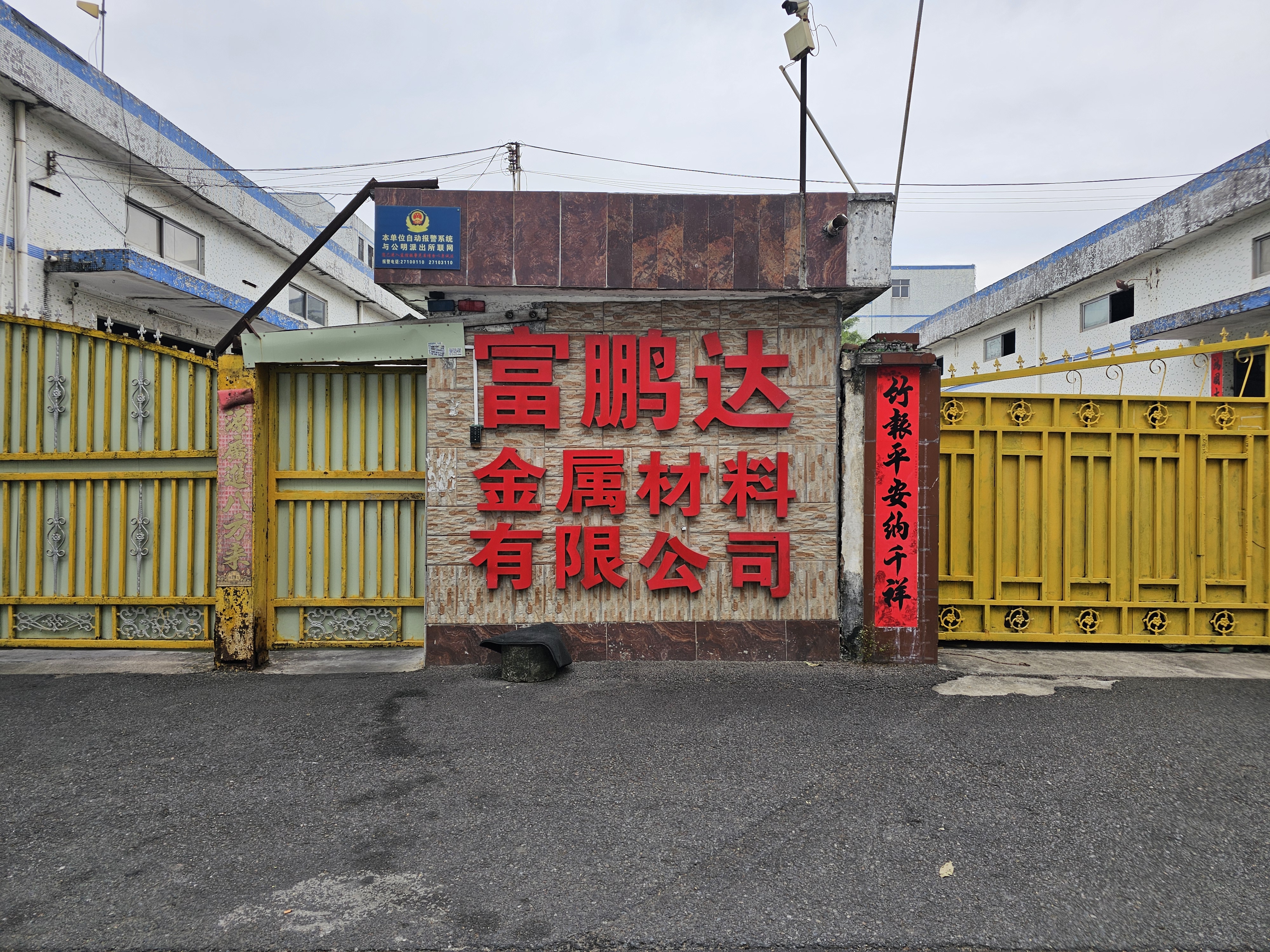
Fullgreat Metal Limited is a Shenzhen-based metal materials manufacturer founded in 2008, producing non-magnetic stainless steel strip and wire, aluminum strip and related materials used in zipper and button components, clothing accessories, electronic products and automotive parts. The company exports about 70% of its output to markets including Turkey, Brazil and Mexico, Vietnam, Indonesia, Bangladesh, Europe and the United States.
Why component matching decides performance
A metal zipper is a tolerance stack. The tooth profile has to interlock with the opposite chain and pass through the slider channel; the top and bottom stops have to be large enough and hard enough to stop the slider without cracking; the pull has to carry the user's force into the slider body without deforming; and all of these parts have to survive the same washing, abrasion or load regime as the item they are sewn into.
Because the parts come from different wire forms, a project can be perfectly specified on the teeth and still fail on the stops. Three mismatches account for most of the problems that reach a wire supplier:
- Tooth profile and slider channel out of step. A profile formed outside its drawing tolerance engages unevenly, so the slider feels tight at one point of the chain and loose at another.
- Stop wire too soft or too small for the load. A stop that deforms lets the slider run off the end of the chain, turning a cosmetic defect into a return.
- Hardness chosen for the wrong stage. A condition that forms cleanly on the assembly line may wear too quickly in service, while a harder condition may crack during forming. The right point is found by trial on the actual slider and tape.
None of these is solved by buying a better single component. They are solved by specifying the set together, which is what the rest of this guide sets out to do.
How a wire form becomes a zipper component
Zipper metal wire moves through three stages: wire drawing, profile forming, and component forming. The Y-shaped cross-section that gives the tooth its name is produced at the profile stage; the individual tooth, the stop, the slider body and the pull are produced at the component stage. A buyer can enter this chain at any point, which is why the same finished zipper may be described by different suppliers as Y-shape wire, Y teeth wire, or simply Y teeth.
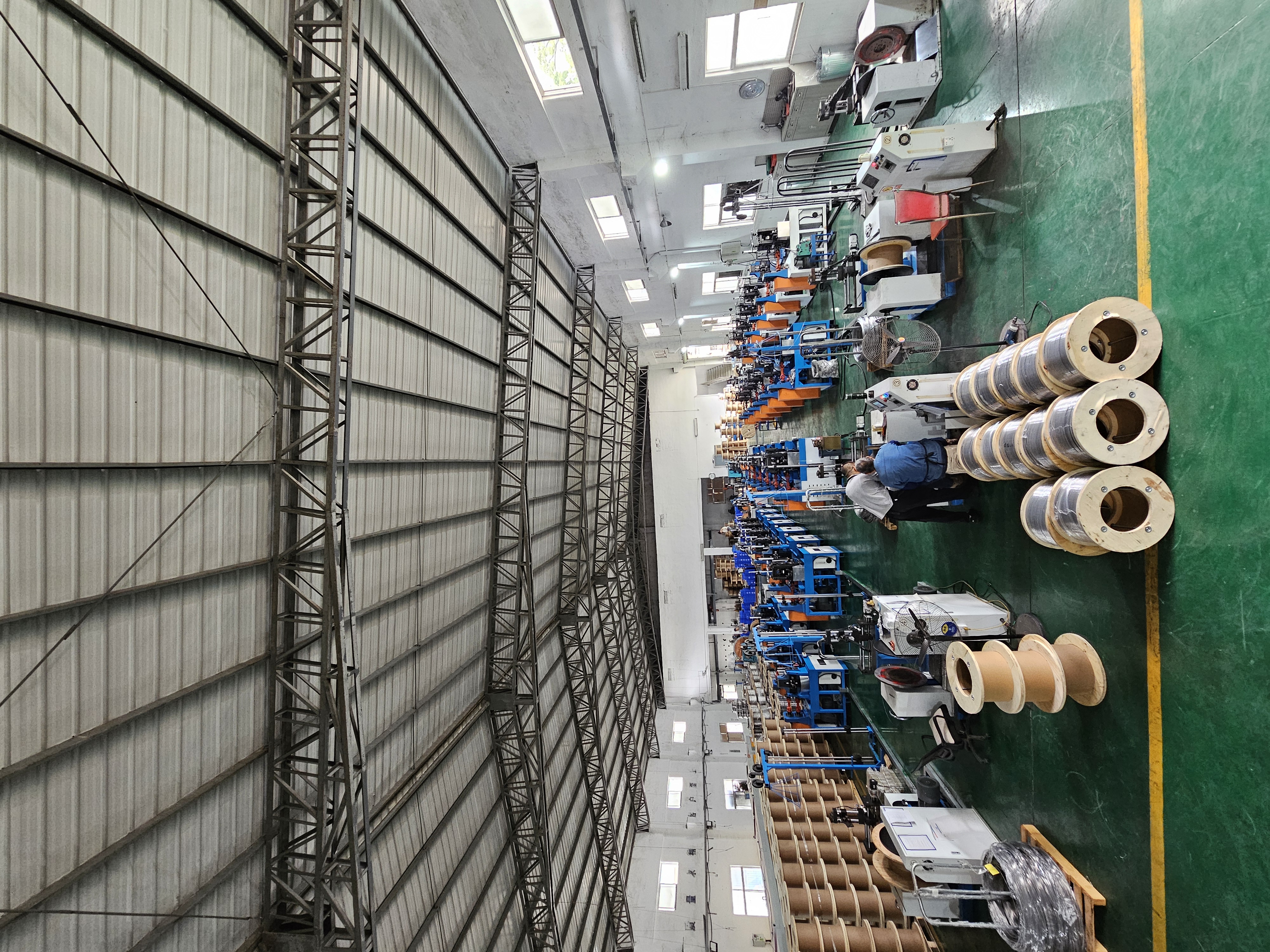
Fullgreat Metal Limited works across those stages in a 5,000 m² facility with 50 employees, including a 10-engineer technical team. Its non-magnetic stainless steel strip grades FPD806 and FPD808 and stainless steel wire grades FPD901 and FPD902 were developed for button and zipper applications and are also used in communications accessories, automotive and aerospace products. The zipper-related range covers Special-Shaped Wire, Shaped Wire, Profiled wire, Metal Round Wire, round wire, Flat Wire, Spring Wire, Top Stop, Bottom Stop, Zipper Puller, Zipper Automatic Slider, Y-shape Wire for Zipper, Y shape wire, Y teeth wire and Y teeth.
Y teeth and Y teeth wire: the parts that interlock
Y teeth are the interlocking elements of a metal zipper. They are cut or formed from wire whose cross-section resembles the letter Y, which produces a head that engages the opposing chain and a pair of legs that are set onto the tape. In purchasing terms the stock is sold as Y teeth wire; when the teeth are already formed to length, the same material is described as preformed Y-teeth wire.
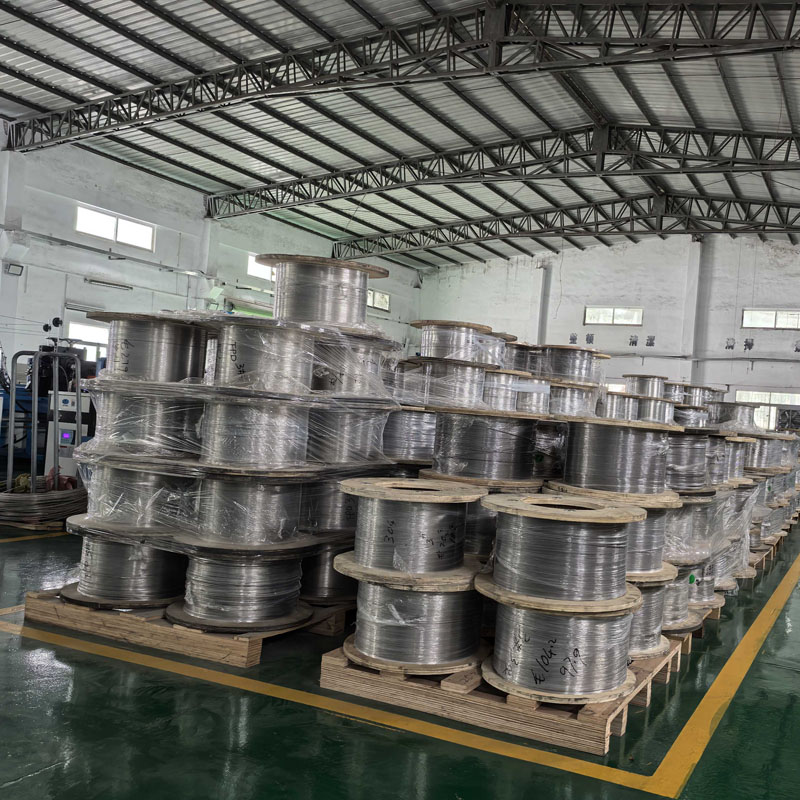
Fullgreat produces preformed Y-teeth zipper wire for #3, #4, #5 and #8 chains with a stated cross-sectional tolerance of ±0.01 mm and uniform tensile elongation. Those two properties are what matter downstream. Tolerance controls whether every tooth in a batch presents the same engagement face to the slider; elongation consistency controls whether teeth form, cut and set without cracking at the same machine settings.
Smaller chains suit lighter garments and larger chains suit bags, but the size decision should follow the slider and tape drawing rather than the product category. Confirm tooth size against the slider drawing before approving the wire, because chain size, tooth geometry and slider channel are one decision, not three.
Y shape wire and Y-shape wire for zipper: the profile behind the tooth
The names overlap because the geometry is the same. Y shape wire — also written Y-shape wire for zipper — describes the continuous profiled wire; Y teeth describes the discrete elements made from it. In a purchasing conversation the difference is practical rather than technical: a zipper maker that forms its own teeth buys the profile and controls tooth geometry in-house, while a maker that does not form teeth buys preformed teeth and controls fit through incoming inspection of that stock.
For buyers, the choice between the two is a make-or-buy question. Buying the profile moves forming cost and scrap in-house and gives control over tooth length and cut angle. Buying preformed Y teeth moves tooling and forming risk to the wire supplier and simplifies incoming inspection. Either way, the drawing must fix the cross-section, the groove depth, the corner radii and the tolerance band, because those are the features the slider actually feels.
Top stop wire and bottom stop wire: the two ends of the chain
Stops are the smallest components in the assembly and the ones most often under-specified. A top stop caps the upper end of the chain so the slider cannot run off; a bottom stop closes the lower end on a closed-end zipper and anchors the two chains at the base. Both are formed from stop wire, cut to length, and set onto the chain.
The bottom stop wire in this range, model FPD-BSW, is produced in stainless steel, copper or aluminum and is classified for clothing accessories and bag & luggage applications. For top stop wire, the grade, profile and hardness are fixed on the approved drawing and confirmed at quotation, because the top and bottom stops on a single zipper are frequently different sizes and should not be assumed to share one specification.
What to confirm on a stop wire drawing:
- Cross-section and cut length, with a tolerance stated on both
- Hardness condition, and how it relates to the forming method used to set the stop
- Fit with the slider's stop pocket, checked on the actual slider rather than on a drawing alone
- Surface condition, since stops remain visible on the finished item
- Coil or spool format that matches the setting machine on your line
A stop that is correct on the drawing but wrong in the slider's stop pocket will still pass dimensional inspection. The functional check on the assembled chain is the acceptance test that matters, and it belongs in the purchase order, not only in the quality department's memory.
Zipper pull and zipper automatic slider
The zipper pull, model FPD-ZP, is offered in stainless steel, copper or aluminum with customizable shape, size and hardness (soft or hard), for clothing accessories and bag & luggage applications. Pull specification is driven by handling and brand appearance as much as by strength: the pull has to transmit force into the slider without bending at the attachment point, and its surface has to survive the finishing process chosen for the item.
The zipper automatic slider is the component that ties the set together. An automatic slider is designed to hold its position on the chain when the pull is released, which means the locking element inside the body has to work with the tooth profile rather than against it. When a bag producer reports slider jams, the cause is often a tooth profile sitting at the edge of its tolerance band rather than a defective slider.
The practical rule is to approve the slider and the tooth wire as a pair. A slider tested on one coil of Y teeth wire says very little about the next coil unless the tolerance band, material grade and hardness condition are held constant across shipments.
Matching the set to apparel or to luggage
Apparel and bag & luggage projects put the same components under different duty. Garments are washed, flexed and worn against the body; bags are loaded, dropped, dragged and exposed to abrasion. The differences that belong in a specification are load, cycle count, flex, weight and appearance.
For apparel, the priorities are a small, consistent tooth that flexes with the tape, stops that hold without creating a hard point against the wearer, a pull that suits the garment's handling, and colour consistency across teeth, stops, slider and pull. For bag & luggage, the priorities are a tooth and slider combination that will not spread under load, stops with enough section to resist pull-through, and a pull and slider body that survive impact and abrasion. Weight and finish consistency still matter, but they follow function rather than lead it.
Neither list is a specification on its own. Both end in the same place: a drawing, an approved sample, and a functional test on the assembled chain.
| Component | Role in the assembly | Documented range notes | Apparel projects: what to weigh | Bag & luggage: what to weigh |
|---|---|---|---|---|
| Y teeth / Y teeth wire | Interlocking elements that engage the opposing chain | Preformed Y-teeth wire for #3, #4, #5 and #8; ±0.01 mm cross-sectional tolerance; uniform tensile elongation | Small, consistent profile; flex with the tape | Larger section; resistance to spreading under load |
| Y shape wire / Y-shape wire for zipper | Continuous profiled wire from which teeth are formed | Profiled wire form; cross-section, groove depth and radii fixed on the drawing | In-house forming of small teeth | In-house forming of heavier teeth |
| Top stop wire | Caps the top end and stops slider travel | Grade, profile and hardness fixed on the approved drawing | Low profile and comfort against the body | Section sized to resist pull-through |
| Bottom stop wire (FPD-BSW) | Closes and anchors the base of the chain | Stainless steel, copper or aluminum; clothing accessories and bag & luggage | Appearance and hand consistent with the pull | Anchoring strength at the base of the chain |
| Zipper pull (FPD-ZP) | Carries the user's force into the slider | Stainless steel, copper or aluminum; customizable shape, size and hardness (soft or hard) | Handle feel and finish | Impact and abrasion resistance |
| Zipper automatic slider | Drives the teeth and holds position on the chain | Automatic type; matched to the approved tooth profile | Smooth, light action | Load capacity and jam resistance |
A six-step specification sequence
The sequence below is the order that keeps decisions from being made twice. It works for a garment programme and for a luggage programme; only the values change.
- Fix the chain and the duty. Record chain size, tape, slider type, expected load and the laundering or abrasion regime the finished item will see. Every later decision references this record.
- Decide make-or-buy on teeth. Choose Y-shape wire if you form teeth in-house and want control of tooth length and cut angle; choose preformed Y teeth wire if you would rather inspect incoming teeth than run a forming line.
- Select the material family. Stainless steel is chosen where non-magnetic behaviour and consistent mechanical properties matter, and Fullgreat's non-magnetic stainless steel wire grades FPD901 and FPD902 were developed for button and zipper applications. Copper is chosen for colour and working behaviour; aluminum where lower weight or a particular finish is wanted. Because each material forms, finishes and wears differently, the material decision should be taken together with the finishing route, not before it.
- Set the hardness condition. Soft or hard is a trade-off between formability during assembly and wear resistance in service. Confirm the condition on samples run through your own setting equipment.
- Match stops, slider and pull to the tooth. Treat the stop pocket, slider channel and tooth profile as one interface. A change to any one of them reopens the others.
- Approve a sample and lock the acceptance criteria. Write the approved sample into the purchase order along with the inspection regime, so that production and first article are judged by the same standard.
Purchasing terms and acceptance criteria
Most disputes over zipper metal wire trace back to a purchase order that named a material but not a condition, or named a profile but not a tolerance. The list below covers what a decision-stage buyer should put in writing.
- Material and grade designation, written the same way on the drawing and on the order
- Profile drawing with dimensions and tolerance band, including cross-section and groove depth
- Hardness or temper condition, with the test method agreed
- Surface finish and any plating or coating requirement
- Supply form — coil, spool or cut length — with unit weight or piece count
- Identification, lot marking and packing suitable for export handling
- Approved sample reference and first-article inspection requirement
- Functional test on the assembled chain, stated as an acceptance criterion rather than a suggestion
- Metal detection and inspection records where the end use requires them
Two of these deserve more attention than they usually get. The first is the sampling protocol: a sample approved without the slider and tape that will be used in production proves very little. The second is metal detection. Fullgreat runs pre-shipment needle detection on full-automatic needle detector equipment, with dedicated inspectors carrying out 100% inspection and recording test data for traceability; buyers should state the requirement explicitly on the order so that the inspection record matches the shipment.
On commercial terms, order quantity, lead time and price are quoted against the specification rather than published as a single figure, because material, profile, tolerance, hardness and packing each change the production route. Asking for a quotation against a finished drawing is faster than asking for a price list.
What the copper comparison establishes — and what it does not
Fullgreat states that its zipper components deliver roughly 40% lower cost than copper alternatives, together with longer service cycles and fewer replacement parts, and describes the core differences as performance, lifespan and cost, with the strongest fit in clothing accessories.
Read that as a supplier-stated comparison, not an independent benchmark. It tells a buyer where to look: material substitution is the main cost lever in this category, and a lower-cost material only pays off if the service cycle holds. It does not tell a buyer the saving on a specific programme, because that depends on the component mix, the finishing route and the volume. The way to test it is a paired sample — the same zipper design built in both materials and run through the same laundering or load cycle — together with a quotation that states its price basis.
Adjacent wire forms: flat, profiled, round, spring and shaped wire
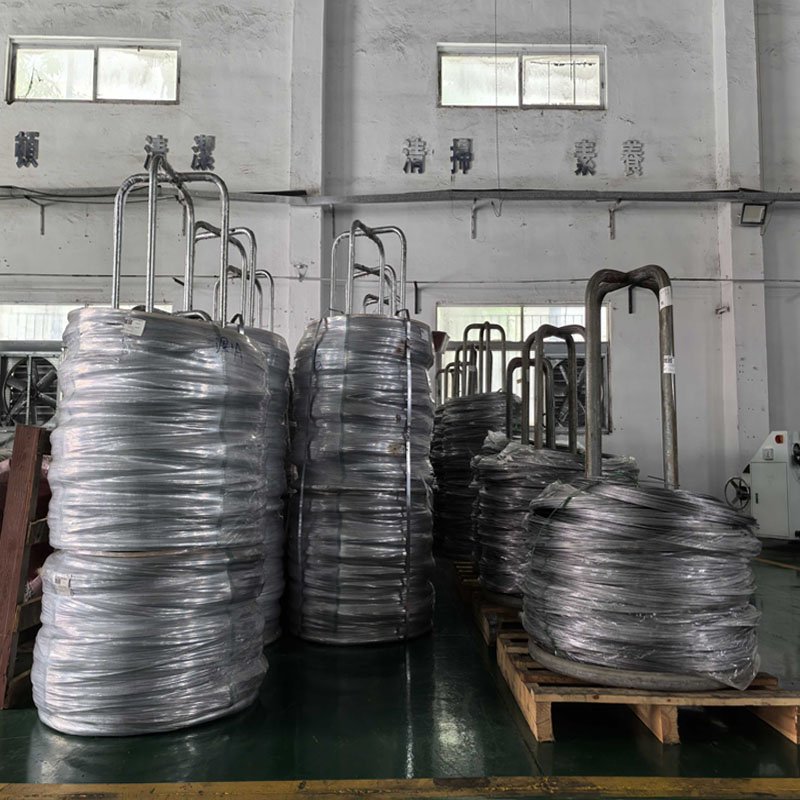
Not every wire in the range ends up in a zipper. The flat wire FPD-FW is produced in stainless steel, copper or aluminum, customizable, for electronic accessories, home appliances, medical devices and clothing accessories. The profiled wire FPD-PW is offered in the same three materials for clothing accessories, medical devices, home appliances and electronic accessories. The range also includes round wire, metal round wire, spring wire, shaped wire and special-shaped wire, with profile, grade and temper fixed per project.
For a zipper buyer, these forms matter at the edges of the assembly: a flat or shaped section may suit a slider body or a pull where a round section would not, and one material source can then cover several components. Buyers sourcing for electronics, appliances or medical devices should start from the application requirement and confirm grade, tolerance and inspection with the supplier rather than assuming that a zipper-grade specification transfers unchanged.
Frequently asked questions
What should a purchase order for zipper metal wire specify?
At minimum: material and grade, profile drawing with dimensions and tolerance, hardness condition, surface finish, supply form (coil, spool or cut length), packing and marking, approved sample reference, and the inspection regime. For preformed Y-teeth wire, state the size (#3, #4, #5 or #8) and the cross-section tolerance; Fullgreat works to ±0.01 mm on preformed Y-teeth wire. Naming needle detection as a pre-shipment requirement keeps the inspection record aligned with the shipment.
Should a project specify Y shape wire or preformed Y teeth wire?
It is a make-or-buy decision. Specify Y shape wire, or Y-shape wire for zipper, if you form teeth in-house and want control of tooth length and cut angle. Specify preformed Y teeth wire if you would rather move forming and its scrap to the wire supplier and inspect incoming teeth. The drawing requirements are similar; the difference is where the forming risk sits.
How do I choose between stainless steel, copper and aluminum?
Start from the duty and the finishing route. Stainless steel is the choice where non-magnetic behaviour and consistent mechanical properties matter, and Fullgreat's non-magnetic stainless steel wire grades FPD901 and FPD902 were developed for button and zipper applications. Copper is chosen for colour and working behaviour; aluminum where lower weight or a specific finish is wanted. Because each material forms, finishes and wears differently, confirm the choice together with the finishing route and on a sample.
How much can material substitution save against copper?
Fullgreat states approximately 40% lower cost than copper alternatives, with longer service cycles and fewer replacement parts. That is a supplier-stated comparison for its own range and a direction for evaluation, not a project-level price. The saving on a specific programme depends on component mix, finishing and volume, and should be confirmed through a quotation and a paired sample trial.
What should a sample request include?
Send the chain size, profile drawing or reference sample, material, hardness condition, the slider and pull you intend to use, and the end use — apparel or bag & luggage. Include the functional test you will run, such as a laundering cycle or a load test on the assembled chain, so the sample is approved against the same criteria as production.
How are order quantity and lead time set, and how do I start?
Quantity and lead time are quoted against the specification, because material, profile, tolerance, hardness and packing each change the production route. Send the drawing and end use to Fullgreat Metal Limited for a quotation and sample plan, and use the Fullgreat Metal company profile brochure to start the material and capability review.
Next step. Share your chain size, profile drawing and end use with Fullgreat Metal Limited to receive a specification-based quotation and a sample plan. Contact: Bruce, tel/WhatsApp +86 13556896920, email Bruce@fullgreat.com. The company profile brochure is available for download.
Conclusion
Zipper metal wire is a family of forms, not a single product, and each form carries a different part of the assembly's job. Y teeth and Y-shape wire decide whether the chain interlocks and runs through the slider; top and bottom stop wire decide whether the slider stays on the chain; the pull and the automatic slider decide whether the user's force reaches the teeth cleanly. Apparel projects and bag & luggage projects weight those jobs differently, but both are settled the same way: a drawing with tolerances, a material and hardness condition agreed with the finishing route, a sample approved on the real slider and tape, and acceptance criteria written into the purchase order.
Buyers who specify the set rather than the part, and who confirm cost claims against their own sample trial, get the most out of the material substitution story in this category. Those who buy on price per kilogram alone usually discover the interface problem later, at the assembly line.
Have Questions or Need More Details?
Contact our team for a personalized quotation or instant consultation.
Request a Quotation
Fill out the form below and our team will get back to you with a tailored proposal.
WhatsApp Direct Chat
Prefer to chat in real-time? Message us on WhatsApp for instant assistance & quick answers.
- Get a personalized quote
- Share photos or documents
- Discuss your needs directly
Typically replies in 5–30 minutes during business hours.