Specifying Zipper Metal Wire: A Technical Guide to Cross-Section Geometry and Material Selection
Zipper metal wire is specified along two axes that have to be settled in the same conversation: the cross-section geometry that lets a tooth, a stop or a spring seat correctly inside the finished zipper, and the material and hardness that allow that geometry to survive forming and service. The profile is agreed against a part number and a mating slider first; material and hardness are then agreed against a test that can accept or reject a lot.
This guide works through the geometry families and the component set in Fullgreat Metal Limited's zipper wire range: Y Teeth Wire (FPD-YTW01), Y-shape Wire for Zipper (FPD-YSW), Y Shape wire (FPD-YSW02), Bottom Stop Wire (FPD-BSW), Top Stop Wire (FPD-TSW), Spring Wire (FPD-SW02), Metal Round Wire (FPD-MRW) and Flat Wire (FPD-FW), with Profiled Wire (FPD-PW), Shaped Wire (FPD-SW) and Special -Shaped Wire (FPD-SSW) covering other drawn sections. Fullgreat Metal Limited, founded in 2008, is a Shenzhen-based producer of non-magnetic stainless steel strip and wire and aluminum strip whose materials are used in buttons, zippers and clothing accessories (fullgreat.com).
Why geometry and material cannot be specified one after the other
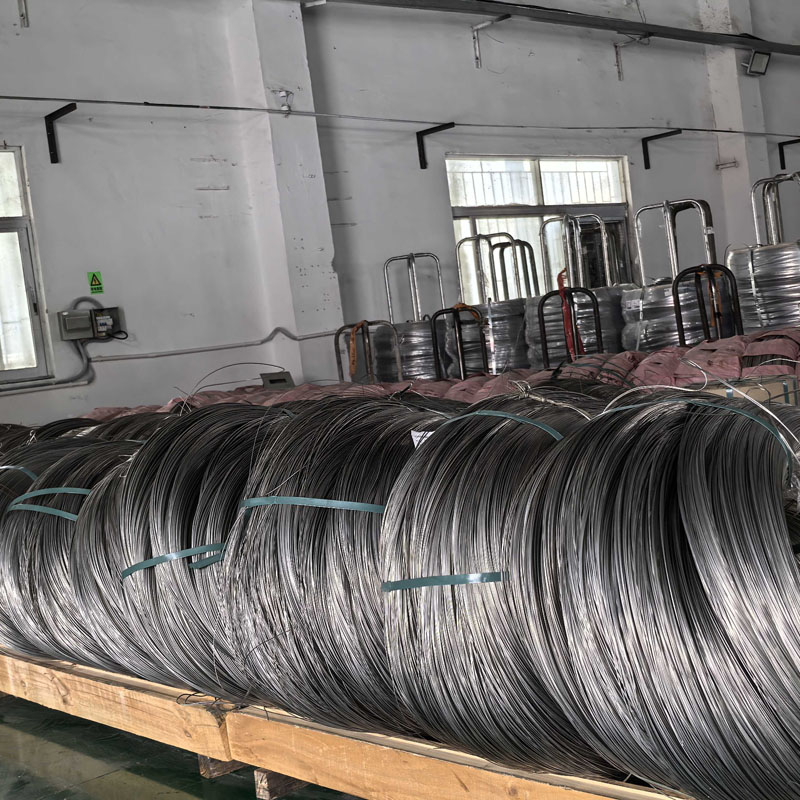
Geometry decides fit; material decides whether fit survives. In a finished zipper the teeth are formed so that they interlock, the slider travels a channel over the closed chain, and the stops terminate slider travel at each end. Each of those interfaces is a dimensional relationship, and each dimension is produced by deforming wire — so the material's response to that deformation is part of the dimensional result, not a separate purchasing question.
The failure this creates is easy to recognise. A profile measures inside its drawing in the annealed state, then relaxes, work-hardens unevenly or cracks during tooth forming or stop crimping. The inspection record reads as a geometry failure; the cause sits in the material and hardness decision. Three rules follow, and they organise the rest of this guide:
- Fix the cross-section against the mating part — the slider, the stop position, the spring seat — not against a shape name.
- Fix material and hardness together with the test that proves them; soft and hard are not acceptance criteria on their own.
- Fix each component separately. A document that declares one material, one hardness and one tolerance for a whole shipment has not specified anything.
The cross-section families in the range
Five families cover the sections discussed here: round, flat, Y-section for teeth, profiled, and special or shaped sections. Their part numbers are not interchangeable, and several of them are close enough in name that the part number — not the description — should appear on the purchase order.
- Round.Metal Round Wire (FPD-MRW) is the plain round section in the range. Spring Wire (FPD-SW02) is also documented as round, with customizable size and hardness and material options of stainless steel, copper or aluminum. Round stock is the usual baseline for wire drawing, and shaped sections are generally produced by deforming it, which is why round-wire and shaped-wire capability are normally assessed together.
- Flat. Flat Wire (FPD-FW) supplies a flat section rather than a round one. Where a flat section is used, the agreement that matters is the relationship between width and thickness, because both are produced in the same pass and move together.
- Y-section. The Y family carries four part numbers: Y Teeth Wire (FPD-YTW01), Y Teeth (FPD-YTW02), Y-shape Wire for Zipper (FPD-YSW) and Y Shape wire (FPD-YSW02). A Y section is the profile normally associated with metal teeth: during tooth forming the two upper arms are deformed so that each tooth presents a head that meshes with its neighbour, while the stem provides the material that is clamped onto the tape. Y-shape Wire for Zipper (FPD-YSW) is documented in stainless steel, copper or aluminum with customizable shape, size and hardness, for clothing accessories and bag & luggage.
- Profiled. Profiled Wire (FPD-PW) covers drawn sections shaped to a drawing rather than to a standard family. Its documented applications are electronic accessories, home appliances, medical devices and clothing accessories, with shape and overall dimensions customized.
- Special and shaped.Special -Shaped Wire (FPD-SSW) and Shaped Wire (FPD-SW) are separate part numbers for sections outside the families above. When a section lands here, the cross-section drawing is the specification, and it has to travel with the enquiry.
| Profile family | Part numbers in the range | Documented notes |
|---|---|---|
| Round | Metal Round Wire (FPD-MRW); Spring Wire (FPD-SW02) | Spring Wire documented as round, stainless steel / copper / aluminum, size and hardness customizable |
| Flat | Flat Wire (FPD-FW) | Separate part number for a flat section |
| Y-section | Y Teeth Wire (FPD-YTW01); Y Teeth (FPD-YTW02); Y-shape Wire for Zipper (FPD-YSW); Y Shape wire (FPD-YSW02) | FPD-YSW: stainless steel / copper / aluminum, shape, size and hardness customizable; clothing accessories and bag & luggage |
| Profiled | Profiled Wire (FPD-PW) | Shape and overall dimensions customized; electronic accessories, home appliances, medical devices, clothing accessories |
| Special / shaped | Special -Shaped Wire (FPD-SSW); Shaped Wire (FPD-SW) | Separate part numbers for non-standard sections |
What each component's cross-section has to deliver

Teeth: four part numbers, one interface
The tooth is the only component whose cross-section is also the product's visible surface, and its geometry is constrained from two sides at once: the head must mesh with the adjacent tooth when the chain closes, and the assembled tooth must pass the slider channel without binding. That is why teeth wire is specified against a slider rather than against a wire diameter alone. Fullgreat's published technical data for its Y-teeth profile wire states that cross-sectional micro-geometry is controlled to ±0.01 mm with uniform tensile elongation, across the #3, #4, #5 and #8 Y-teeth profile sizes named in that data sheet.
The range also carries four Y-related part numbers. Y Teeth Wire (FPD-YTW01) and Y Teeth (FPD-YTW02) are different items, and Y-shape Wire for Zipper (FPD-YSW) and Y Shape wire (FPD-YSW02) are different items again. A specification that says 'Y-shape wire' without a model leaves the supplier to choose, and the conversation that follows is usually about fit rather than price.
Stops: two specifications, not one
Bottom Stop Wire (FPD-BSW) closes the lower end of the chain and stops the slider from running off; the equivalent part at the top is Top Stop Wire (FPD-TSW). Both are separate part numbers in the range and should be specified separately. The documented customization for the bottom stop covers size and shape, with hardness available in soft or hard. For the top stop, the same attributes — cross-section, size, material and hardness — should be written into the order in the same way rather than copied across from the bottom stop, because the two parts are formed onto the tape at different points of the assembly and are not automatically interchangeable.
Spring wire: the elastic element
Spring Wire (FPD-SW02) is documented as round, in stainless steel, copper or aluminum, with customizable size and hardness; its documented applications extend beyond zippers to clothing accessories, medical devices, home appliances and electronic accessories. Where a spring wire sits inside an automatic slider, the properties that decide performance are elastic return and consistency under repeated deflection, which is why diameter and hardness are specified as a pair. A spring wire quoted on diameter alone has an undefined spring rate; quoted on hardness alone, it has an undefined travel.
Slider and pull: the boundary conditions for tooth geometry
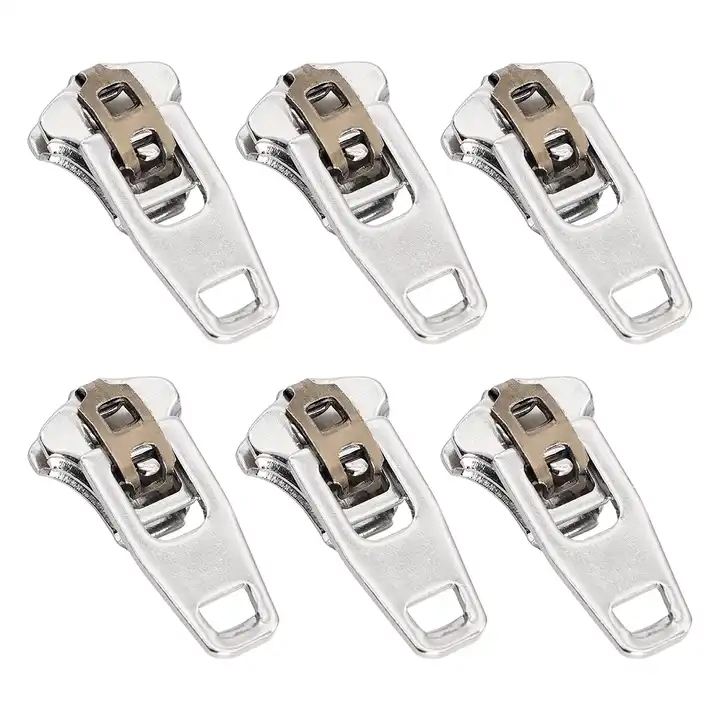
The Zipper Automatic Slider (FPD-ZAS) is documented for clothing accessories and bag & luggage in stainless steel, copper or aluminum, with customizable shape, size and hardness (soft or hard); the Zipper Pull (FPD-ZP) carries the same material and customization set. The slider is the part the teeth run through, so its specification is the boundary condition for tooth geometry: a tooth drawing is complete only when it names the slider it must pass, and a slider change re-opens the tooth drawing.
Material selection: stainless steel, copper and aluminum
Across the documented models the material options are stainless steel, copper and aluminum — stated explicitly for Y-shape Wire for Zipper (FPD-YSW), Spring Wire (FPD-SW02), Profiled Wire (FPD-PW), the Zipper Automatic Slider (FPD-ZAS) and the Zipper Pull (FPD-ZP). Stainless steel is a family name rather than a grade, and the choice inside that family matters. Fullgreat's company profile describes its non-magnetic stainless steel wire grades FPD901 and FPD902 as being used in buttons and zippers, developed with Sichuan University as a substitute for copper strip, with national patents obtained for that non-magnetic stainless steel development. If magnetic response is relevant to your finishing or inspection process, the grade has to be named on the drawing, because the words 'stainless steel' do not answer the question.
Material choice also changes cost, and the size of the change should be quoted rather than assumed. Fullgreat's published comparison of composite copper wire against solid brass states material cost reductions of 30%–40% for brass-look teeth wire. That is a material-cost figure and should not be read as a landed or total cost; it does not cover forming, scrap or finishing. Whatever figure a supplier gives, the comparison holds only between comparable sections and comparable hardness — a cost per kilogram for a round section does not describe a Y-section of the same nominal size.
Two disciplines keep material selection from drifting. First, material is a per-part attribute: sharing a material list with another component does not mean one declaration covers both. Second, the material has to be stated with the same precision as the profile — model, section, size, material, hardness, test — because a material name on its own leaves forming behaviour undefined.
Hardness: turning soft or hard into a measurable requirement
A soft or hard hardness choice is documented for Bottom Stop Wire (FPD-BSW), the Zipper Automatic Slider (FPD-ZAS) and the Zipper Pull (FPD-ZP); hardness is listed as customizable on Y-shape Wire for Zipper (FPD-YSW) and Spring Wire (FPD-SW02). The commercial meaning of that option is simple — the buyer can ask for the forming behaviour the process needs — but the technical meaning has to be pinned down, because soft and hard describe a range rather than a value.
The mechanism is a trade. Softer wire deforms more readily, which helps where a tooth or a stop has to be closed onto the tape without cracking; harder wire resists deformation in service, which matters where the finished part carries load. Both directions can fail: too soft and the stop deforms under load or the tooth loses its grip; too hard and the forming operation produces cracks or demands more force than the tooling was set for. The way to keep the decision measurable is to specify hardness together with the acceptance tests already used in quality control — dimensional requirements, composition, tensile strength and elongation — and to agree which of them decide acceptance, instead of treating a soft or hard label as the end of the discussion.
A seven-step specification sequence
The sequence below keeps the two variables in the right order. It applies to a first enquiry and to a change request on a running order.
- State the finished function. Name the end product family the component serves. Across this range the documented applications are clothing accessories and bag & luggage, with profiled wire also documented for electronic accessories, home appliances and medical devices. The function decides which interfaces matter.
- Fix the component and its part number. Choose between Y Teeth Wire (FPD-YTW01), Y Teeth (FPD-YTW02), Y-shape Wire for Zipper (FPD-YSW), Y Shape wire (FPD-YSW02), Bottom Stop Wire (FPD-BSW), Top Stop Wire (FPD-TSW), Spring Wire (FPD-SW02), Metal Round Wire (FPD-MRW) or Flat Wire (FPD-FW), and write the model rather than the shape word.
- Fix the cross-section family and attach the drawing. If the section is not a catalogue family, it becomes Profiled Wire (FPD-PW), Shaped Wire (FPD-SW) or Special -Shaped Wire (FPD-SSW), and the drawing defines the part.
- Set the dimension window and the tolerance that governs it. For Y-teeth profiles the published reference is ±0.01 mm on cross-sectional micro-geometry; for other sections the tolerance has to be agreed explicitly, because customizable size describes freedom, not precision.
- Choose material and hardness together. Stainless steel, copper or aluminum as documented for the model; soft or hard where that option is documented; then name the grade and the values that prove hardness.
- Define the acceptance set. Ask for dimensional requirements, composition, tensile strength and elongation to be reported, and state which of them release the lot for your process.
- Validate a sample against the mating part. Assemble the sample tooth, stop or spring with the slider and tape it will actually run with, and record the result before the volume order is placed.
Documented attributes by model
The table reproduces only what the product data states, so that gaps stay visible instead of being assumed. Where an attribute is not listed, the specification step is to request it in writing.
| Model | Component | Documented materials | Documented customization | Documented applications |
|---|---|---|---|---|
| FPD-YSW | Y-shape Wire for Zipper | Stainless steel, copper, aluminum | Shape, size, hardness | Clothing accessories; bag & luggage |
| FPD-BSW | Bottom Stop Wire | Not stated in the product data | Size, shape; hardness soft or hard | Clothing accessories; bag & luggage |
| FPD-SW02 | Spring Wire | Stainless steel, copper, aluminum (customizable) | Size, hardness; shape round | Clothing accessories; medical devices; home appliances; electronic accessories |
| FPD-ZAS | Zipper Automatic Slider | Stainless steel, copper, aluminum | Shape, size, hardness (soft or hard) | Clothing accessories; bag & luggage |
| FPD-ZP | Zipper Pull | Stainless steel, copper, aluminum | Shape, size, hardness (soft or hard) | Clothing accessories; bag & luggage |
| FPD-PW | Profiled Wire | Stainless steel, copper, aluminum | Shape, overall dimensions | Electronic accessories; home appliances; medical devices; clothing accessories |
Scope note on demand data. Published commercial-research estimates for the finished zipper market put 2025 at USD 16.62 billion in one report and USD 18.74 billion in another, with reported CAGRs of 7.0%, 7.71% and 7.76% across three publishers. These figures describe finished zippers, not the metal wire input, and the estimates are not directly comparable; they are useful as downstream context only, and no wire-level market figure is asserted here.
Where specifications fail
Five patterns account for most rework in zipper wire specifications, and each is avoidable at the enquiry stage.
- Shape word instead of part number. Four Y-related part numbers sit in the same range. 'Y-shape wire' is not a specification; FPD-YSW is.
- One declaration for a whole shipment. Material, hardness and tolerance are per-part attributes, and a blanket declaration cannot be verified against a per-part drawing.
- Soft or hard without a test. Without tensile strength and elongation values, the hardness instruction is a preference rather than a requirement and cannot be rejected on inspection.
- Profile validated without its mating part. A tooth measured on its own passes; a tooth measured in the slider it will run in is the check that predicts assembly behaviour.
- Documentation left to the shipment. Documentation requested at order entry arrives with the lot; documentation requested after a problem arrives as a discussion.
Documentation, commercial terms and supplier checks
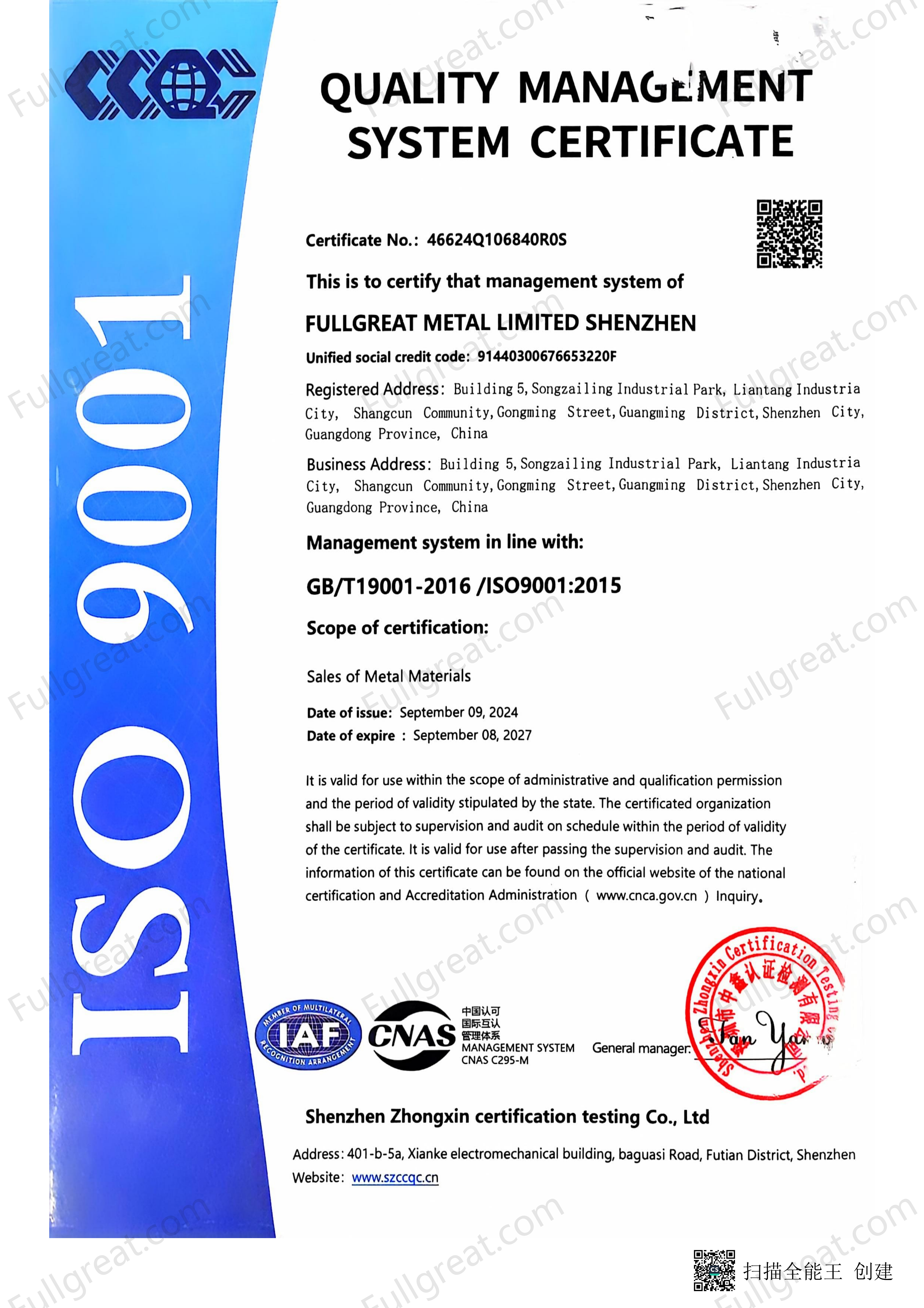
At evaluation stage the supplier's paperwork is part of the technical answer. Fullgreat Metal Limited holds ISO 9001 certification, certificate number 46624Q106840R0S, issued 9 September 2024 and valid to 8 September 2027 by Shenzhen Zhongxin certification testing Co., Ltd, against GB/T19001-2016 / ISO9001:2015, with the stated scope 'Sales of Metal Materials'. That scope wording is worth reading as written: a quality-management certificate with a sales scope is evidence of a documented management system, and it does not by itself certify the mechanical properties of a specific wire lot — those come from the lot's test report.
On the commercial side, the documented terms are a minimum order quantity of 1 ton, a lead time of 30–45 days, OEM/ODM production, and customization across material, packaging, specifications and colour, with a test report listed as the after-sales document. Supplier facts relevant to an evaluation include a 5,000 m² facility, 50 employees, a 10-engineer R&D team, an export ratio of 70%, and main markets in Turkey, Latin America (Brazil, Mexico), Southeast Asia (Vietnam, Indonesia, Bangladesh) and Europe and America.
Case reference: a two-year zipper OEM programme
A documented case in the range covers a zipper OEM customer in Japan running 50 tons per month on a two-year programme, with results recorded as stable operation and finished product that is smooth and free of burrs. The useful part of that record for a specification discussion is what it implies about the acceptance set: a burr-free finished part is a surface and tool-wear outcome, and it is governed upstream by cross-section geometry and hardness rather than by a final inspection step.
Frequently asked questions
What documentation should accompany a zipper metal wire order?
An order should carry four documents: the purchase specification (model, cross-section, size, material and grade, hardness with the values that prove it), the cross-section drawing for that part, the acceptance test set — dimensional requirements, composition, tensile strength and elongation — and the lot test report, which Fullgreat lists as its after-sales document. Supplier-level evidence supports that package: Fullgreat Metal Limited holds ISO 9001 certification, certificate 46624Q106840R0S, issued 9 September 2024 and valid to 8 September 2027 by Shenzhen Zhongxin certification testing Co., Ltd, against GB/T19001-2016 / ISO9001:2015, with the scope 'Sales of Metal Materials'. The certificate covers the management system; the lot test report is what describes the wire you receive.
Can cross-section shape, size and hardness be customized for each component?
Yes, within the documented options. Shape, size and hardness are listed as customizable on Y-shape Wire for Zipper (FPD-YSW), the Zipper Automatic Slider (FPD-ZAS) and the Zipper Pull (FPD-ZP); size and shape are customizable on Bottom Stop Wire (FPD-BSW) with hardness available in soft or hard; Spring Wire (FPD-SW02) is documented as round with customizable size and hardness; and Profiled Wire (FPD-PW) is customized by shape and overall dimensions. Production is OEM/ODM with customization across material, packaging, specifications and colour.
Does soft or hard hardness mean the same thing on every component?
No, which is why the label should not be the whole instruction. Soft or hard is documented explicitly for Bottom Stop Wire (FPD-BSW), the Zipper Automatic Slider (FPD-ZAS) and the Zipper Pull (FPD-ZP), while hardness is listed as customizable on Y-shape Wire for Zipper (FPD-YSW) and Spring Wire (FPD-SW02). On a specification, pair the label with values from the acceptance set — tensile strength and elongation are both part of the documented quality-control scope — so that a lot can be accepted or rejected against a number rather than a description.
What drives the cost difference between material options?
Material choice per component is the first driver, because the documented options — stainless steel, copper and aluminum — form differently and are priced differently. Fullgreat's published comparison of composite copper wire against solid brass states material cost reductions of 30%–40% for brass-look teeth wire; that is a material-cost figure, not a landed cost, so it should be tested against a full quote. The second driver is the section itself: a Y-section and a round section of the same nominal size are different products, and cost per kilogram is comparable only between like sections, like material and like hardness. Minimum order quantity is documented at 1 ton, which also marks the point where a material change becomes a purchasing decision.
How should a new profile be sampled and validated?
Order a sample against the drawing, naming the model and the slider it must pass, then validate in three steps: measure the cross-section against the agreed dimension window, confirm material and hardness from the test report (composition, tensile strength, elongation), and assemble the sample with the tape and slider it will actually run with. A tooth that measures correctly but binds in its slider has not been validated. Because customization covers specifications, the sample request should state the specification rather than only the product name.
What are the minimum order quantity and lead time, and how do I start?
The documented terms are a minimum order quantity of 1 ton and a lead time of 30–45 days under OEM/ODM production. The shortest path to a comparable quote is a single enquiry containing the component model, the cross-section drawing, the material and grade, the hardness requirement with its test values, and the end application — clothing accessories, bag & luggage, or one of the other documented applications. Fullgreat Metal Limited publishes its range at fullgreat.com, and the company profile PDF can be downloaded from the link below; sample and quotation requests can go to Bruce at Bruce@fullgreat.com or +86 13556896920. A sample request costs less than a re-opened tooling specification.
Next step: send the part number, drawing and acceptance values in one message and ask for a sample plus a test report. Contact Bruce — email Bruce@fullgreat.com, WhatsApp +86 13556896920 — or download the Fullgreat Metal company profile (PDF).

Conclusion
The specification order is the whole argument: part number, cross-section family, dimension window and tolerance, material and grade, hardness with the test that proves it, acceptance set, and a sample validated against the mating slider. Wire that fails usually fails because one of those seven was left as a word instead of a value, and the geometry and material decisions are where most of that risk sits.
Fullgreat Metal Limited's range covers the profiles discussed here, from Y Teeth Wire (FPD-YTW01) and Y-shape Wire for Zipper (FPD-YSW) through Bottom Stop Wire (FPD-BSW), Top Stop Wire (FPD-TSW) and Spring Wire (FPD-SW02) to Metal Round Wire (FPD-MRW) and Flat Wire (FPD-FW), with OEM/ODM customization of material, specifications, packaging and colour. The practical takeaway for an evaluation-stage buyer is narrow and useful: state the section against the slider, state the material with its grade, state the hardness with its numbers, and let the test report close the loop.
Have Questions or Need More Details?
Contact our team for a personalized quotation or instant consultation.
Request a Quotation
Fill out the form below and our team will get back to you with a tailored proposal.
WhatsApp Direct Chat
Prefer to chat in real-time? Message us on WhatsApp for instant assistance & quick answers.
- Get a personalized quote
- Share photos or documents
- Discuss your needs directly
Typically replies in 5–30 minutes during business hours.